Room ideas / Bathroom
How to organise a small bathroom counter
A bathroom counter works when you can find everything in the morning without moving things around. Group what you use by routine, and pick containers that actually fit between the wall and the sink.
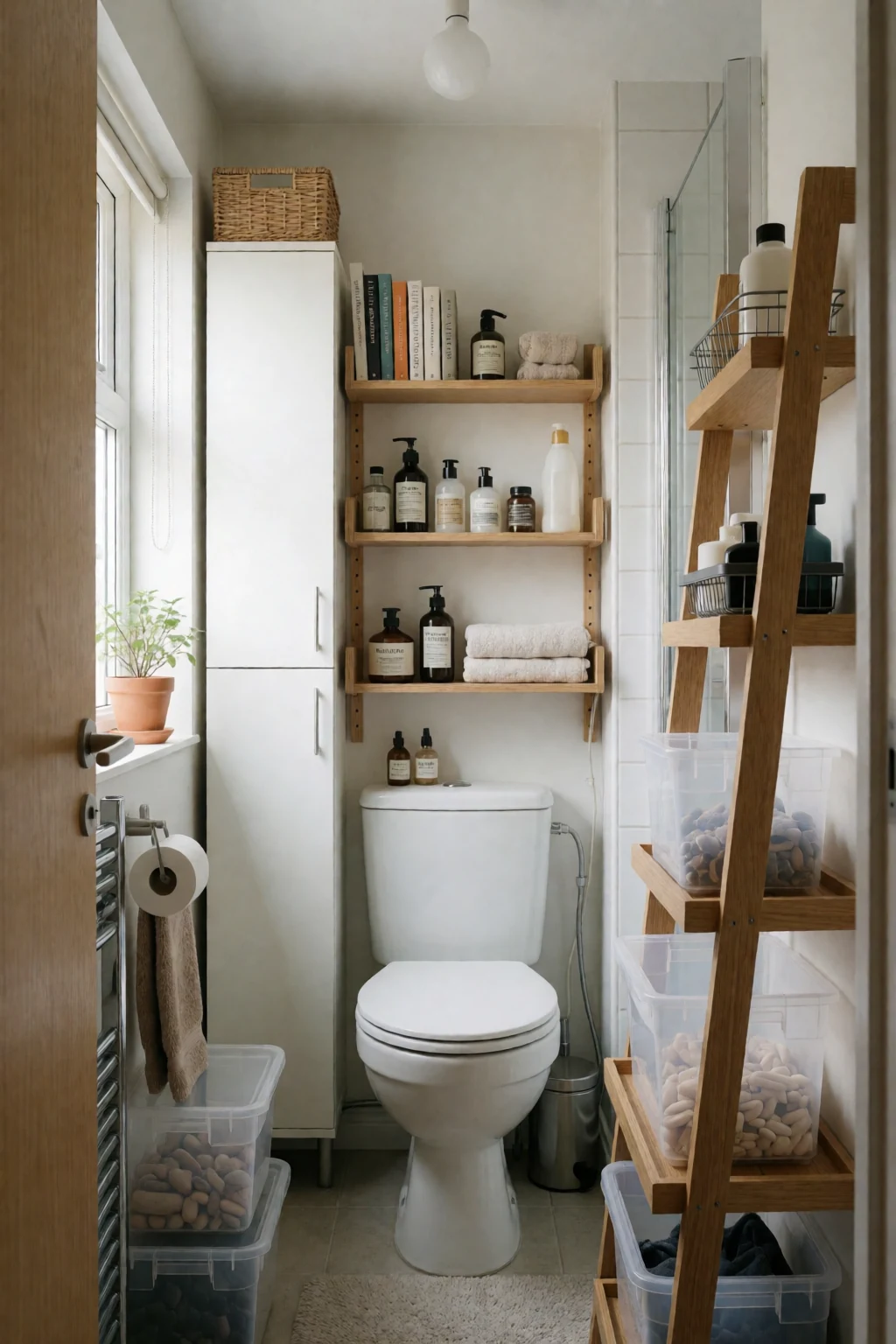
Three rules for the counter
- Group by routine: morning skincare together, evening products together, and shared things like hand soap where everyone can reach.
- Buy containers that fit your counter's real depth and width, not ones you will have to move every time you use the sink.
- Keep the middle of the counter for what you use most, and push the rest to the back or sides.
What belongs on a counter
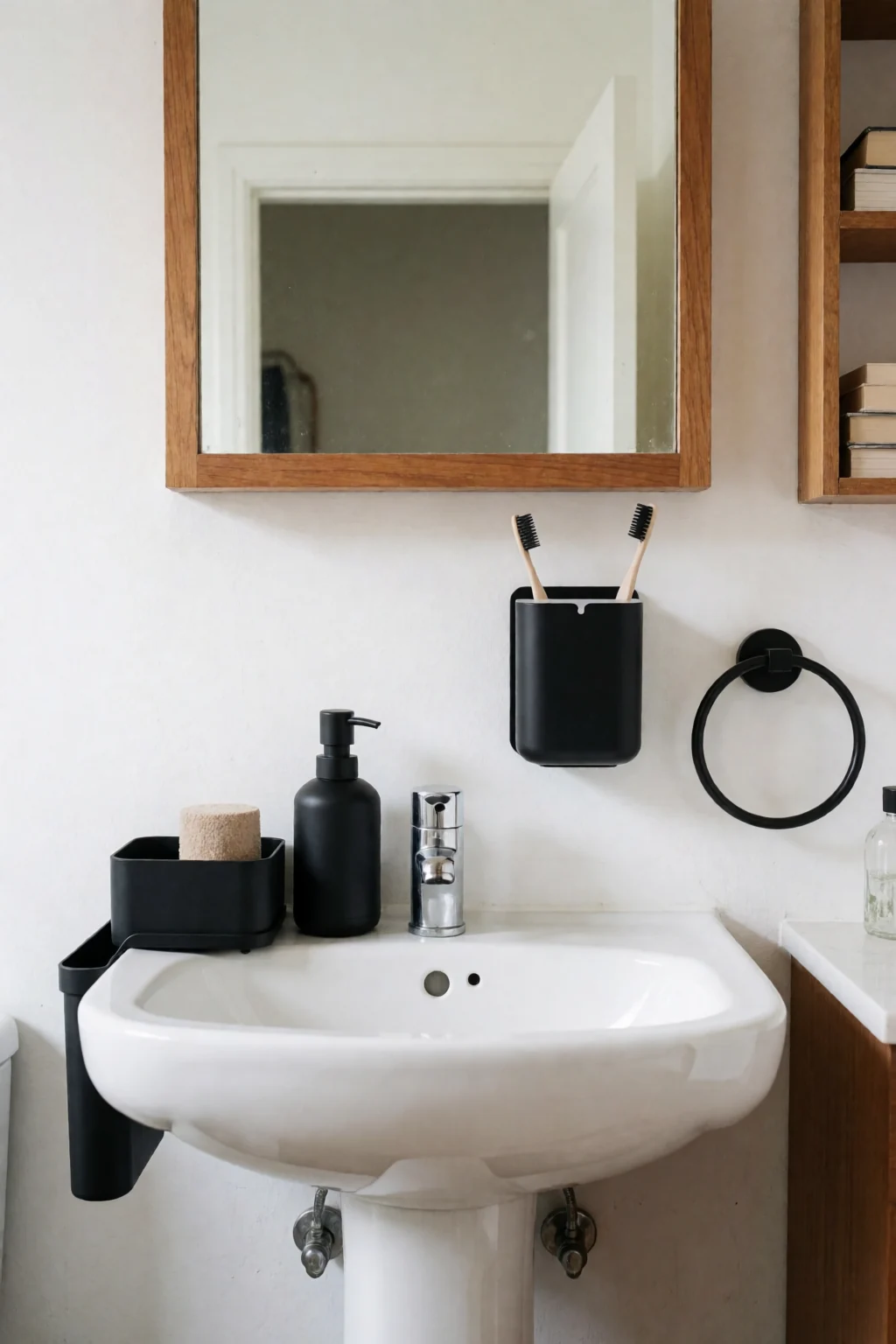
The goal is to keep daily products in a small footprint so there is still clear space for a towel, phone or makeup bag. Group them by routine (morning, evening, shared) and put each group in a tray, caddy or small organiser. Instead of ten loose bottles, you see three containers.
A tidy counter usually has some height to it: a two-tier shelf for skincare, a divided caddy for toothbrushes and face wash, a tray with pump bottles and maybe a small vase. Matching pump bottles make different brands look like a set. Anything you use weekly or less goes in a drawer or cupboard.
Counter storage is for what you grab several times a day, so it has to stay visible and easy to reach. Spare stock and cleaning products belong under the sink or in a linen cupboard.
Five counter layouts
- Divided caddy, pump bottles, small mirror
- A divided caddy by the sink for toothbrush, face wash and hand soap, often-used products decanted into matching pumps, and a small mirror leaned against the wall. On a very tight counter, swap the mirror for a tray.
- Two-tier shelf
- Skincare on the top tier, daily products on the bottom, liquids in matching pumps, and a small stem of faux greenery. It uses height and leaves the counter underneath clear.
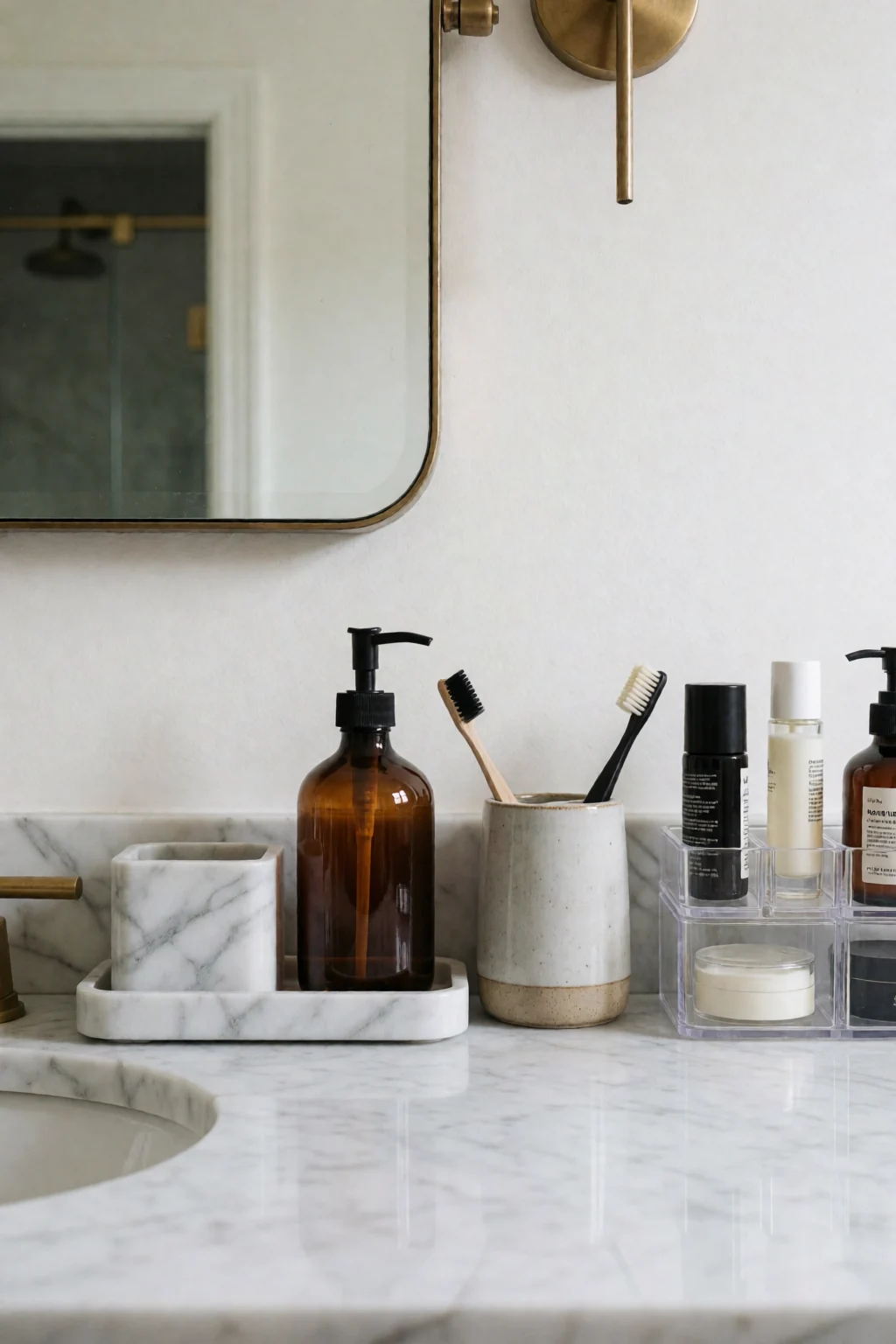
- One tray holds it all
- A rectangular tray holding a divided organiser with toothbrushes and cosmetics, and the hand soap pump just outside it. The tray marks out the zone and catches drips. Good for narrow counters.
- Tiered organiser and a plant
- A tiered organiser next to the sink, daily products in pumps, and a small plant or faux stem on the top tier. Things are split by height, and the plant does not get in the way.
- A tray per person
- In a shared bathroom, give each person a narrow tray with their own pump bottles, with a countertop mirror behind. Everyone's things stay together, and nobody moves anyone else's.
Measure and choose
- Depth and the tap
- Measure from the wall to the edge of the sink before you buy. A caddy that hangs over the edge gets knocked off, and one that blocks the tap has to be moved every time. Leave at least two inches clear in front.
- Who uses what, and when
- Face wash, toothbrush and moisturiser, the things you use first and last thing, belong nearest the sink. Weekly products go in a drawer, under the sink or on a shelf above the mirror. If you share, give each person a section or container.
- Materials
- Counters get splashed with water, toothpaste and product. Plastic, metal and sealed wood wipe clean quickly; woven and fabric organisers stain and hold damp. Check pump bottles seal properly. Clear containers show what is inside, and also show dust sooner.
- Where to start
- Use what you already own first: a small tray or dish shows you what size works. Matching pump bottles are a cheap first step that tidies the look straight away. Buy a caddy or tiered shelf only once you know what needs to stay out.
Clear it, then build it back
Clear and wipe the whole counter. Put back only what you used in the last three days: toothbrush, face wash, moisturiser, hand soap and anything else daily. The rest goes in a drawer, cupboard or under the sink for now. Measure the depth and width you have, and try grouping the daily items on a tray or dish you own to see whether that footprint works.
Decide whether matching pump bottles would help. If you have several washes, lotions or soaps in different packaging, decanting them makes the counter look calmer and keeps them upright. Then arrange by use: twice-a-day things at the front or on top, a-few-times-a-week things at the back or on the lower tier. Add a mirror or a stem of greenery only if there is room left, and only after a week of using the setup.
Shop the pieces
16 bathroom pieces
Links open similar items, not the pictured ones.
-
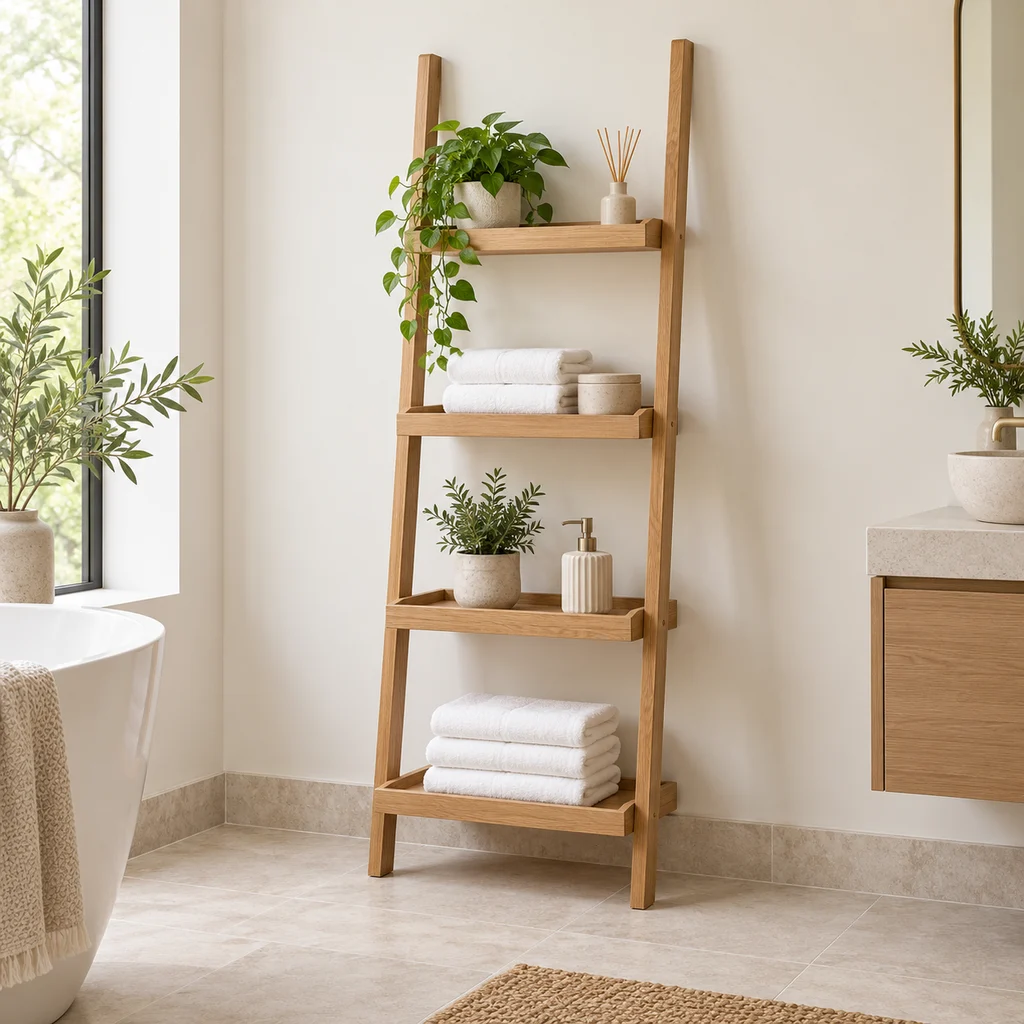
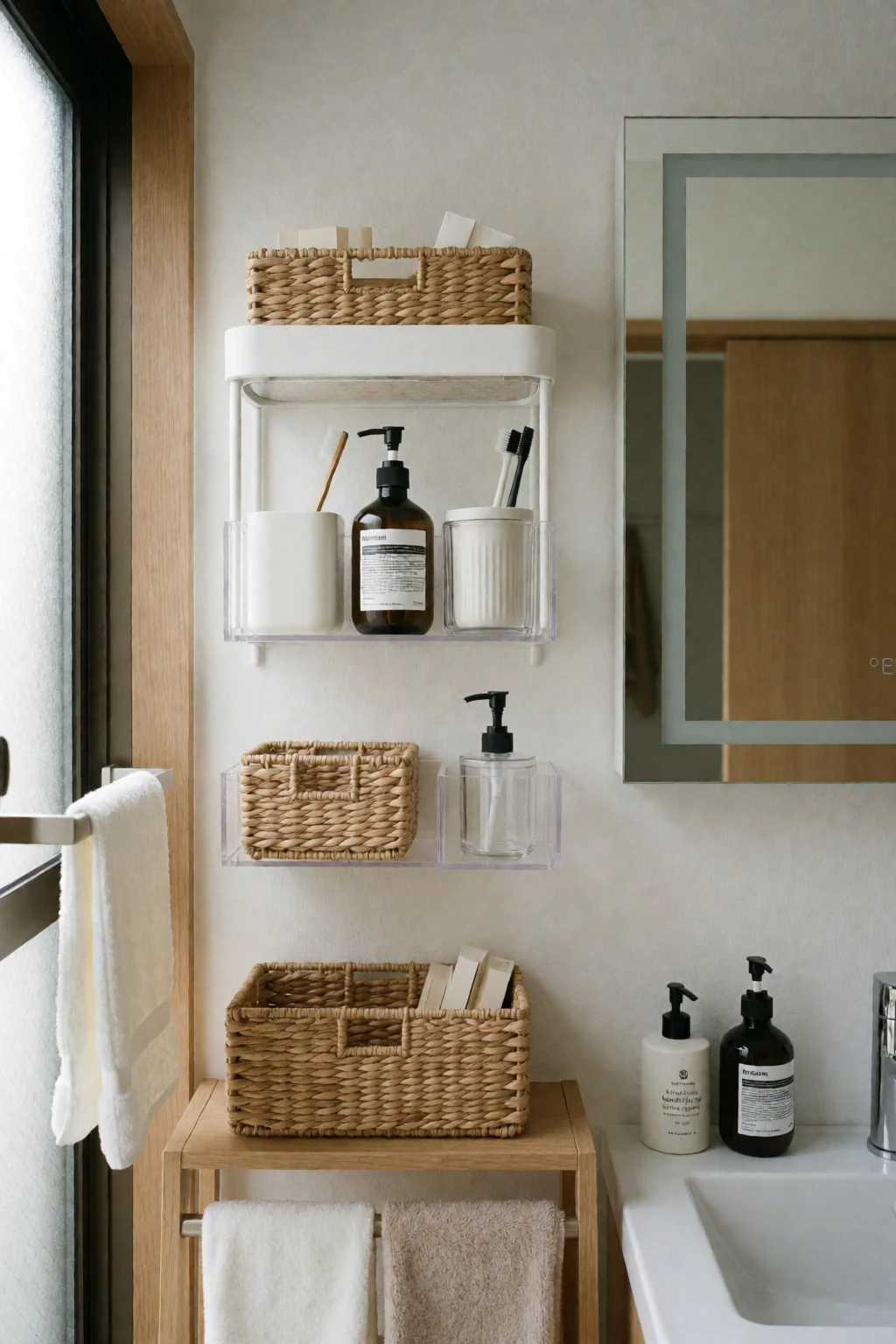
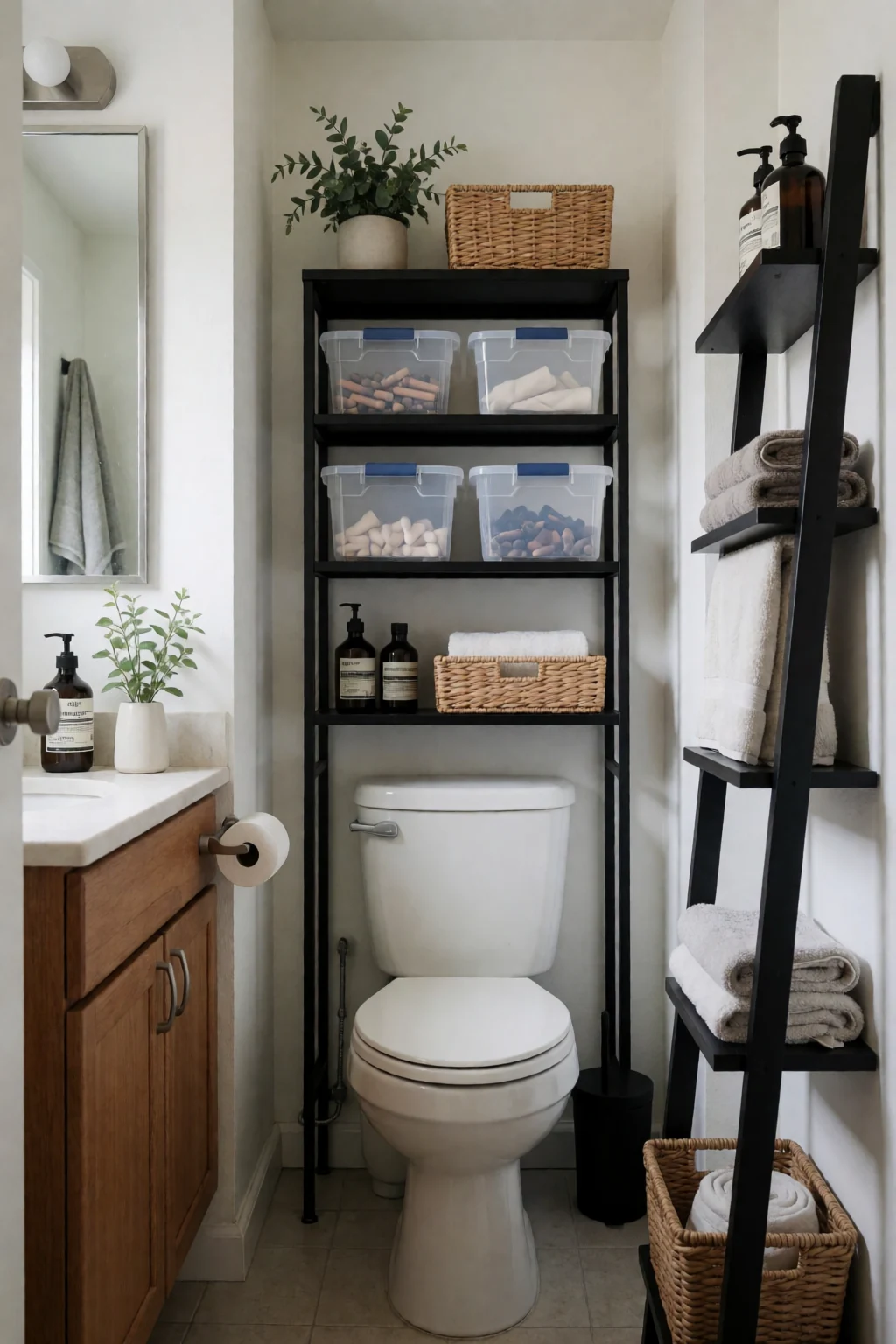
Ladder shelf
What to check
A leaning ladder shelf needs a wall anchor to stay steady. Check the depth so it does not block the door swing.
-
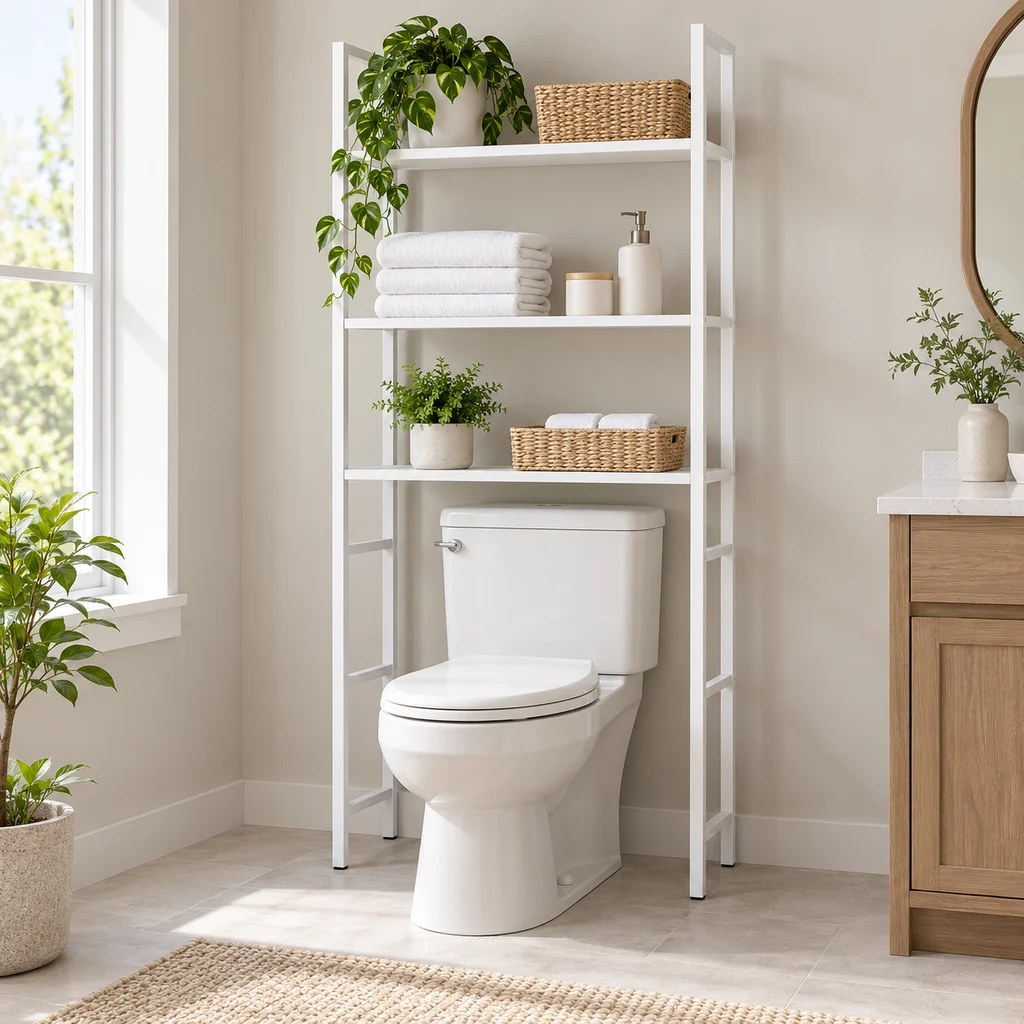
Over-toilet shelf
What to check
Measure the width of your toilet and the height to the cistern top. The frame must clear both.
-
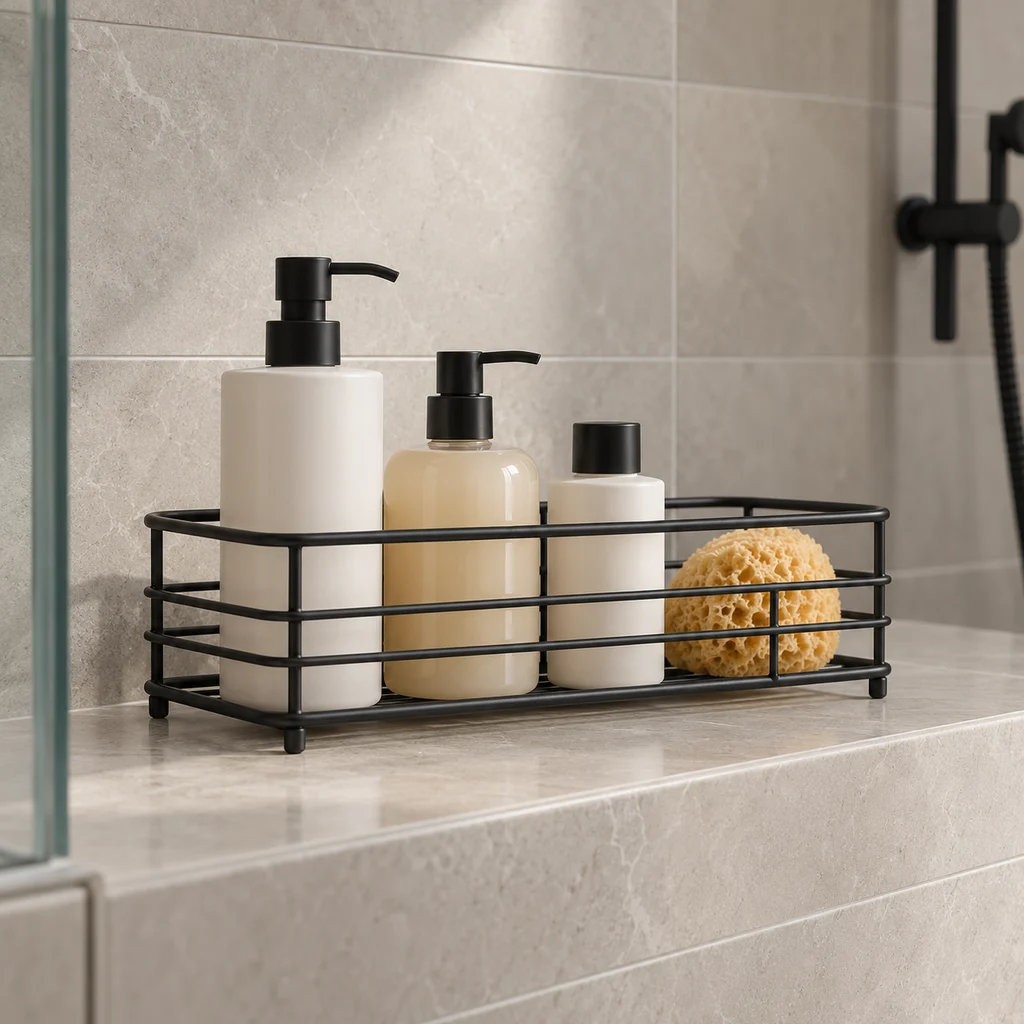
Shower caddy
What to check
Adhesive caddies need clean, dry, smooth tile to stick. Check the weight limit if you store large bottles.
-
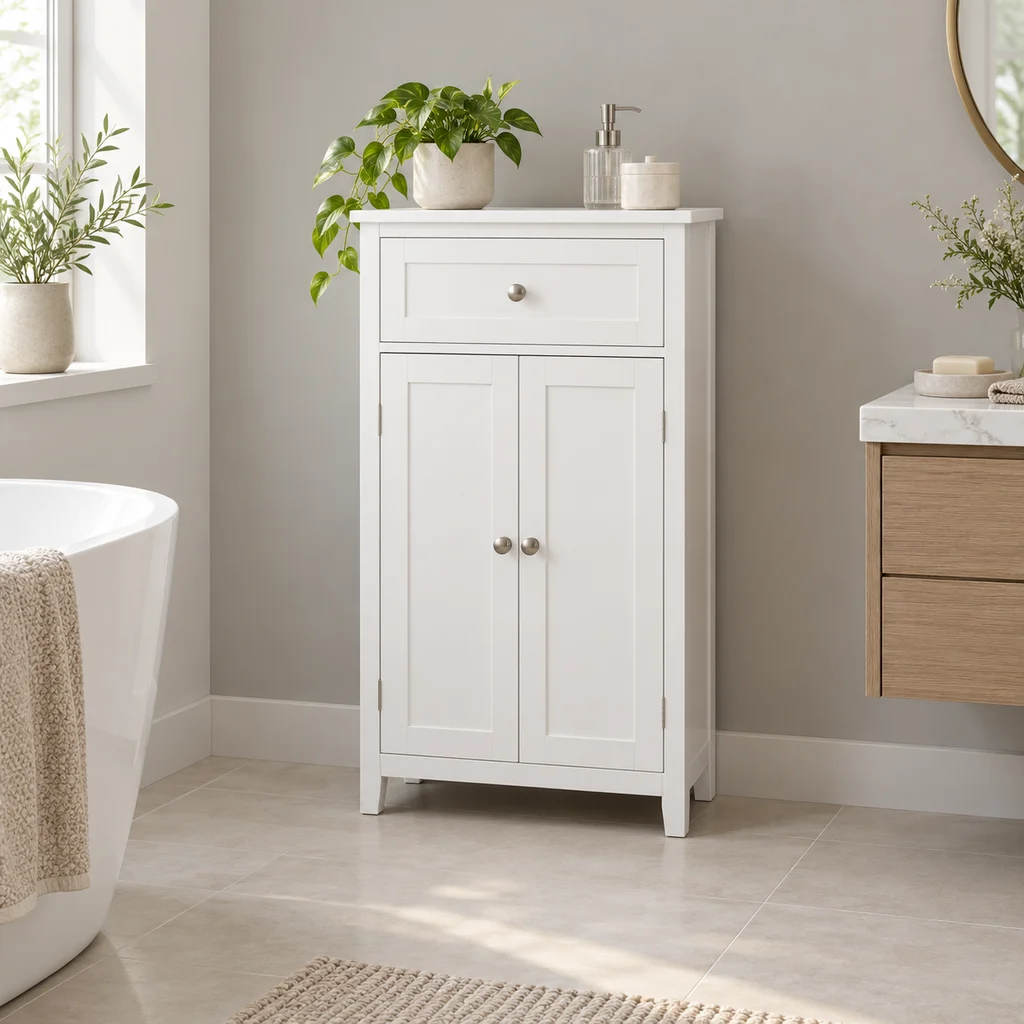
Bathroom cabinet
What to check
Measure the floor space and the door swing of the cabinet itself. Bathrooms are damp, so check the finish is moisture resistant.
-
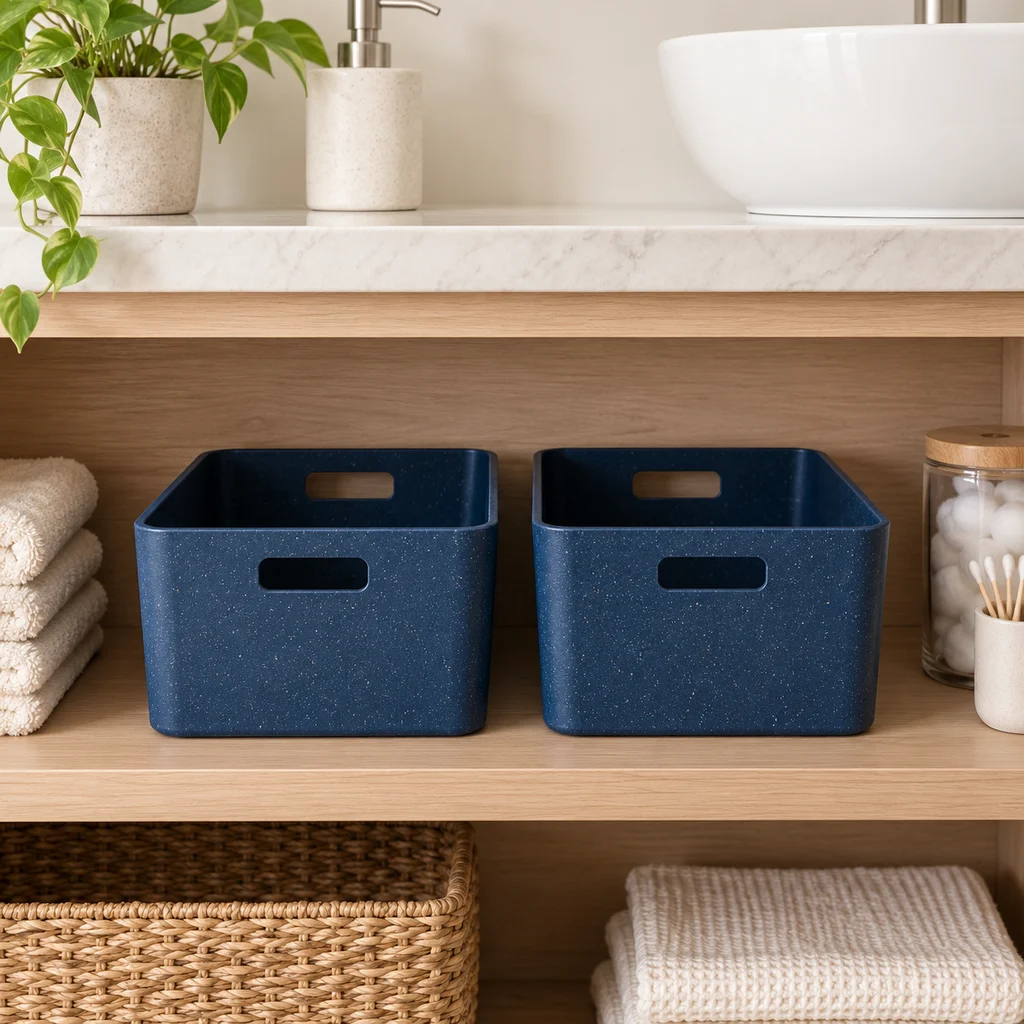
Storage bins
What to check
Measure the shelf or cabinet the bins will go in, including the height, before choosing a size.
-
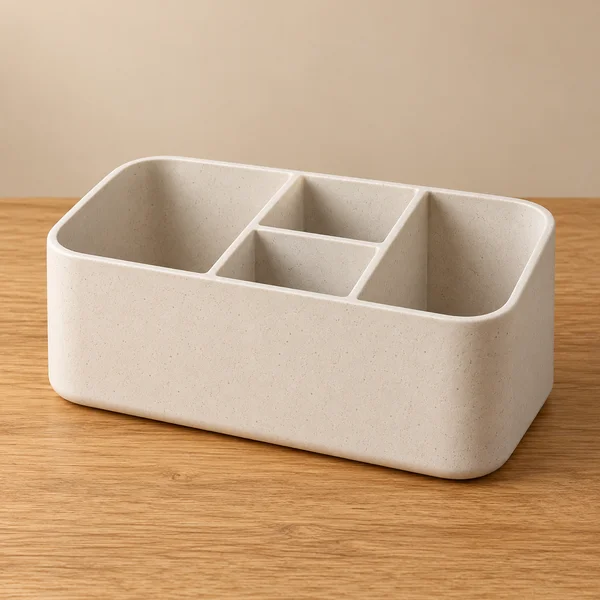
Bathroom countertop divided caddy
What to check
Clear plastic shows what is inside but also water marks. Check the compartment sizes against the bottles you use.
-
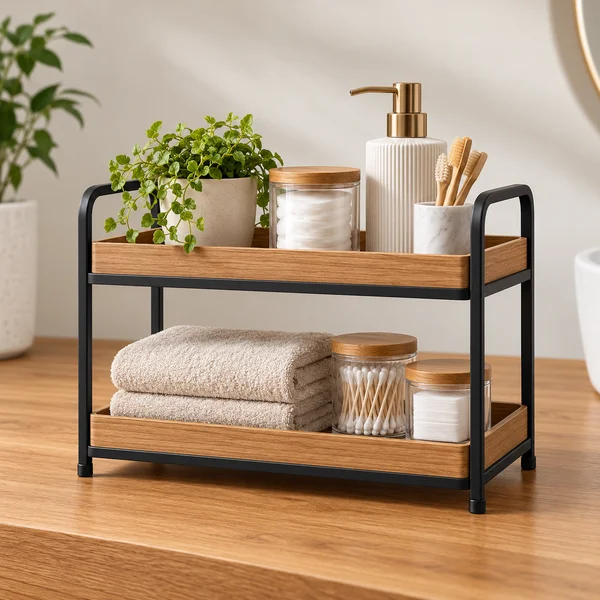
Two tier bathroom countertop shelf
What to check
Measure the counter depth and the height under any mirror or cabinet before choosing a tiered shelf.
-
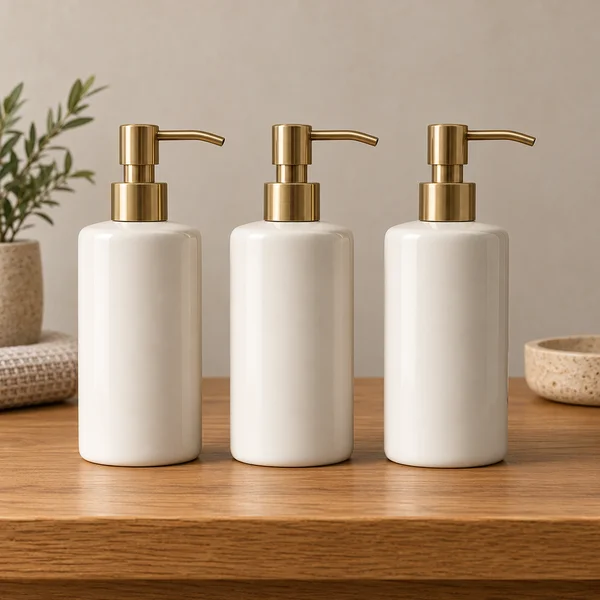
Bathroom refillable pump bottles
What to check
Check the pump suits thick shampoo and conditioner, and label the bottles so they are easy to tell apart.
Show all 16 pieces
-

Faux greenery stems
What to check
Faux stems gather dust. A quick shake or soft brush every few weeks keeps them looking fresh.
-
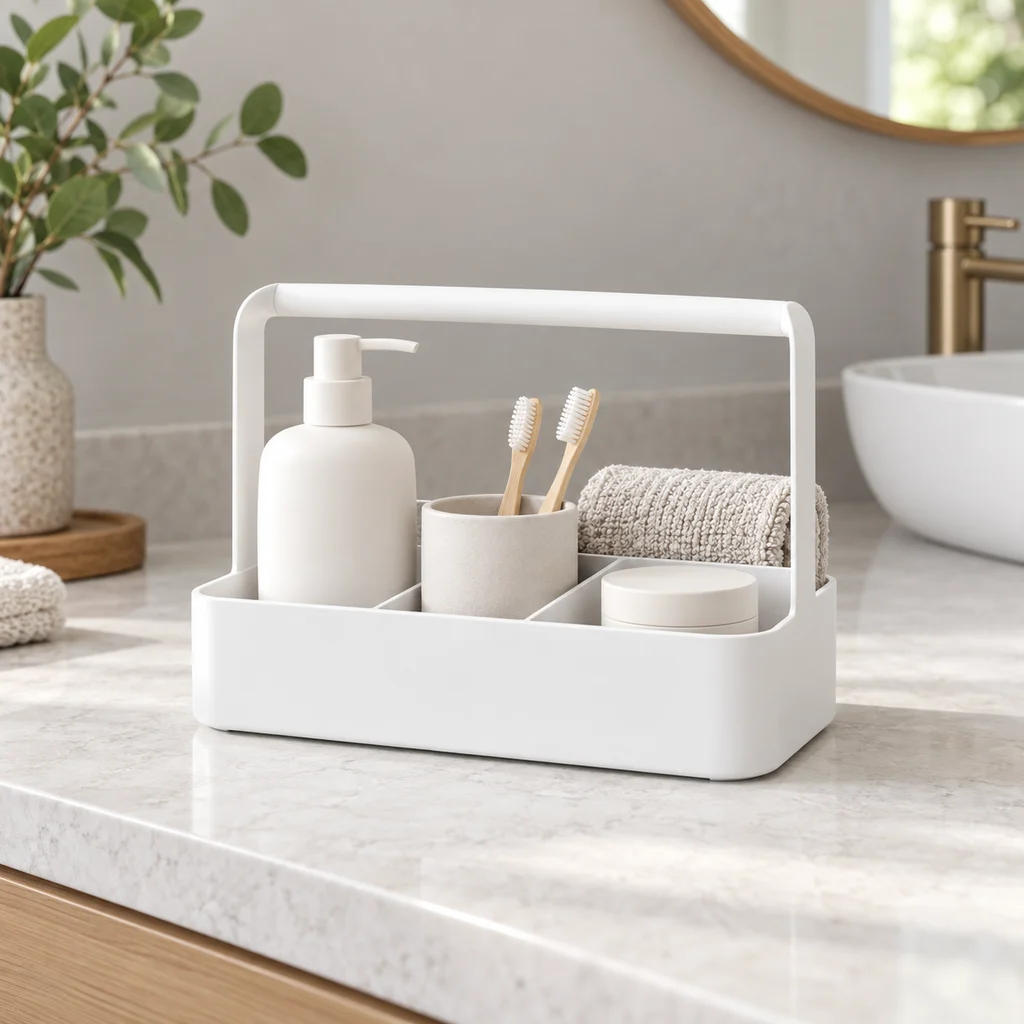
Bathroom caddy
What to check
A carry caddy works best when it holds one routine. Check the handle is comfortable and the base drains.
-
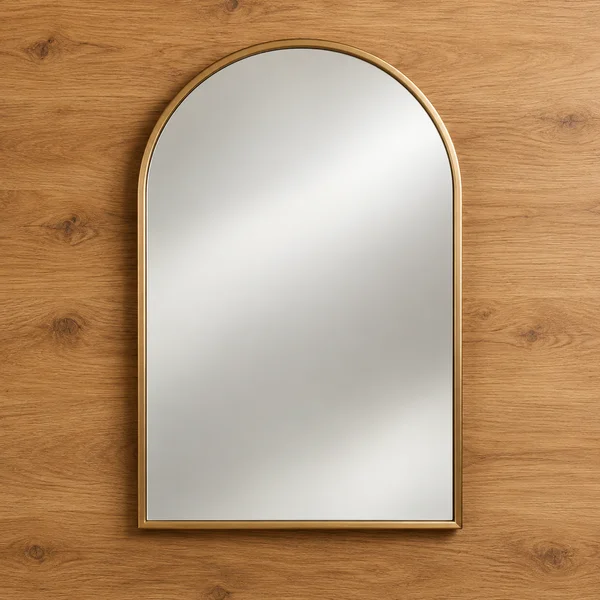
Bathroom vanity mirror
What to check
Measure the wall above the vanity, and centre the mirror on the basin rather than the wall.
-
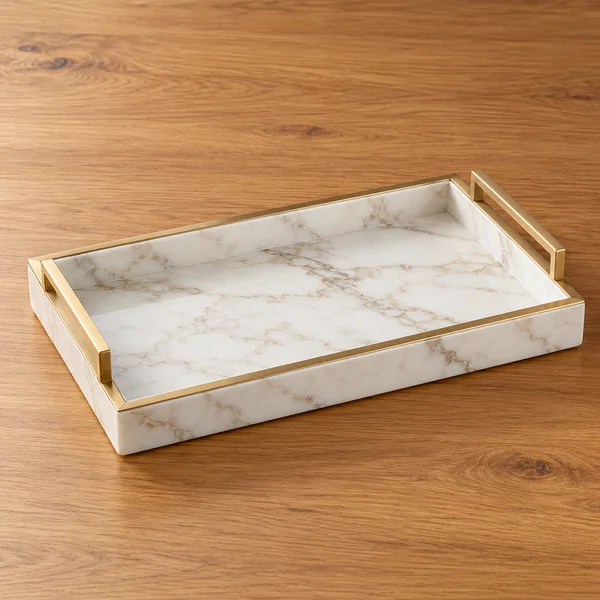
Bathroom vanity tray
What to check
Marble is heavy and cool to the touch. Wipe it dry often, as some soaps and oils can mark natural stone.
-
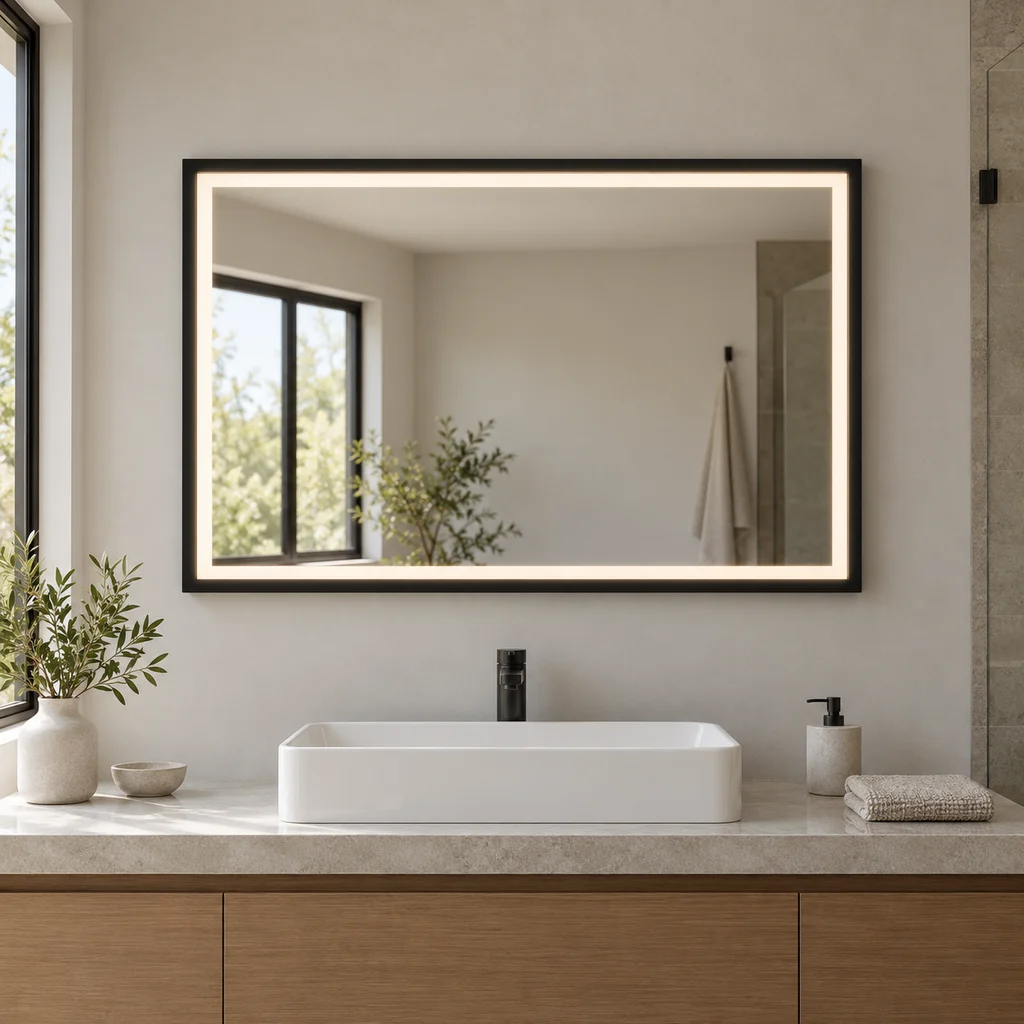
LED bathroom mirror
What to check
A lit mirror needs power at the wall. Check whether it plugs in or must be hardwired by an electrician before you buy.
-
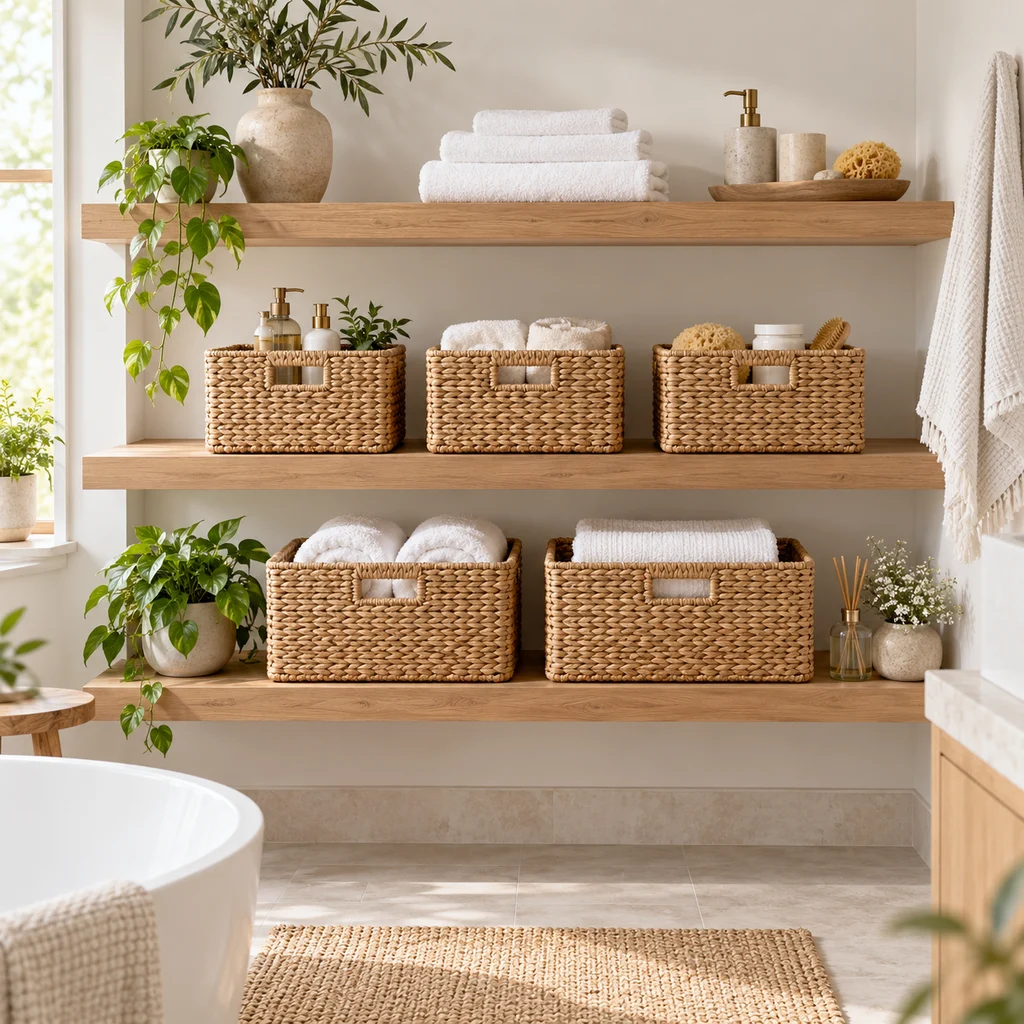
Storage baskets
What to check
Measure the shelf depth and height before buying baskets. Check whether the weave has a liner if you store fabric or small items.
-
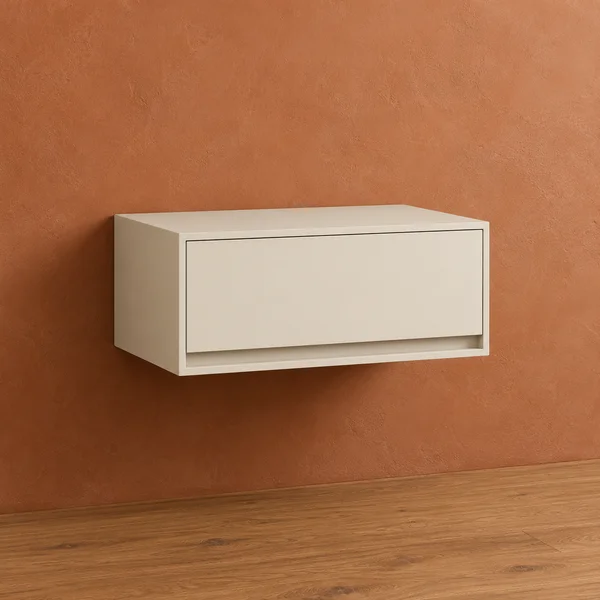
Wall mounted bedside drawer
What to check
Wall-mounted drawers need solid fixings and leave the floor clear. Mount them at a height you can reach from bed.
-
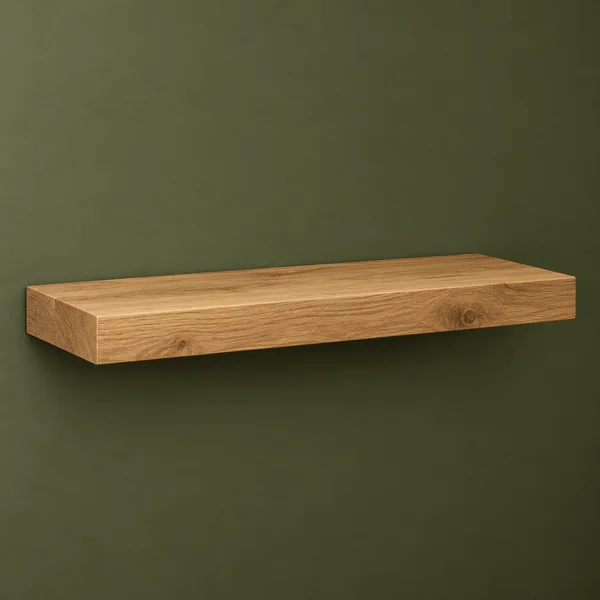
Wood floating wall shelf
What to check
Check the shelf depth and weight rating, and fix into studs or solid wall plugs.
The gallery
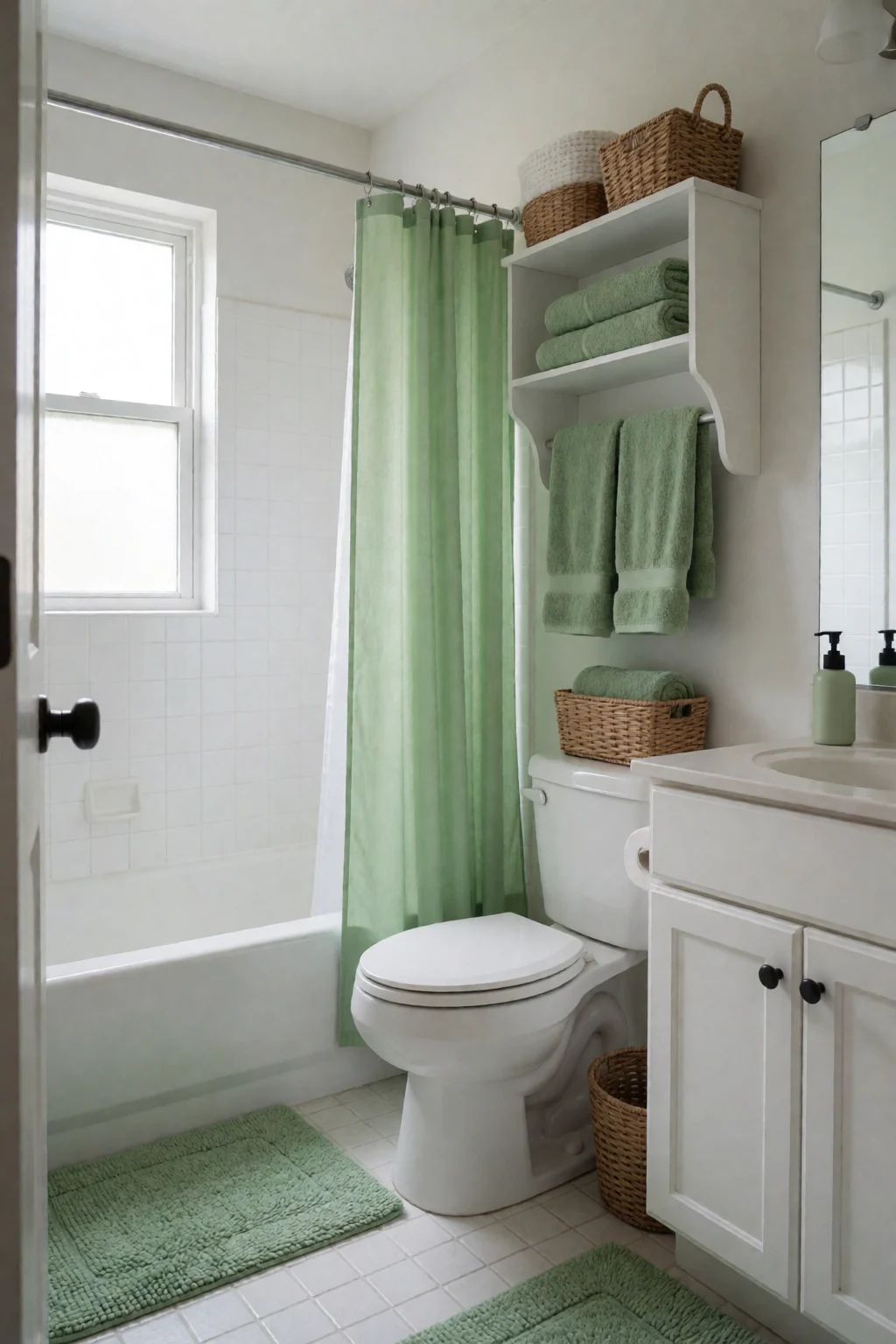
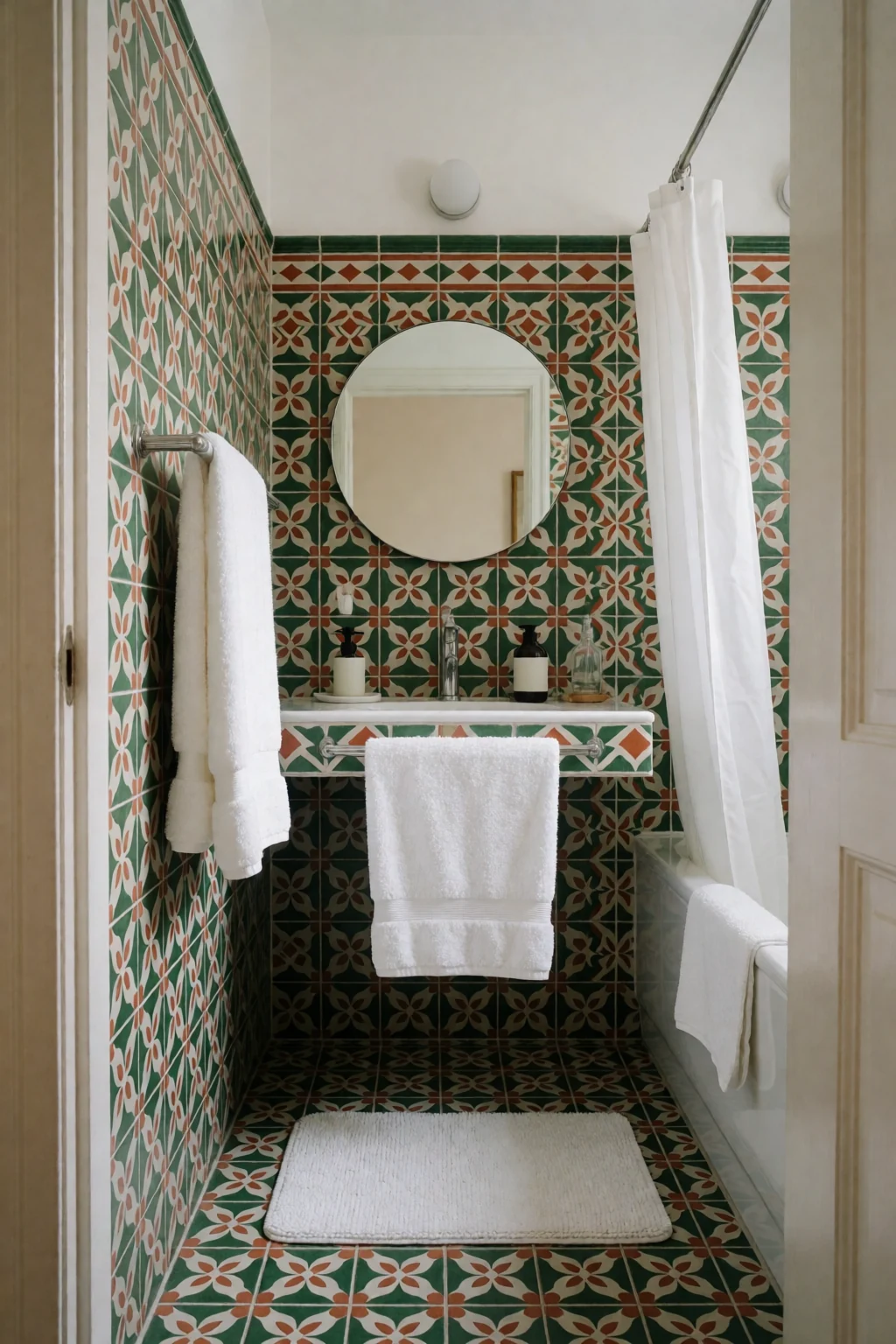
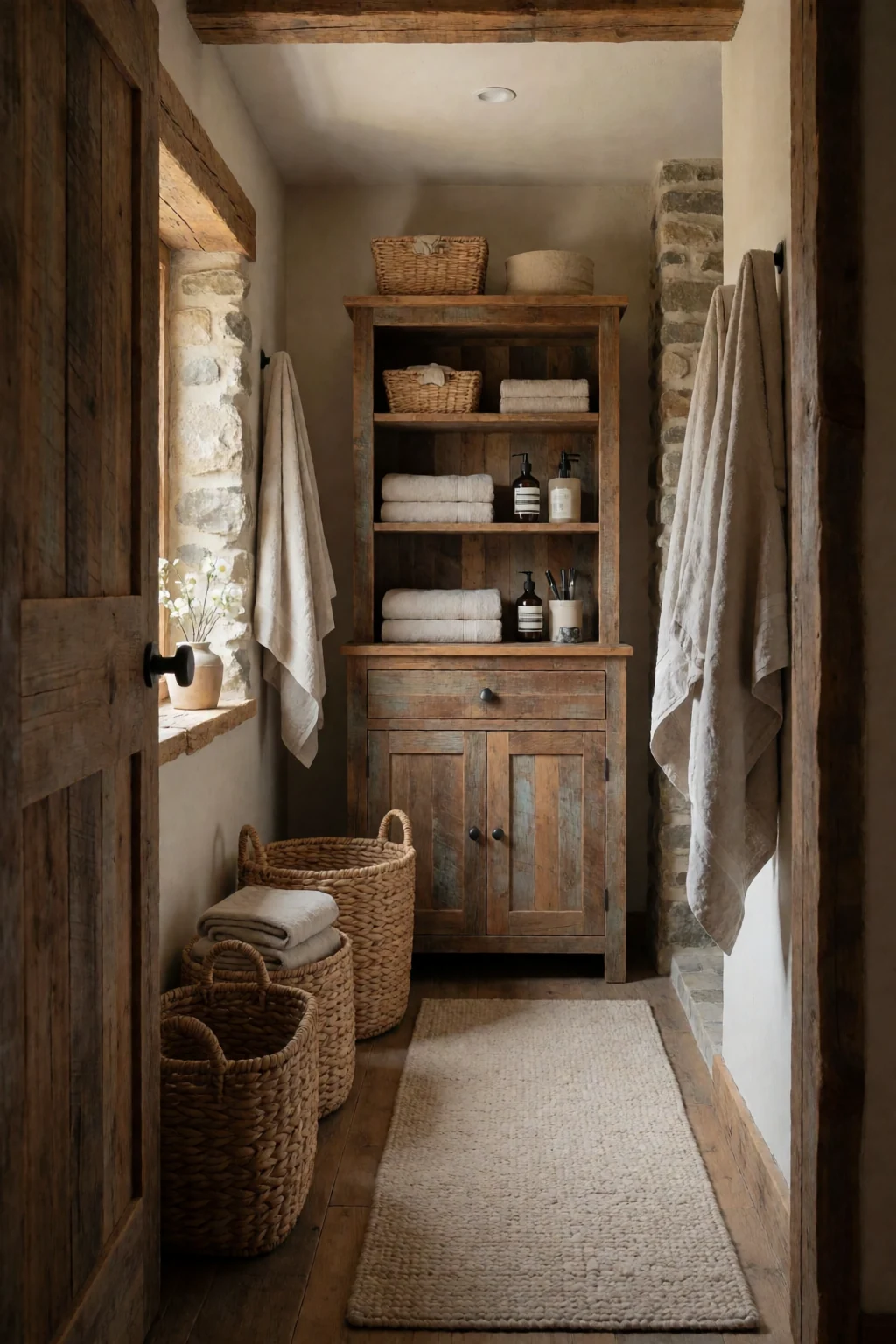
8 bathroom looks
Open a look to see its pieces.
Keep exploring
Related guides
 Bedroom
A bedroom is arranged around what you reach from bed, while a bathroom counter holds small daily products on a narrow surface by the sink.
 Work & gaming
A desk uses trays and shelves to manage electronics and cables; a bathroom counter uses them for toiletries.
 Living room
A living room is set up for people sharing and relaxing, while a counter serves one or two people's routines several times a day.
Questions
How do I organise a counter with no drawers?
Keep daily items on a two-tier shelf or in a divided caddy, and put spares in a basket under the sink or on a shelf above the mirror. A small wall-mounted shelf adds more room if you have the wall space.
What size tray should I get?
At least two inches shorter than the distance from the wall to the sink edge, so it neither hangs over the counter nor blocks the tap.
Open or closed storage on the counter?
Open trays and caddies are quicker for daily routines. Closed boxes hide clutter but add a step every time. Most people do best with open storage on the counter and closed storage in the cupboards.
How do I make the counter look less cluttered?
Group things so you see one tray instead of ten products, decant liquids into matching pumps, move anything not used daily into a drawer, and keep the middle clear.