Room ideas / Bathroom
How to organise bathroom drawers so they stay tidy
A bathroom drawer stays usable when you can reach your toothbrush and cleanser without lifting anything else, spares wait out of the way, and tweezers and hair ties stop disappearing into the back corners.
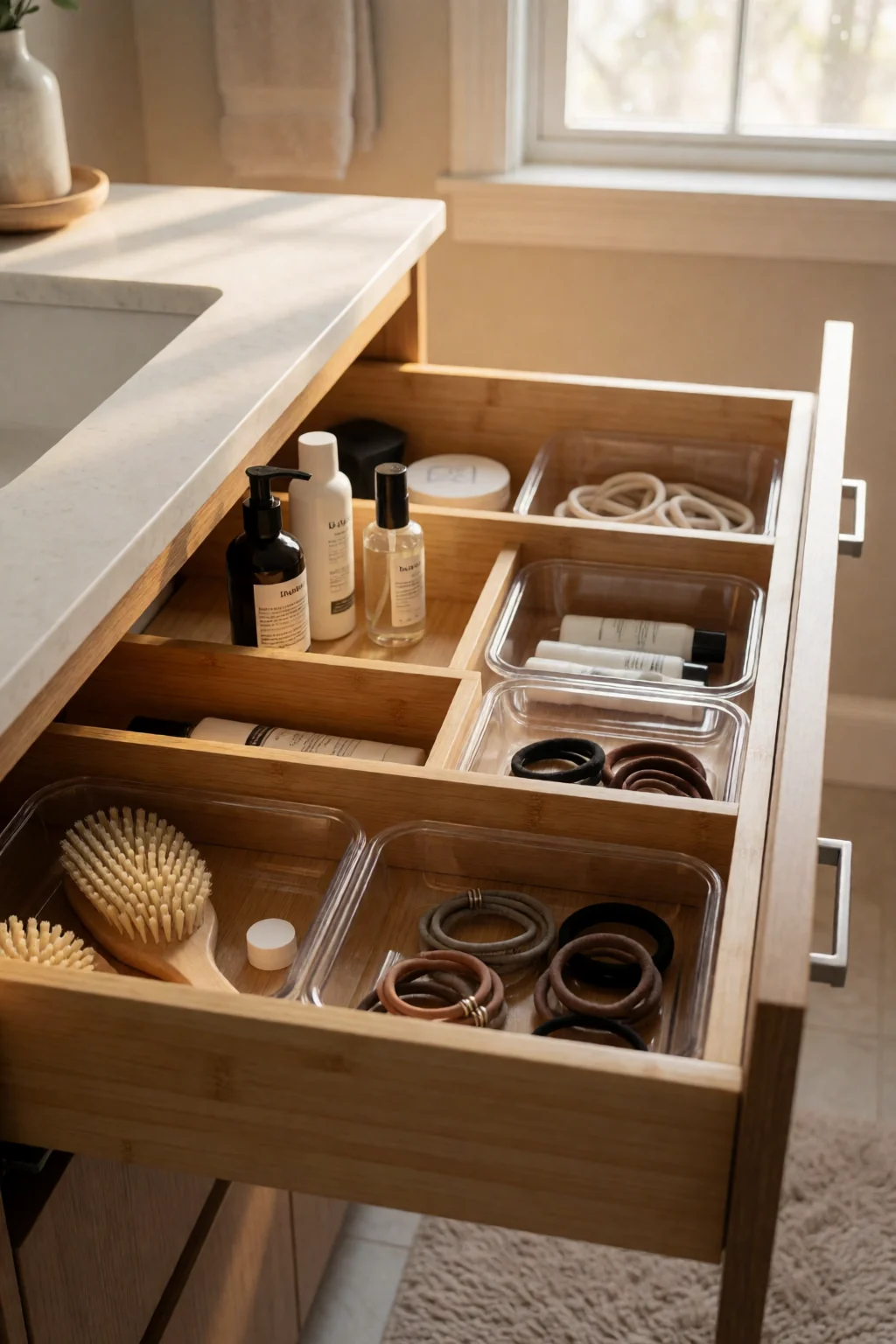
Three rules inside the drawer
- Keep daily items in the front third of the top drawer, and spares at the back or in a lower drawer.
- Use shallow dividers or interlocking bins sized to the drawer, so nothing slides, tips or jams the runners.
- Stand tall bottles in deeper bins and keep shallow trays for flat things like tweezers, nail clippers and hair ties.
Sorting by how often you reach
Bathroom drawers work best sorted by how often you use things. Daily items go in the top drawer, at the front where your hand lands first. Spare stock goes further back or lower down, and small tools get their own compartments so they do not mix. Every category has a physical edge.
A drawer looks organised when the sections are visible and the trays are shallow. Acrylic or bamboo inserts keep tubes upright and stop bottles rolling when the drawer opens. Everything wipes clean, and you never dig under half-empty lotions to find the contact lens solution or razor.
Bathroom drawers differ from kitchen or desk drawers because they hold liquids and wet tools. That makes wipeable plastic, metal or sealed wood the right materials.
Five drawer layouts
- Three shallow trays
- Three acrylic trays in the top drawer: one for teeth and skincare in the morning, one for daily makeup, and one at the back for spare toothpaste. The things you use most stay in view and stop drifting backwards.
- Bamboo dividers for tools
- Adjustable bamboo dividers across a wide drawer make long channels for brushes and combs, with small sections for tweezers, hair grips and small scissors. Sealed bamboo copes with damp hands.
- Stacking bins for spares
- Travel shampoos and spare bars of soap in clear stacking bins in a lower drawer, the least used underneath. You can see what you have and stop buying duplicates.
- Silicone mat for makeup
- A ridged silicone mat on the drawer base stops compacts and lipsticks sliding every time it opens. A couple of upright acrylic holders keep eyeliners and mascaras standing.
- Deep basket for the hair dryer
- A compact hair dryer and its attachments in a deep wire basket at the back of a lower drawer, the cord coiled loosely with a silicone band so it does not catch on the runners.
Depth, damp, weight and expiry dates
- Drawer depth and the pipes
- Measure the inside height, width and depth of each drawer before buying anything. Many bins are too tall for shallow vanity drawers and stop them closing. Check where the sink trap sits, as it often limits how far a top drawer comes out.
- Spills and damp
- Wet hands and leaking bottles are normal in a bathroom. Choose acrylic, stainless steel or sealed bamboo that wipes clean. Cardboard and fabric organisers soak up water and can go mouldy.
- Weight on the runners
- Glass perfume bottles and big refills strain the runners if they all sit in one corner. Keep heavy things toward the back or centre and lighter things like cotton pads at the front.
- Expiry dates
- Check the dates on sunscreen, acne treatments and liquid makeup before giving them a permanent spot. Keep only the spares you will use in the next few months; old samples and duplicates fill a drawer fast.
Empty, sort, measure, refill
Empty every drawer onto a towel on the counter. Wipe the insides with a mild detergent and dry them. Sort everything into three piles: things you touch every morning and night, spares like unopened toothpaste and soap, and small loose items like tweezers, hair ties and floss picks. Throw away anything expired, empty or never going to be used.
Measure each drawer and choose trays or dividers to fit your three piles. Daily things go in shallow trays at the front of the top drawer, spares behind them or in a lower drawer in clear bins, and small items in narrow compartments or on a silicone mat. Open and close each drawer before you refill it completely, to check nothing catches.
Shop the pieces
16 bathroom pieces
Links open similar items, not the pictured ones.
-
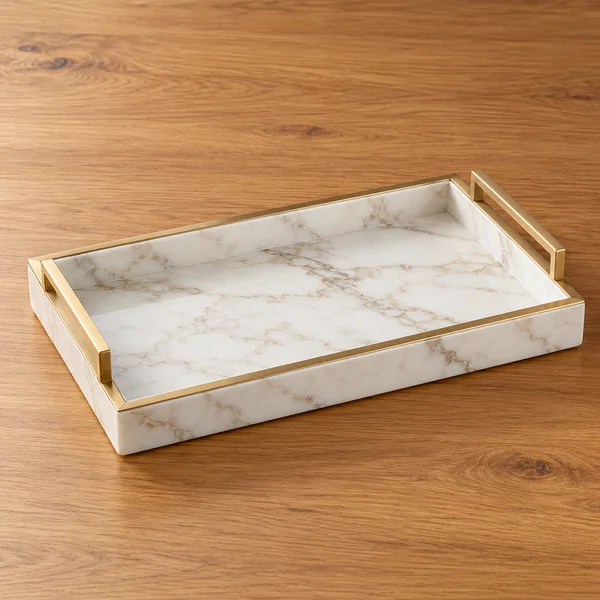
Bathroom vanity tray
What to check
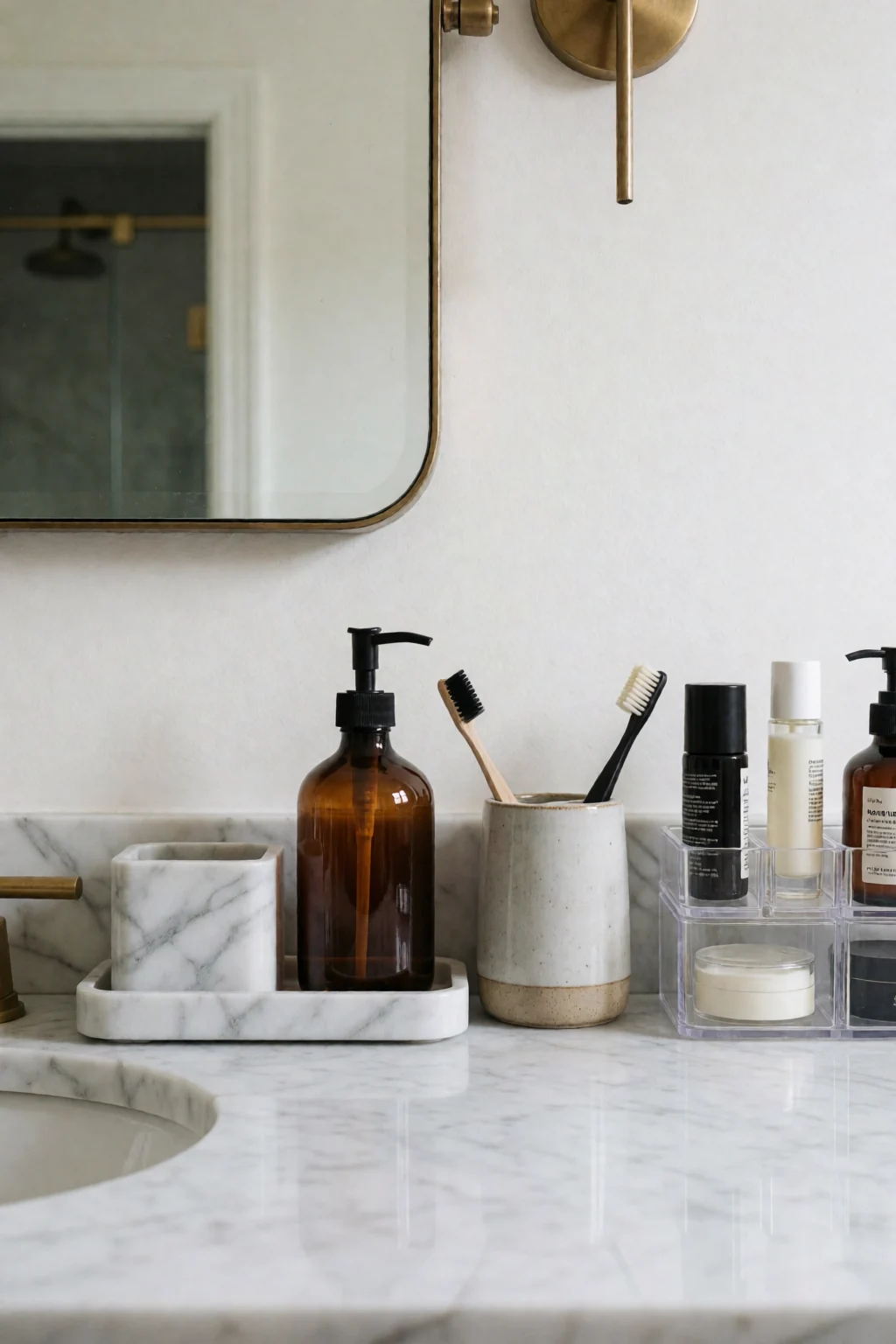
Marble is heavy and cool to the touch. Wipe it dry often, as some soaps and oils can mark natural stone.
-
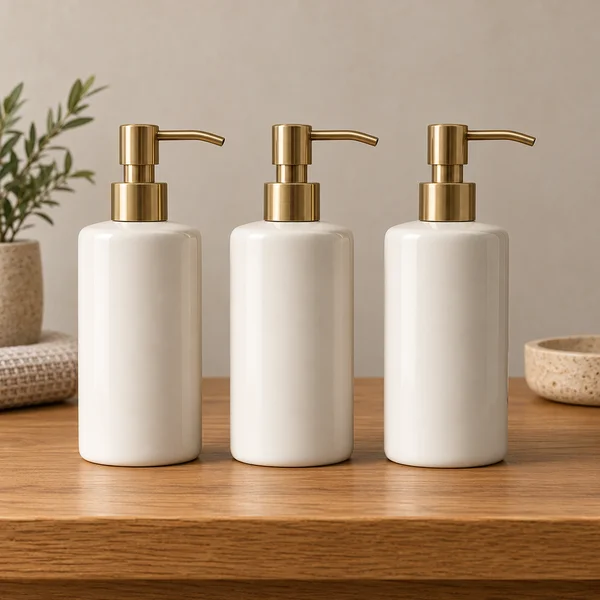
Bathroom refillable pump bottles
What to check
Check the pump suits thick shampoo and conditioner, and label the bottles so they are easy to tell apart.
-
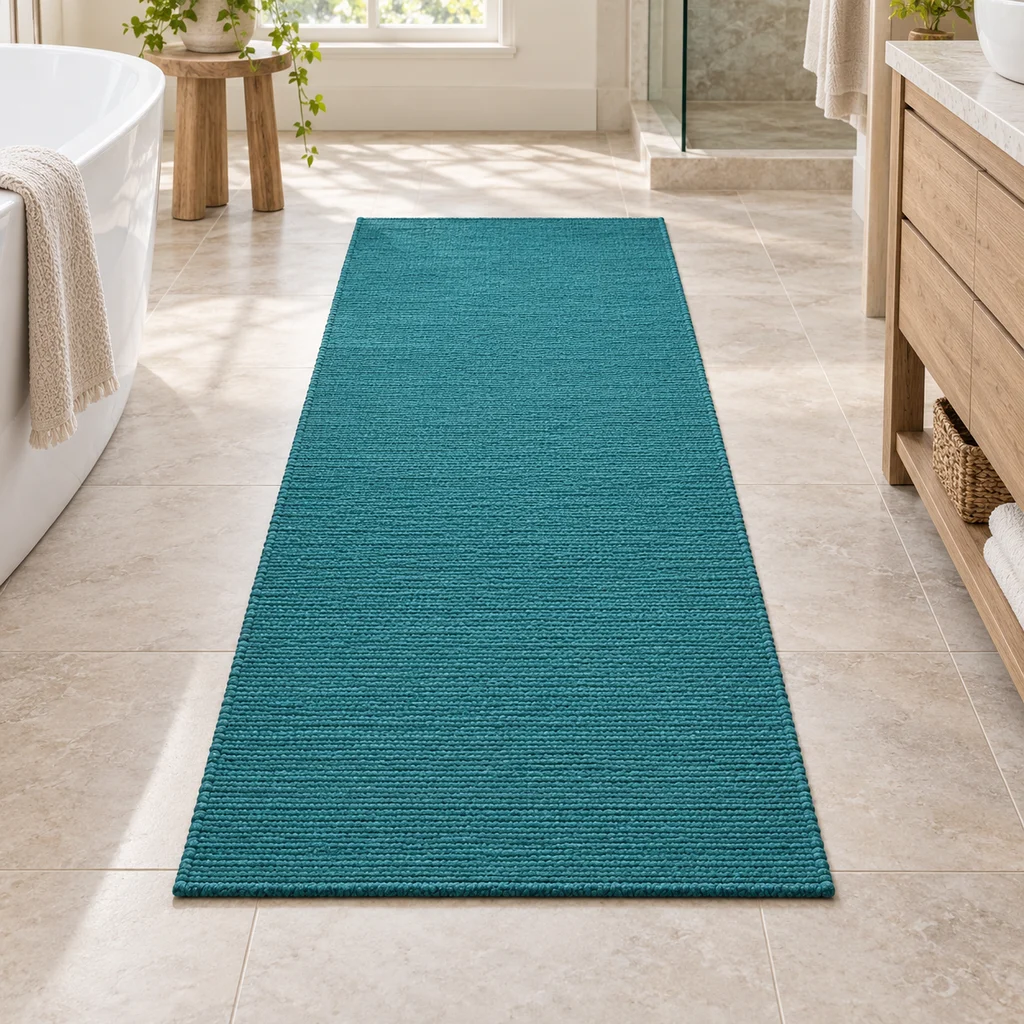
Bathroom runner
What to check
Measure the floor in front of the bath or vanity. A runner should stop short of the door so it does not catch.
-
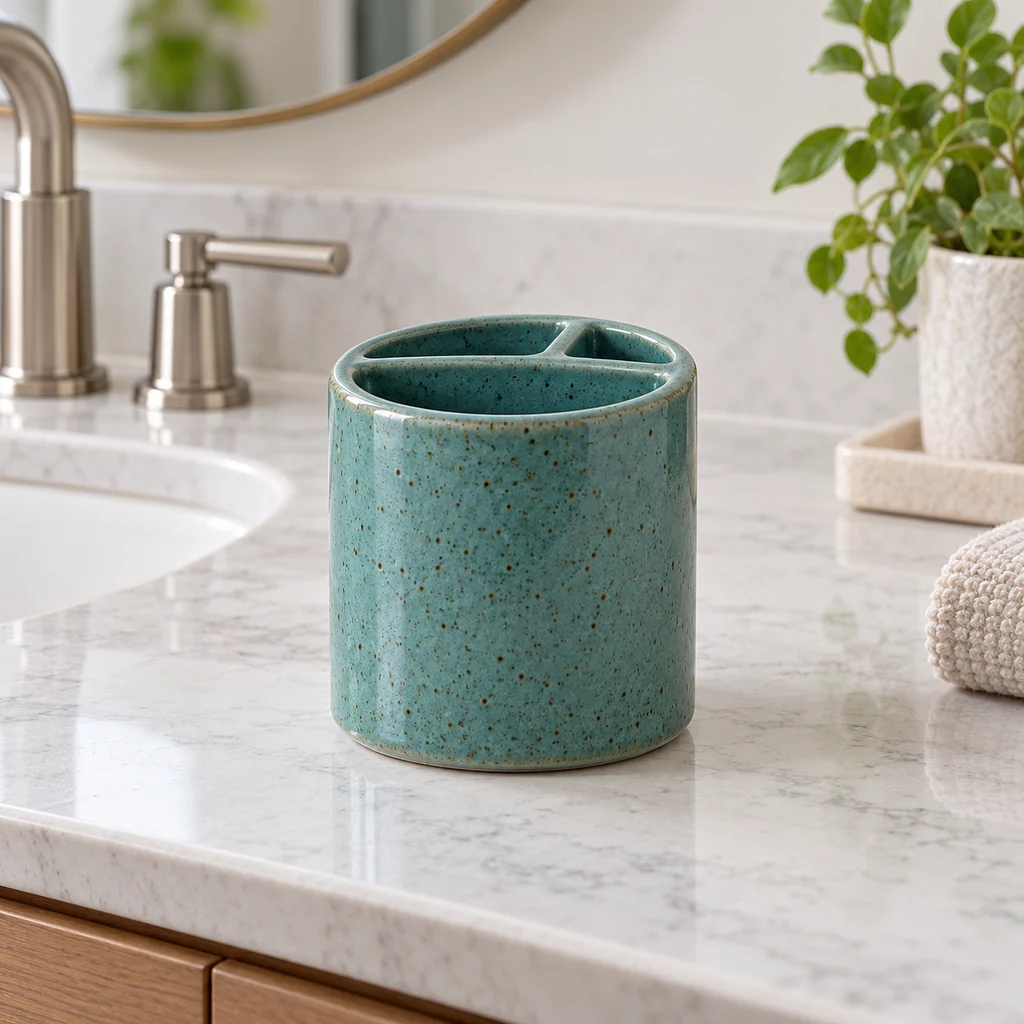
Ceramic toothbrush holder
What to check
Ceramic holders collect water at the bottom. Choose one with drainage or plan to rinse it every few days.
-
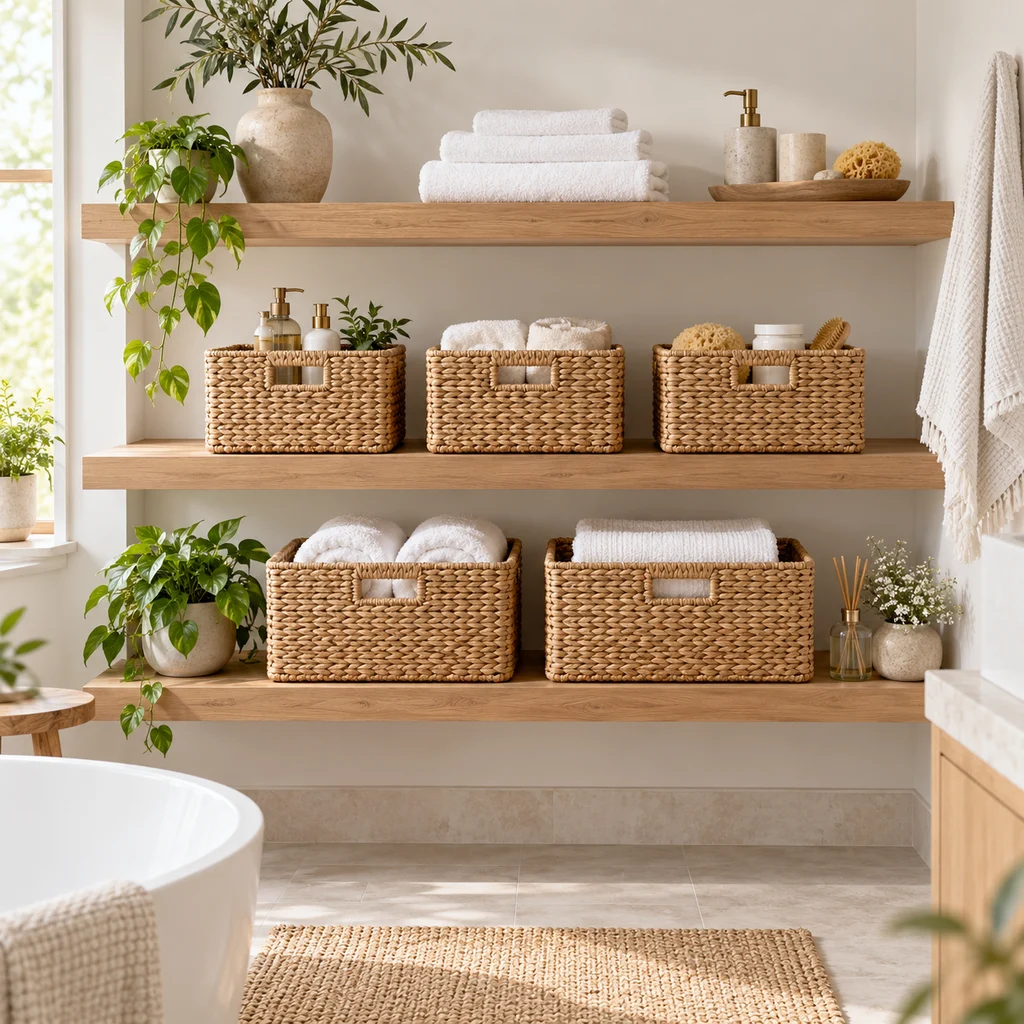
Storage baskets
What to check
Measure the shelf depth and height before buying baskets. Check whether the weave has a liner if you store fabric or small items.
-
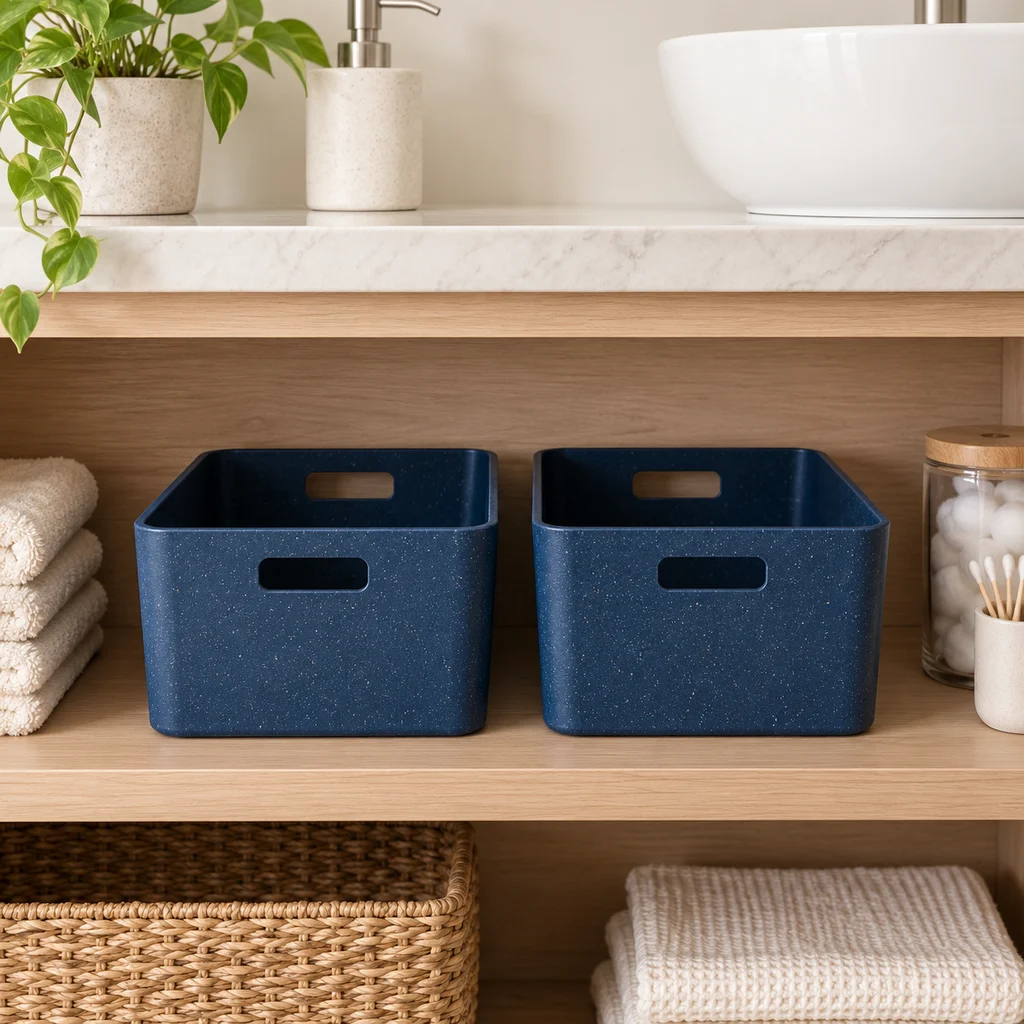
Storage bins
What to check
Measure the shelf or cabinet the bins will go in, including the height, before choosing a size.
-
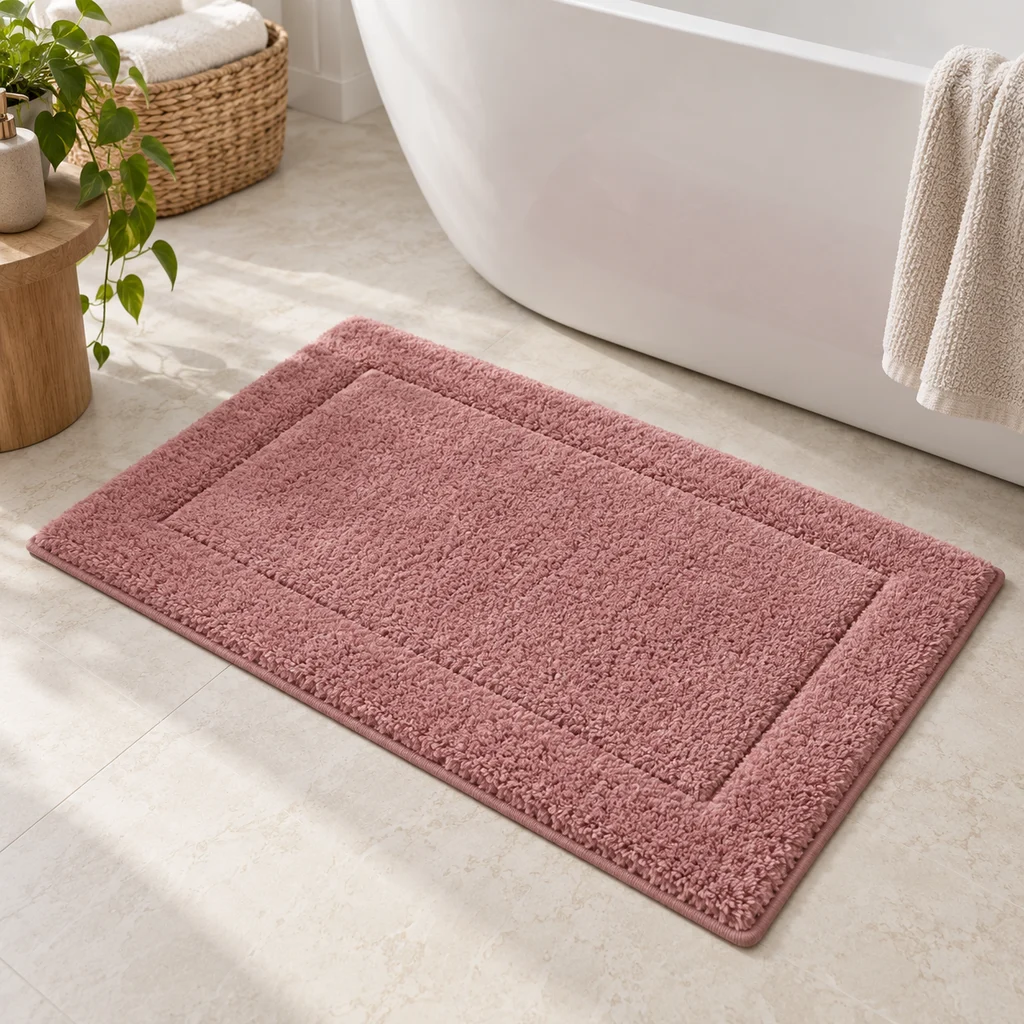
Bath mat
What to check
Check the backing is non-slip on your floor, and that the mat can be machine washed and dried.
-
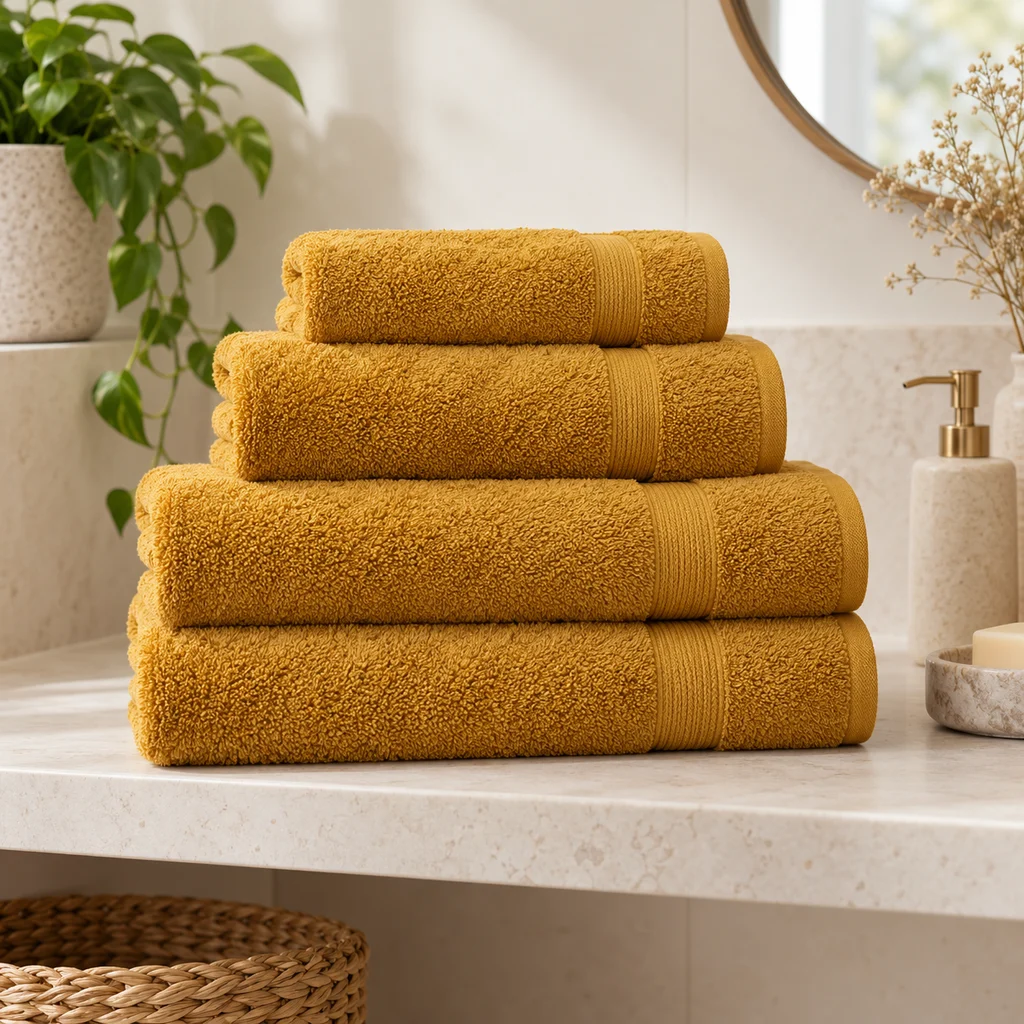
Bath towels
What to check
Check the size: bath sheets are larger than standard towels and take longer to dry in a small, damp bathroom.
Show all 16 pieces
-
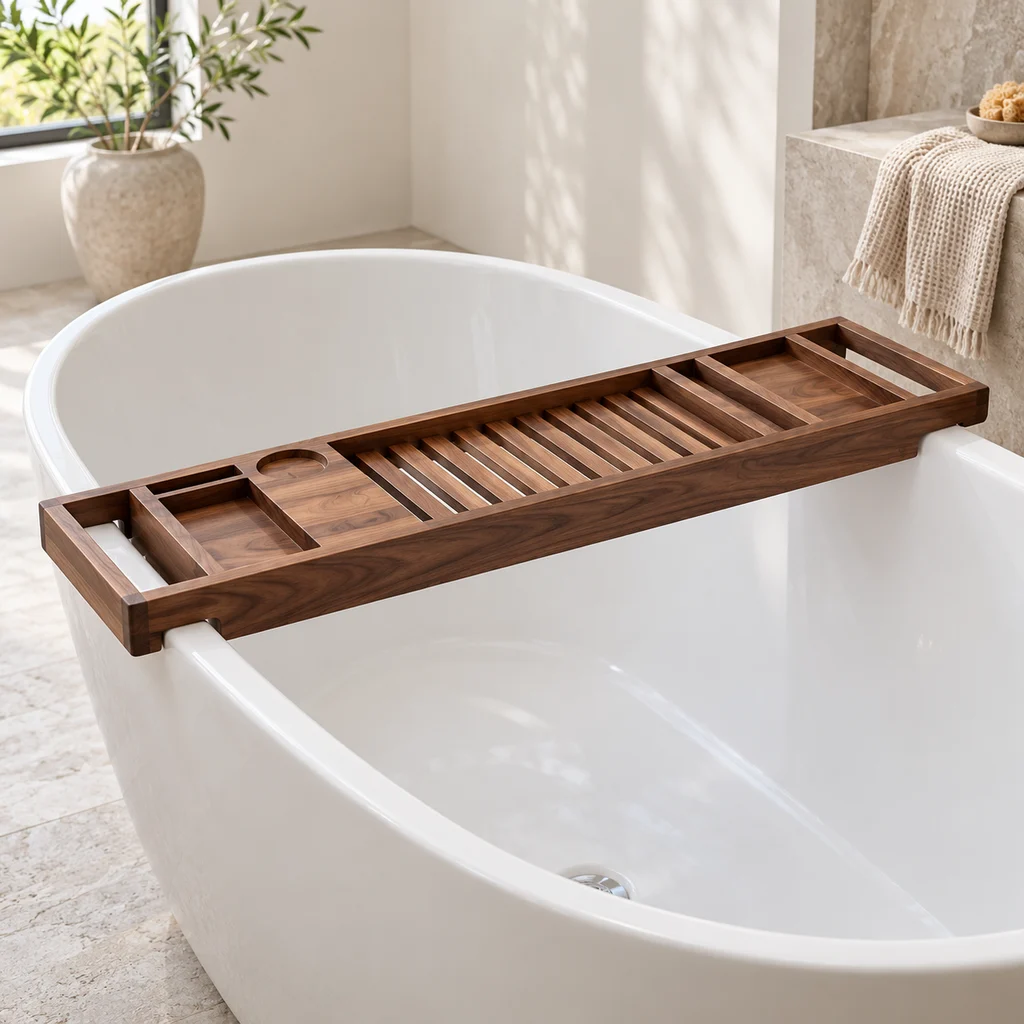
Bathtub tray
What to check
Measure the width of your bath at the rim. The tray must rest on both sides with some overlap.
-
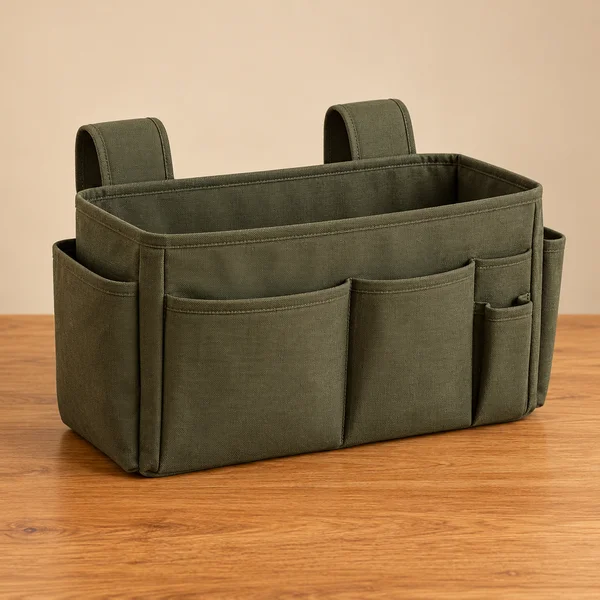
Bedside storage basket
What to check
Measure the gap between the mattress and the wall or frame. A bedside caddy needs a firm mattress edge to tuck under.
-
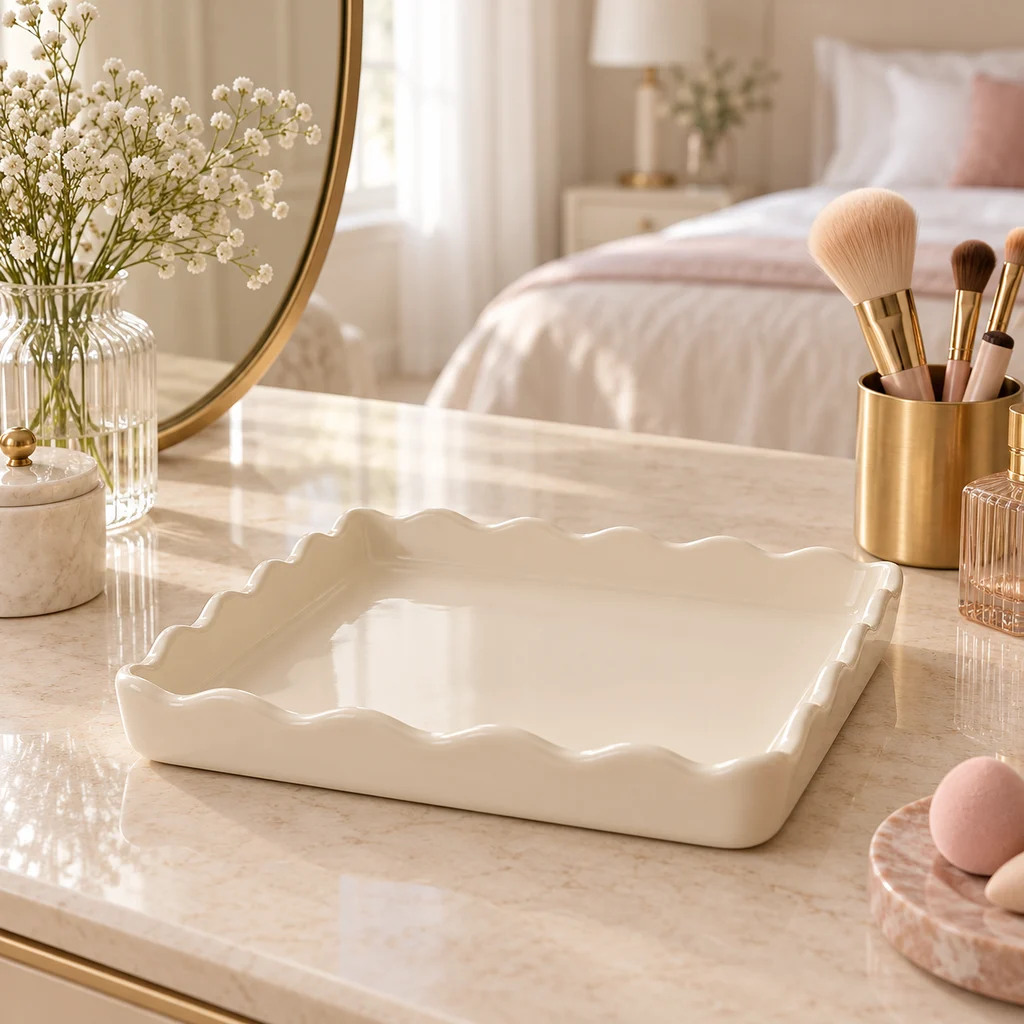
Ceramic makeup tray
What to check
A small tray only holds a few daily things. Measure the space on your vanity and choose a tray you can lift off to wipe underneath.
-
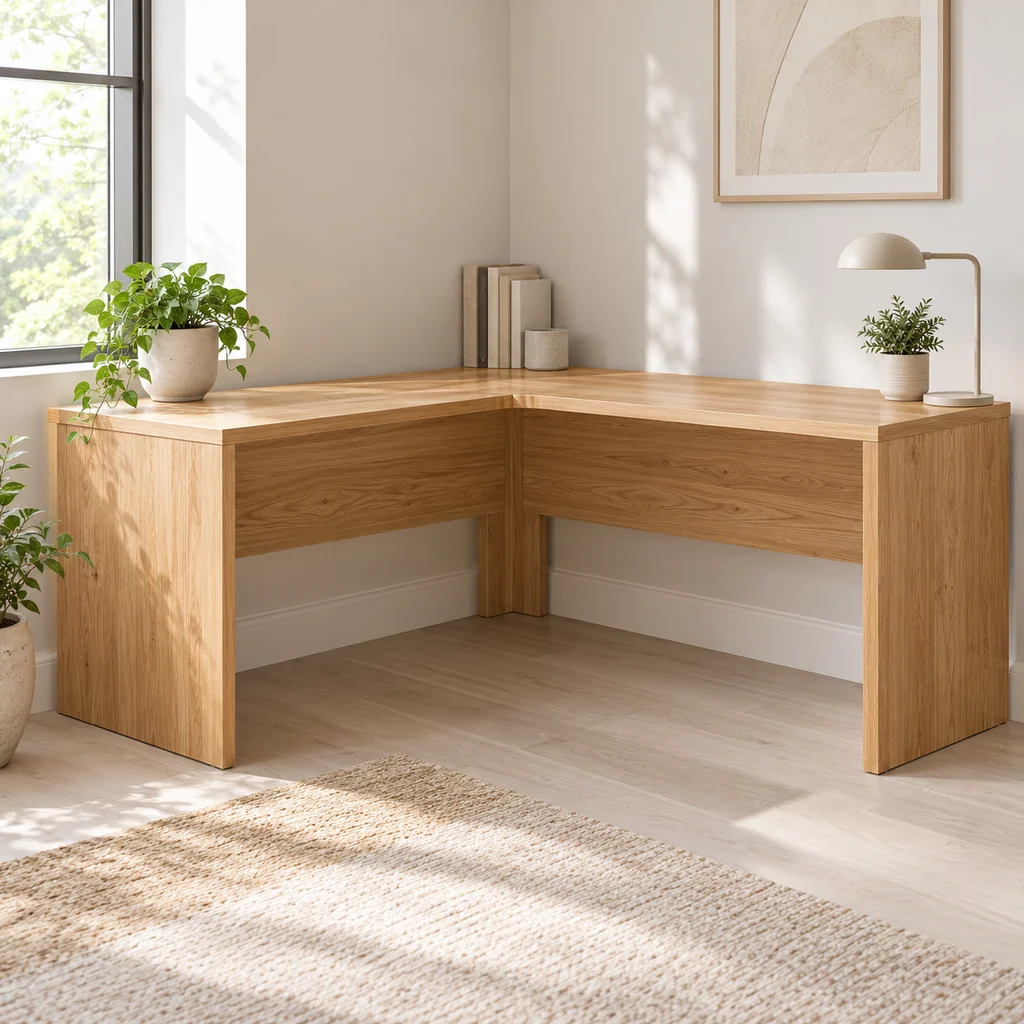
Corner desk
What to check
Measure both walls and the diagonal path into the room. Large L desks often arrive in heavy flat-pack boxes.
-
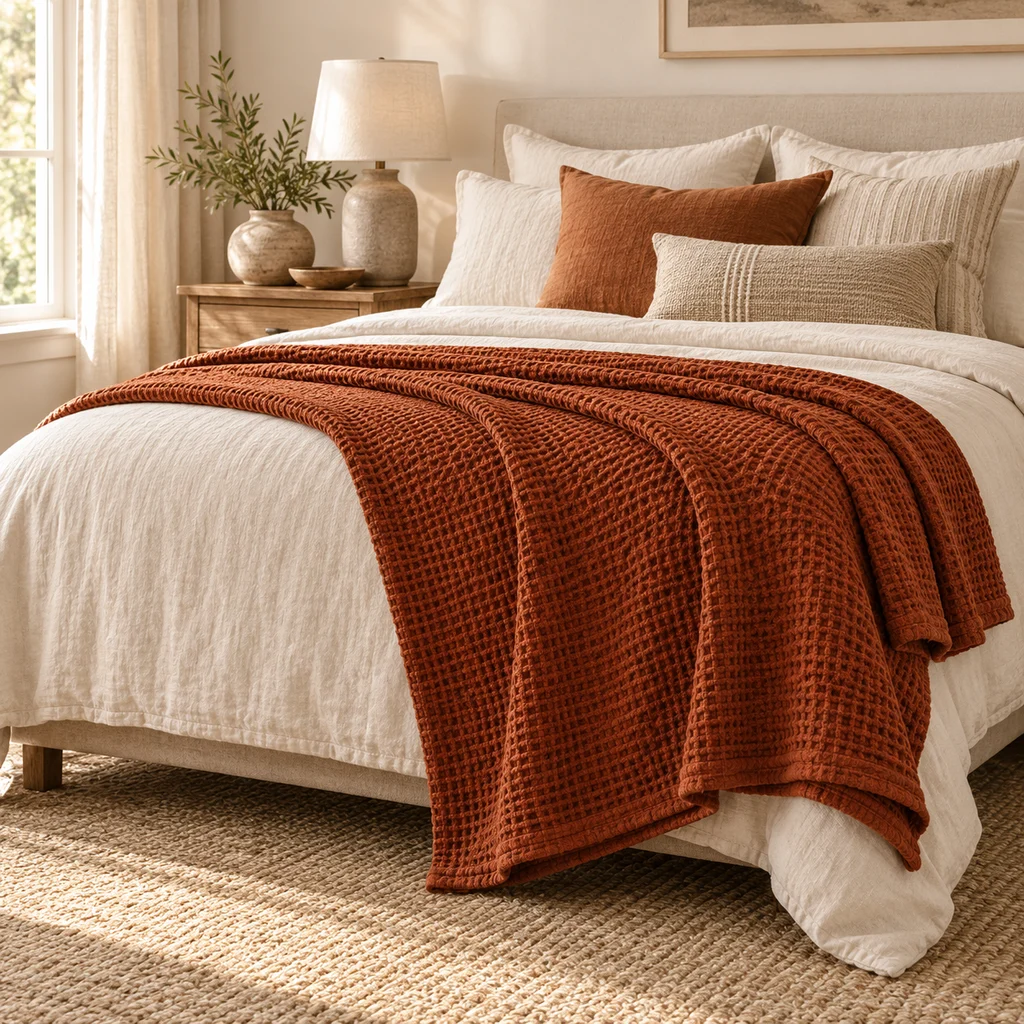
Cotton throw
What to check
Check the throw size against the bed or sofa it will sit on. A small throw reads as an accent; a larger one can cover your lap and feet.
-
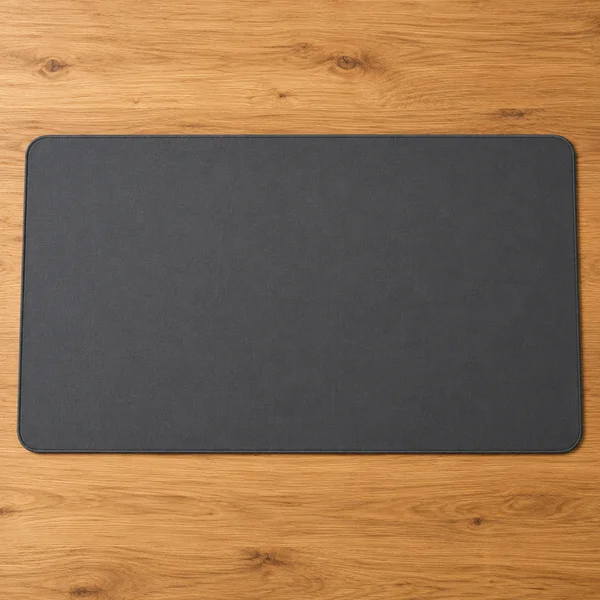
Desk mat
What to check
Measure the space your keyboard and mouse sweep across. A mat that stops short of the mouse is the most common mistake.
-
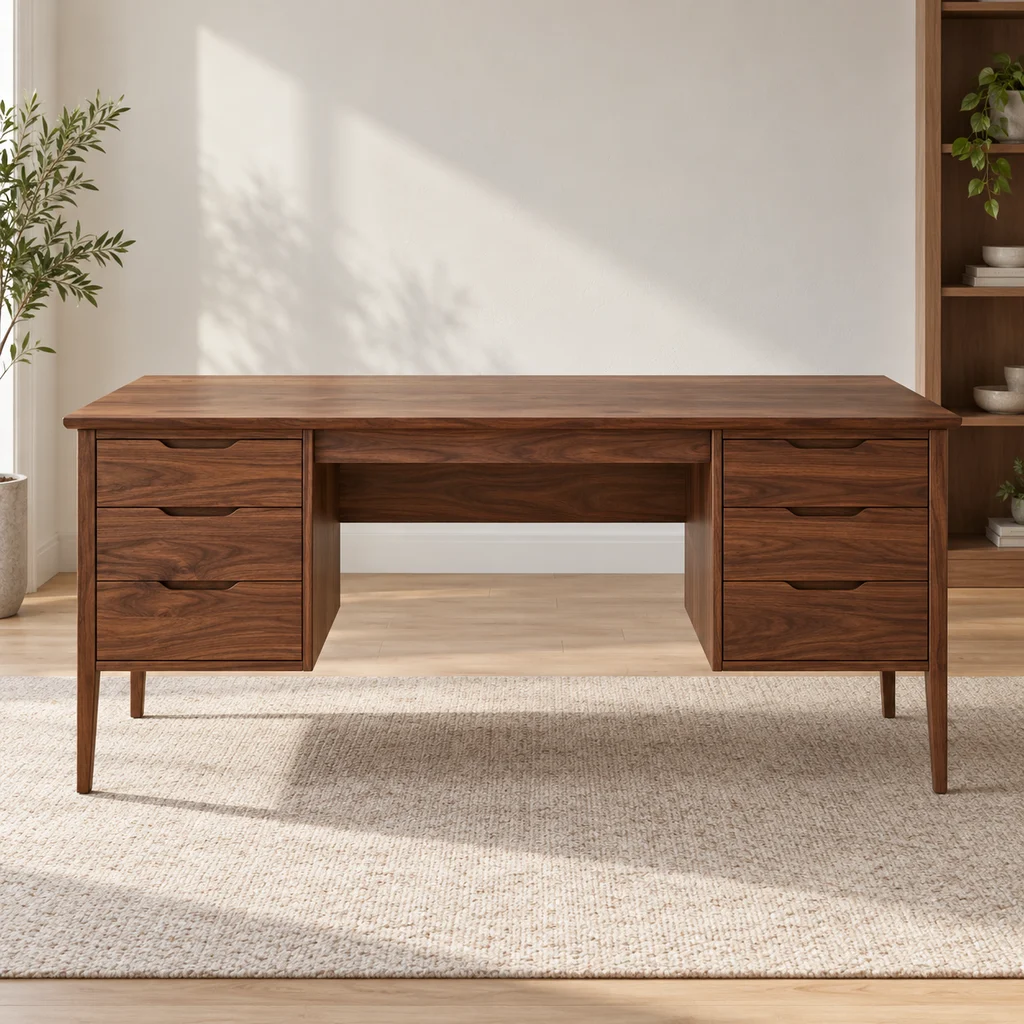
Drawer desk
What to check
Check the desk depth. A monitor needs about an arm's length from your eyes, which a very shallow desk cannot give.
-
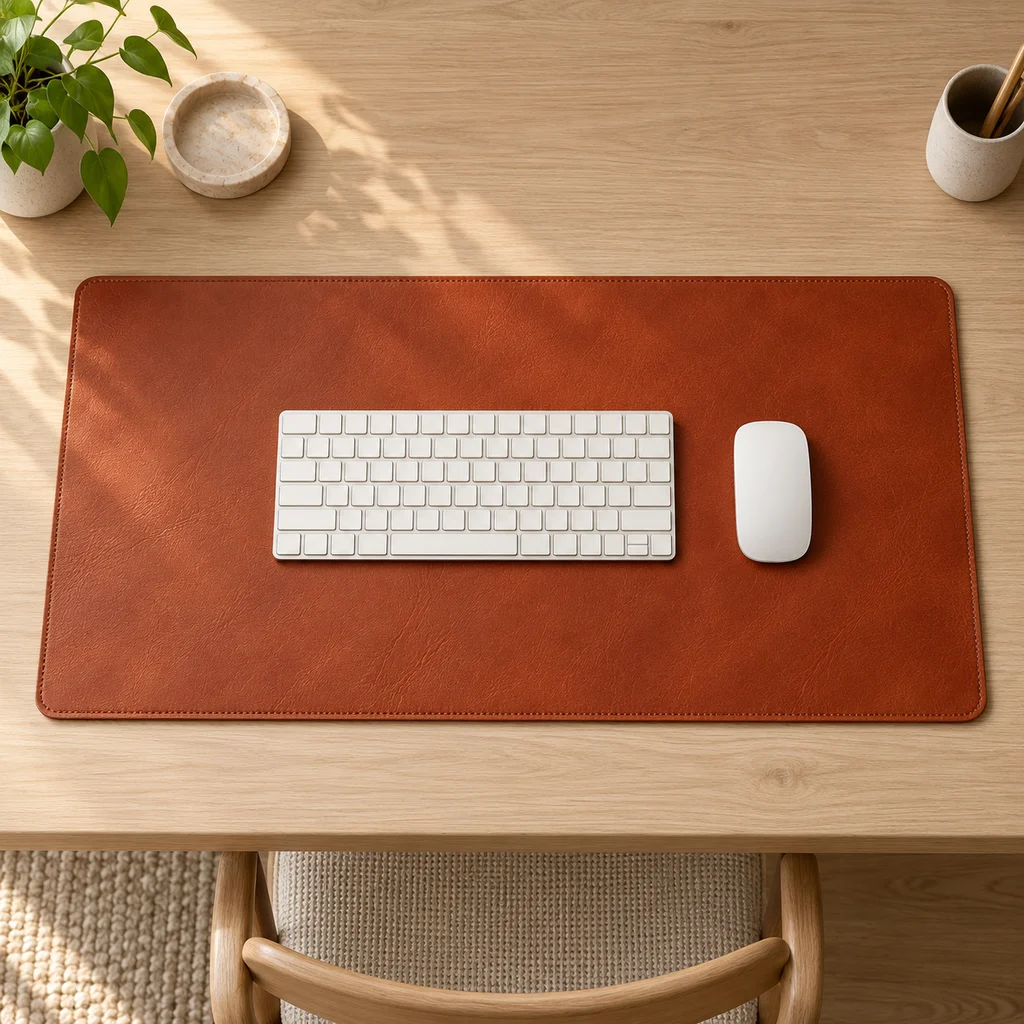
Leather desk mat
What to check
Measure your desk width and depth. A mat should cover the keyboard and mouse area without hanging over the front edge.
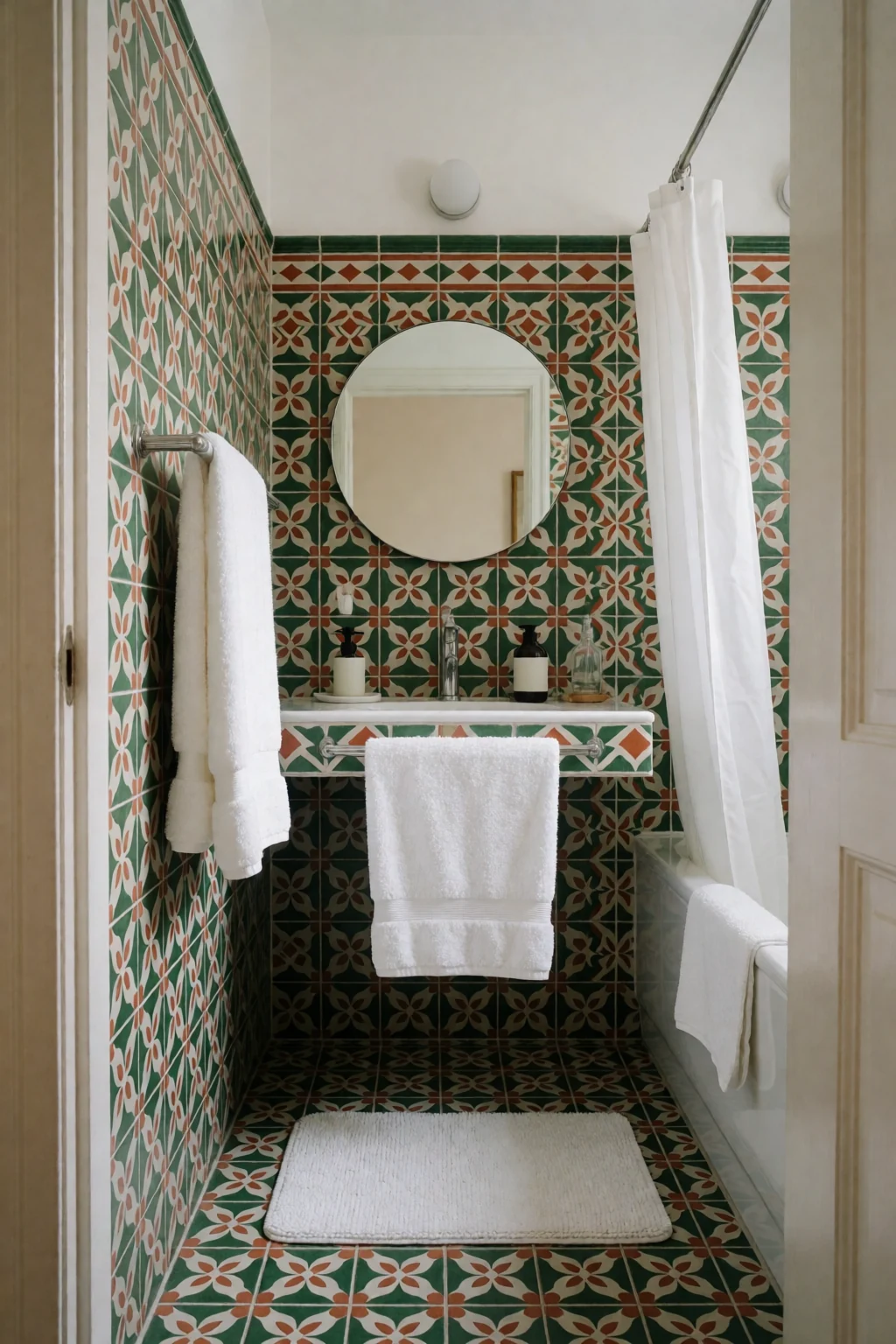
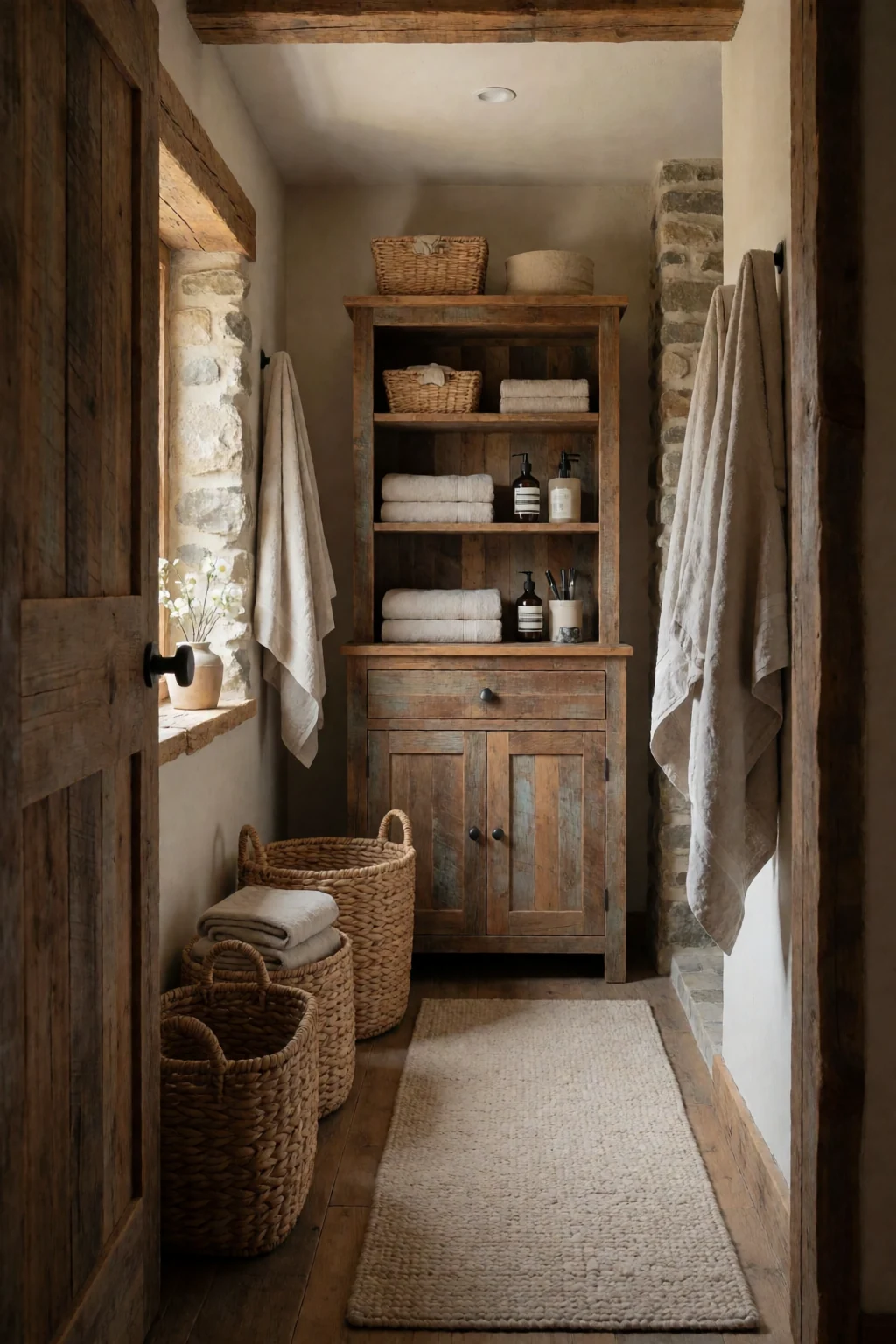
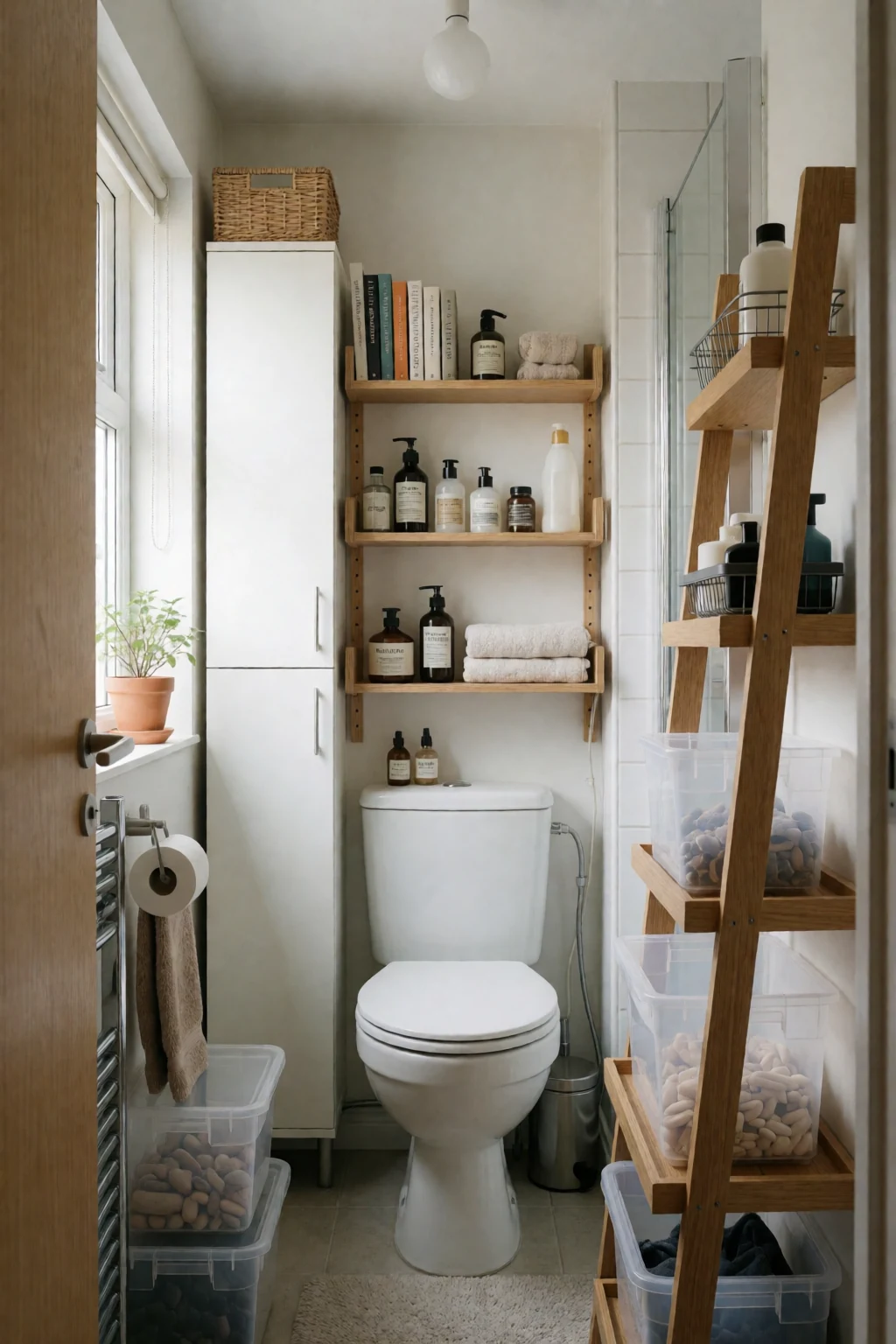
The gallery
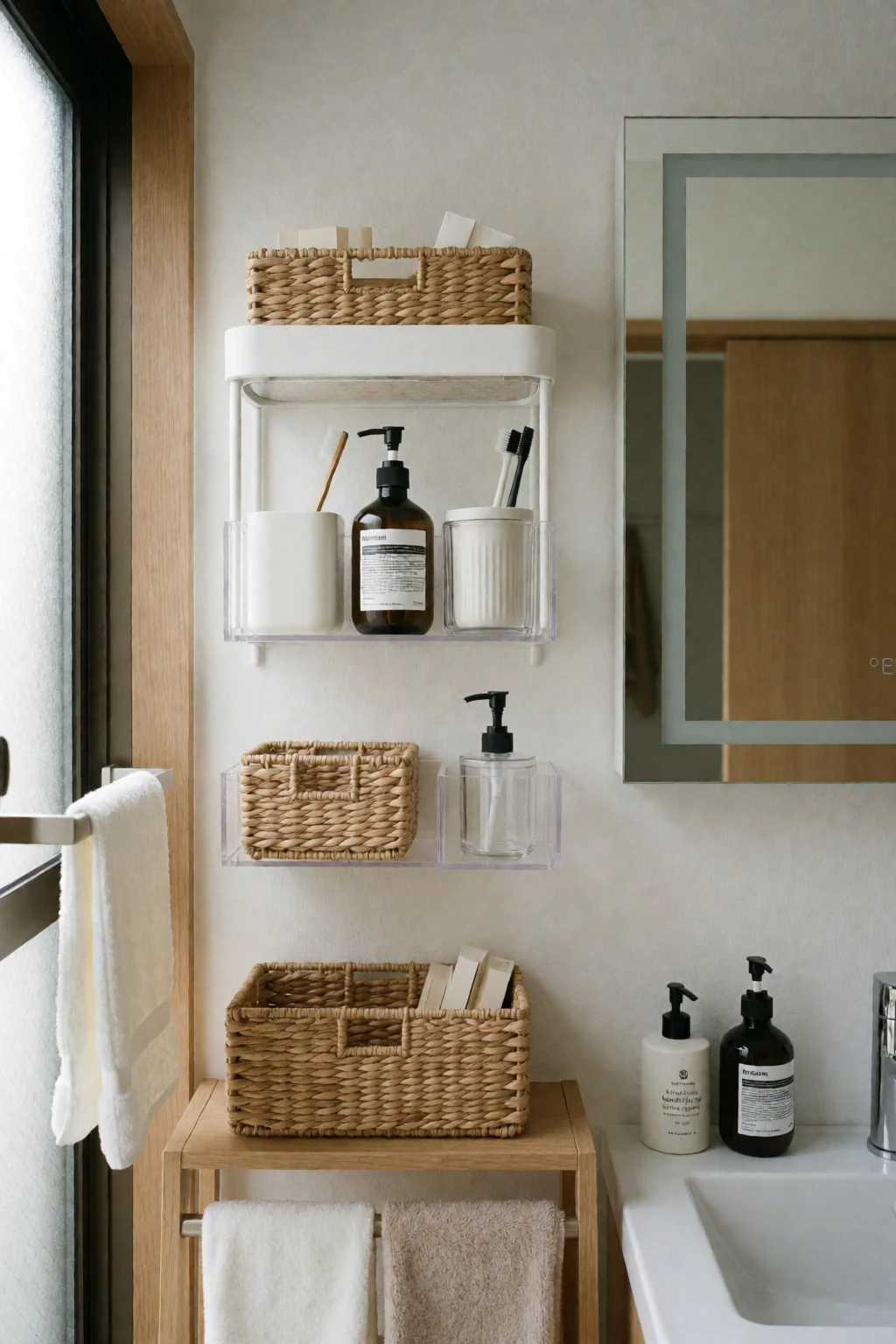
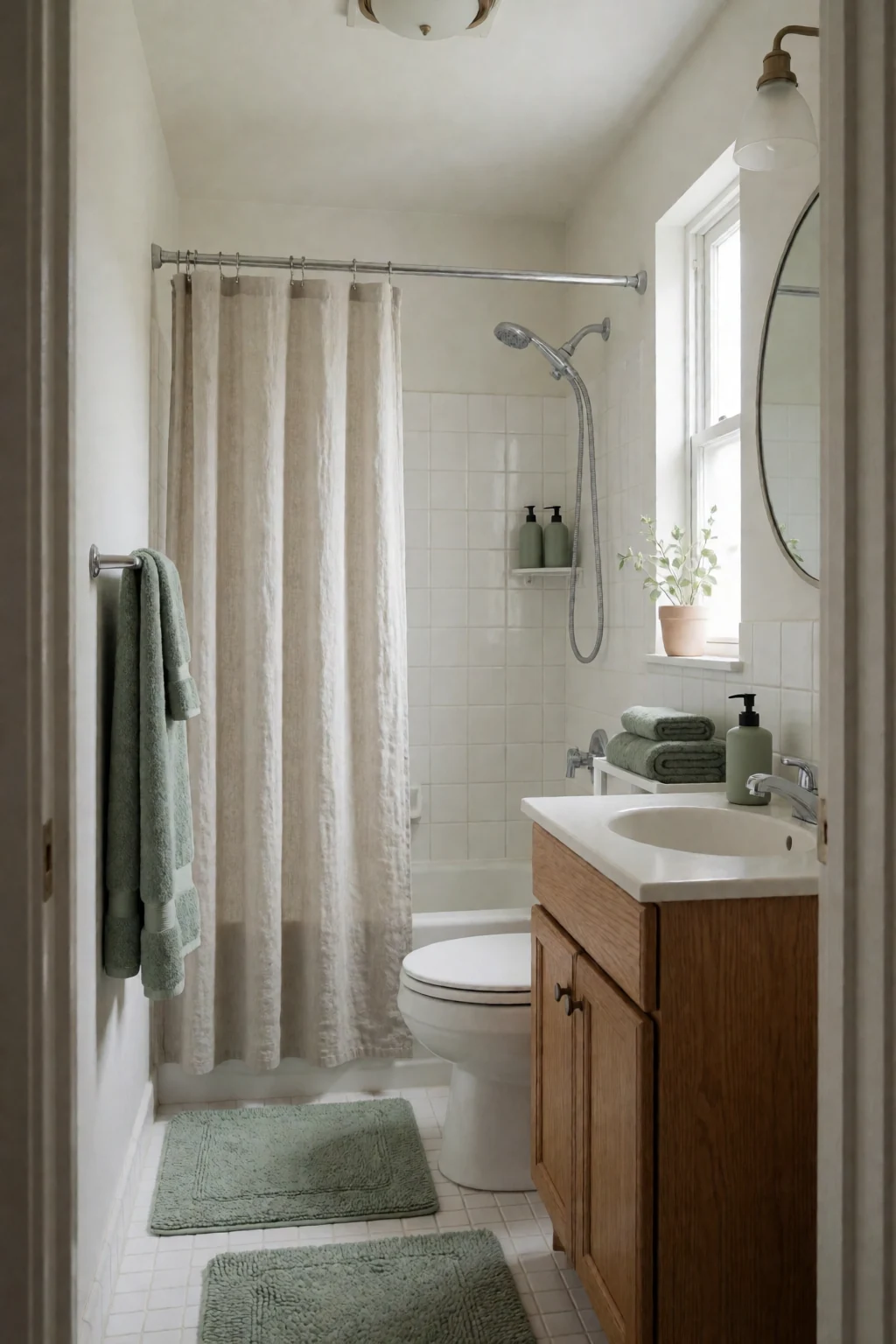
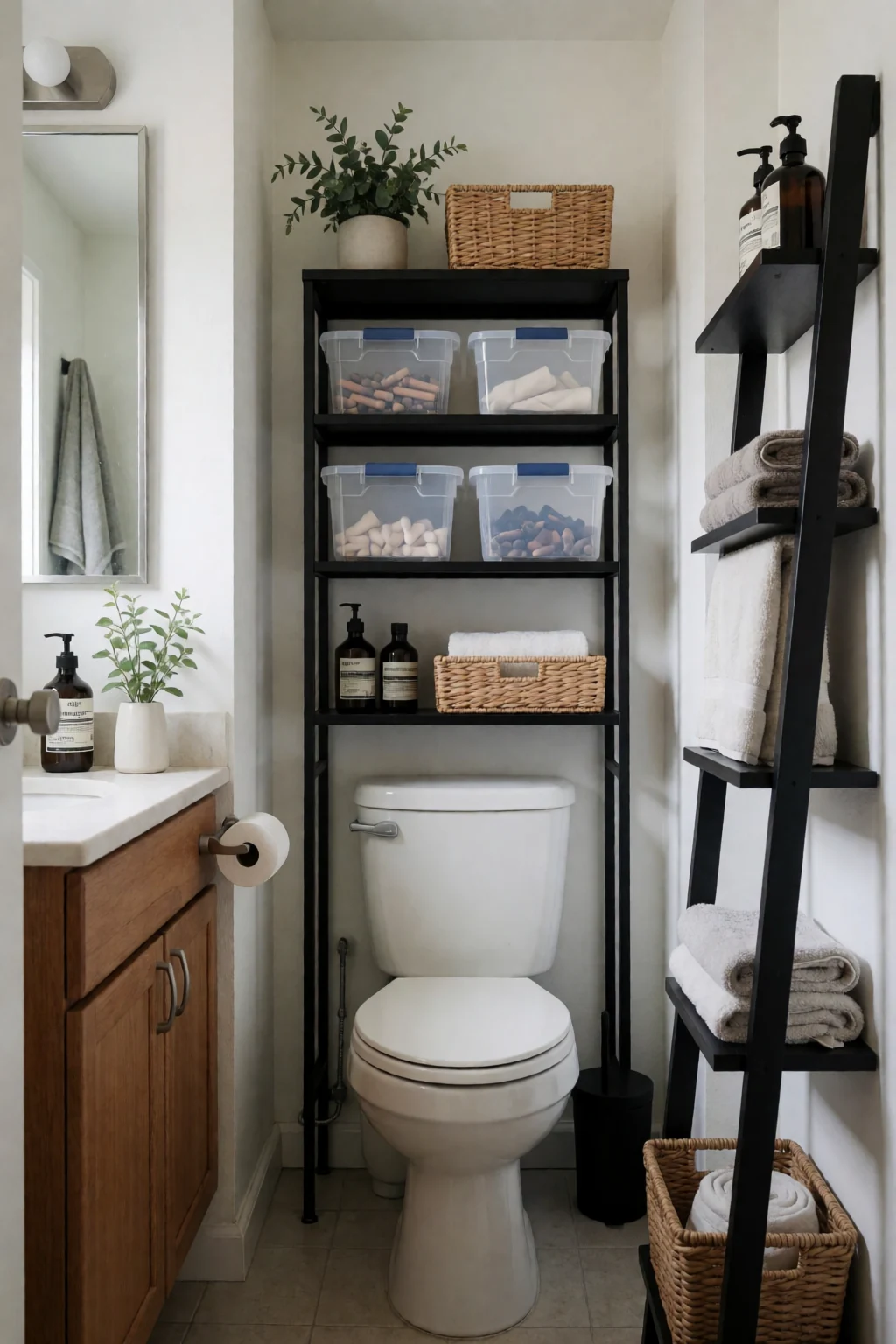
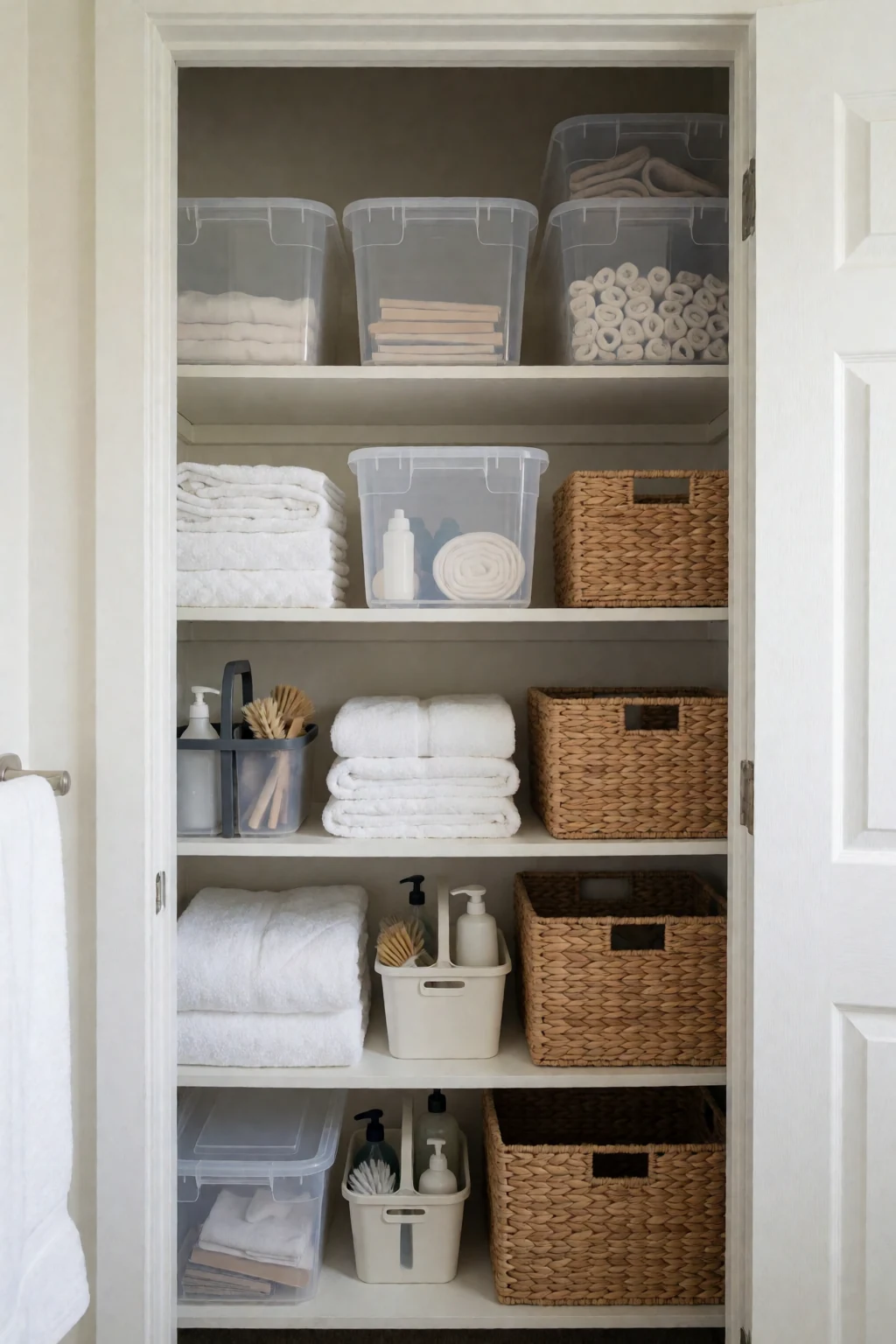
8 bathroom looks
Open a look to see its pieces.
Keep exploring
Related guides
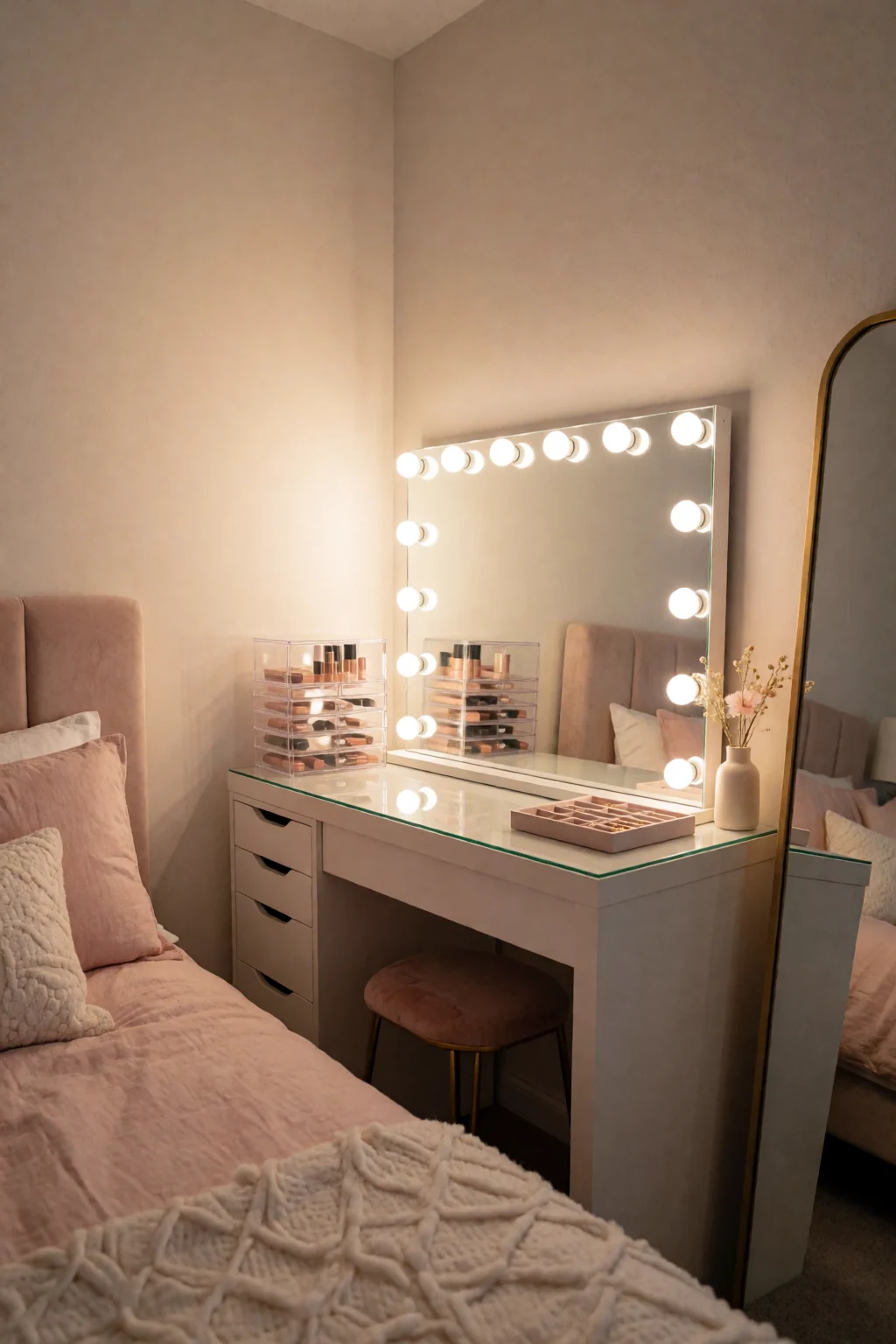 Bedroom
 storage keeps things within reach of the bed; bathroom drawers hold wet grooming things in wipeable bins.
 Work & gaming
A desk setup is about cables and surface space for electronics, while bathroom drawers sort small personal care items.
 Living room
A living room is arranged around shared seating, while bathroom drawers deal with private things in a small enclosed space.
Questions
How do I stop things sliding around in the drawer?
Line the drawer with a silicone grip mat, or use interlocking trays with rubber feet. Light compacts, brushes and pencils stay where you put them.
How do I store tall bottles in a shallow drawer?
Lay them flat in a wide shallow tray with a low divider so they cannot roll, instead of forcing them upright.
How often should I clear out bathroom drawers?
A five-minute wipe and tidy once a month, and a full check for expired products twice a year.
Should spare toiletries go in the drawer or a cupboard?
Only the spares you will use in the next few weeks go in the drawer. Multipacks and big refills belong in a linen cupboard or under the sink.