Home / Small bedroom ideas
3 Cozy Lighting Ideas for a Small Bedroom
Choose the job for your next light before choosing its shape.
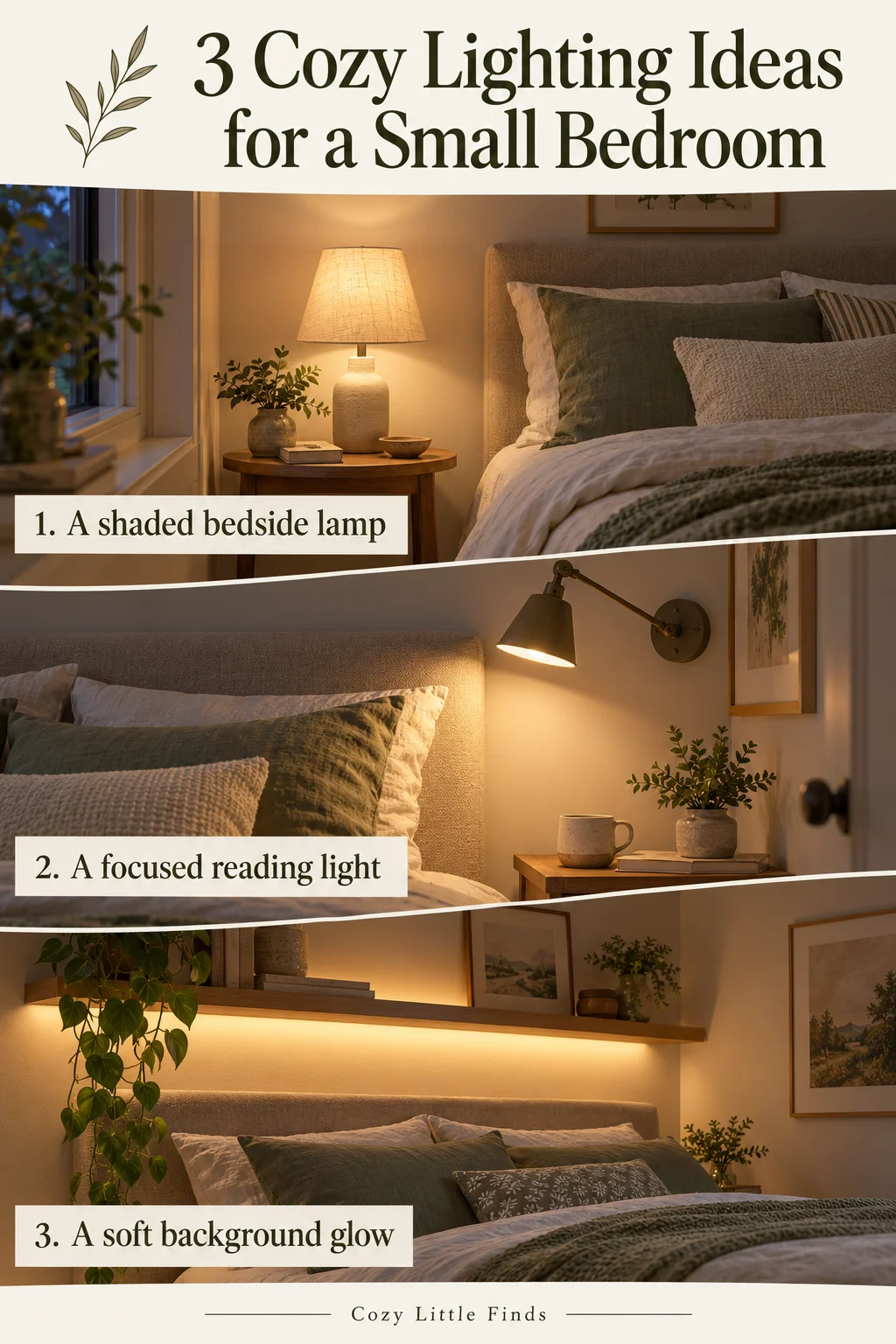
A small bedroom can ask one light to do too many things. The ceiling light helps you find clothes, but you may want something more focused for reading or softer for an evening corner. Before buying another lamp, name the missing job: light on a page, light across a bedside surface or a glow behind the furniture.
The three references below are different options, not a requirement to buy three new fixtures. Start with the light you already use and choose the smallest addition that would make a real difference. Check the arrangement from the bed as well as from the doorway: a lamp can look attractive in a room photograph while putting its switch out of reach.
In this guide
| Lighting idea | Useful when | Check before buying |
|---|---|---|
| Shaded bedside lamp | You want a softer pool of light beside the bed | Base footprint, shade width and switch position |
| Focused reading light | You want to direct light toward a book | Beam direction, reach and mounting requirements |
| Background glow | You want to highlight a shelf or headboard | Placement, product compatibility and controls |
1. A shaded bedside lamp
A shaded table lamp is a straightforward starting point when you already have a useful bedside surface. Compare the whole footprint, including the shade. A narrow base does not guarantee the shade will fit between a headboard and wall, and a large shade may cover the space where you normally put your glasses or water.
Before shopping, mark out the size of the base and shade on your existing table using removable paper templates. Leave room for the items you actually use. Think about how you will turn the lamp on: a switch on the cord, base or shade can require a different reach. Keep the cable route separate from the drawer opening and the path around the bed.
For the illustrated mood, look for a simple shade with a quiet ivory or oatmeal finish and a base that connects to an existing material in the room. Ceramic beside oak is one option; you do not need to replace the table to copy the overall color direction. A lamp you own may only need a compatible bulb or shade change.
2. A focused reading light
A reading light gives you a more specific placement question: where will the beam fall when you sit in your usual position? An adjustable head or arm can help aim the light, but check its actual reach and movement range instead of assuming every joint rotates in every direction. A photograph cannot establish whether a fixture will reach your book.
Compare wall-mounted, freestanding and clamp-style options against your room. A wall-mounted light can free some tabletop space, but needs a suitable mounting position and installation. A clamp requires the right supporting edge. A small table light may be a better fit if you rent or move the furniture often.
Treat plug-in and hardwired versions as different purchases. Read the product instructions and use the required installer where applicable; this guide does not provide wiring or mounting instructions. Before ordering, note the power connection, control position and whether you can use the light independently of the main room light.
3. A soft background glow
A concealed light behind a shelf or headboard changes the backdrop rather than adding another object to the bedside surface. In the reference, the light washes a small section of wall. Use that as an idea for the effect you want, not as proof of a particular product or an installation that suits your furniture.
Look at the light source from your normal seated and lying positions. Decide whether you want to see the fixture itself or only its reflection. Then check the product’s intended mounting surface, required clearances, power supply, length and instructions. Do not assume a light strip can be cut, extended or joined unless that specific system permits it.
Keep decorative glow separate from the job of reading. A shelf can look warmly lit while leaving the page in shadow. If the missing function is useful light for a task, solve that first and treat background lighting as an optional finishing detail.
Compare the light, not just the lamp
Color temperature and brightness answer different questions. Australia’s Energy Rating guide explains light output in lumens and color temperature in Kelvin, with 2700 K as a warm example. Use those labels to compare products rather than choosing from a photograph’s warmth alone; exposure, shade fabric and wall color also affect the picture.
Check whether the fixture uses a replaceable bulb or an integrated light source, which bulb fitting is required and whether a bulb is included. If dimming matters, check the compatibility of the complete fixture, bulb and controls. The presence of a slider or a smart-home label is not enough to establish that your existing equipment will work with it.
Make one useful lighting purchase
Write a short shopping brief: the job, available space, power connection, switch location and finish. Add the measurements you need to confirm. Compare the complete purchase, including any required bulb, compatible controls and installation, rather than only the price of the fixture.
Try a lamp you already own in the proposed position before committing to a new arrangement. You may discover that moving a light solves the problem, or that your bedside storage needs adjusting first. Keep the parts that work and buy for the specific gap you can now describe.