Room ideas / Bathroom
Small bathroom organisation: a plan for the whole room
A small bathroom gets easier once you treat it as three small zones, the sink, the shower and the toilet, and give each one only what is used there. The walls and the back of the door hold more than you think.
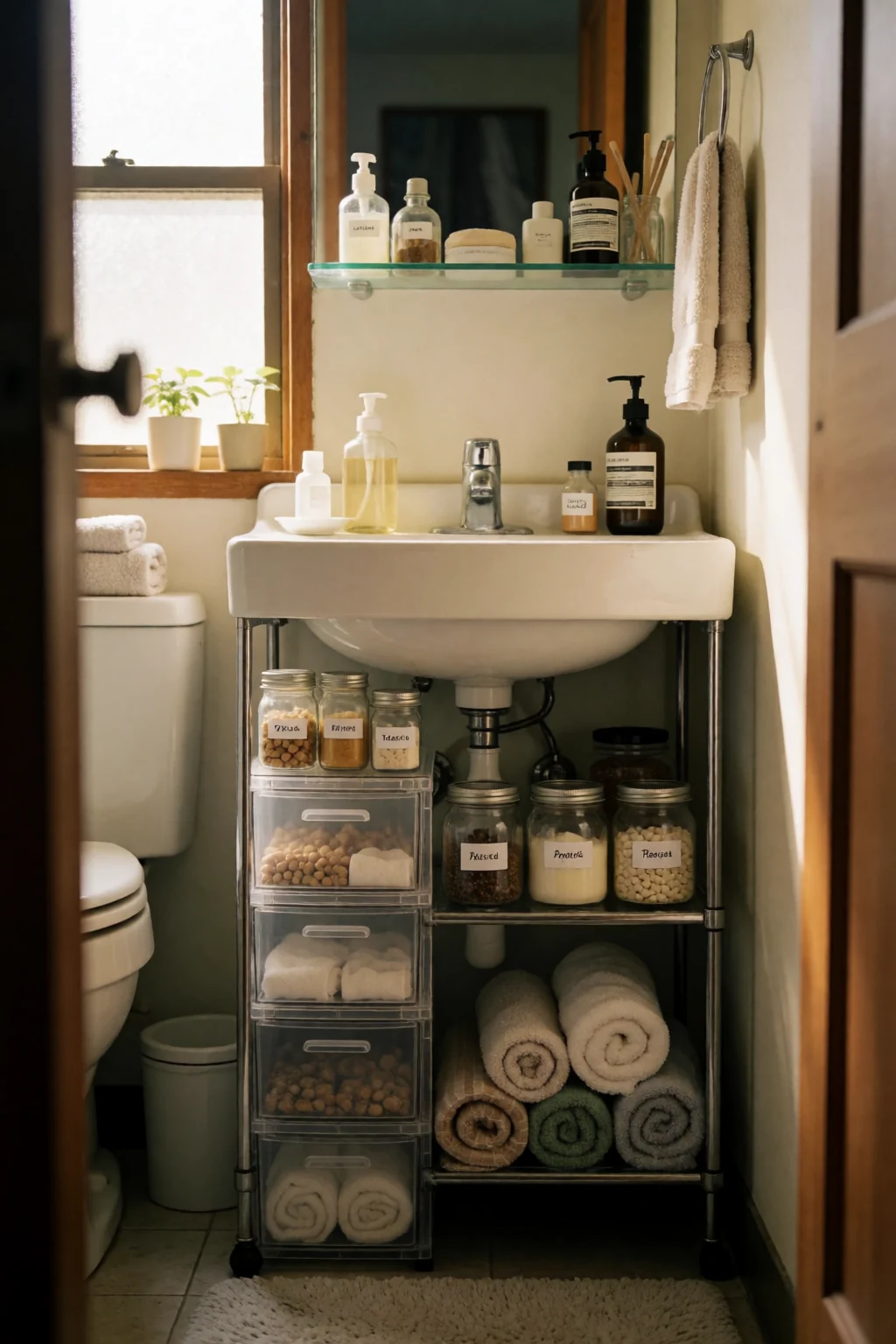
Three rules for a small bathroom
- Keep in the bathroom only what is used there each week; move bulk spares to another cupboard.
- Store each item in the zone where you use it: sink, shower or toilet.
- Use wall space and the back of the door before adding anything that stands on the floor.
Three zones in one small room
Small bathroom organisation is less about buying storage and more about deciding what lives in the room at all. A small bathroom has room for the things used in it every day, a few spares and the cleaning kit. Everything else, from bulk refills to the second hair dryer, does better in a hall cupboard.
Think in zones. At the sink: toothbrushes, face wash, a hand towel and whatever you use in the morning. In the shower: what you use every shower. By the toilet: spare rolls and the brush. Each zone gets its own storage close by, so nothing has to travel across the room and nothing piles up on the one free surface.
Once each zone is set, the walls do the rest. Above the toilet, behind the door, beside the mirror and inside the vanity are all space that a small bathroom usually wastes.
Five plans for small bathrooms
- Mirror cabinet and a clear counter
- Swap a plain mirror for a mirror cabinet and move every daily product into it. The counter keeps just soap and a toothbrush cup, which makes the room look half as busy.
- Back of the door
- An over-door rack with shallow baskets for spare toiletries and hair tools, plus two hooks for towels and a dressing gown. It uses the biggest blank surface in the room without any drilling.
- Under the sink in two levels
- A two-tier sliding organiser that fits around the pipe, cleaning products on the bottom, spares on top, and a small caddy you can carry out for cleaning.
- Shelf over the toilet
- One or two floating shelves above the cistern with lidded baskets for spare rolls and cotton wool. See the over-the-toilet guide for clearances.
- Towel rail on a narrow wall
- A slim wall towel rail or a row of hooks on the narrow wall by the shower instead of a towel ladder on the floor. Towels dry faster spread out and the floor stays clear for cleaning.
Space, damp, renting and sharing
- Where you can actually fit things
- Measure the gaps before you shop: the depth between the toilet and the wall, the width beside the sink, the space behind the door when it is fully open. Storage that blocks the door or makes you turn sideways at the sink is worse than none.
- Damp and ventilation
- Small bathrooms steam up quickly. Choose plastic, sealed bamboo, coated metal or glass, avoid cardboard and bare wood, and keep a gap behind baskets so air can move. Run the extractor fan or open the window after every shower.
- Renting
- Over-door racks, tension poles, under-sink organisers and freestanding shelves need no holes. If you can drill, a mirror cabinet and floating shelves give the most space for the least floor.
- Sharing the bathroom
- If several people use it, give each person a basket or a shelf of their own and keep shared things, like hand soap and spare rolls, in one obvious place. It stops one person's things spreading over every surface.
Edit, zone, then go up the walls
Take everything out of the bathroom, cabinets included, and sort it on the floor of another room into three piles: used weekly in the bathroom, spares, and things that belong elsewhere or should go. Be strict with the first pile. Then split it by zone, sink, shower or toilet, and notice which zone has the most; that is where your storage needs to go first.
Clean the empty room, then fit storage zone by zone, starting with the busiest. Fit wall and door storage before anything freestanding. Put things back so the daily items are easiest to reach and spares sit higher or deeper. Store the bulk spares from the second pile in a hall cupboard and top up the bathroom from there each week.
Shop the pieces
16 bathroom pieces
Links open similar items, not the pictured ones.
-
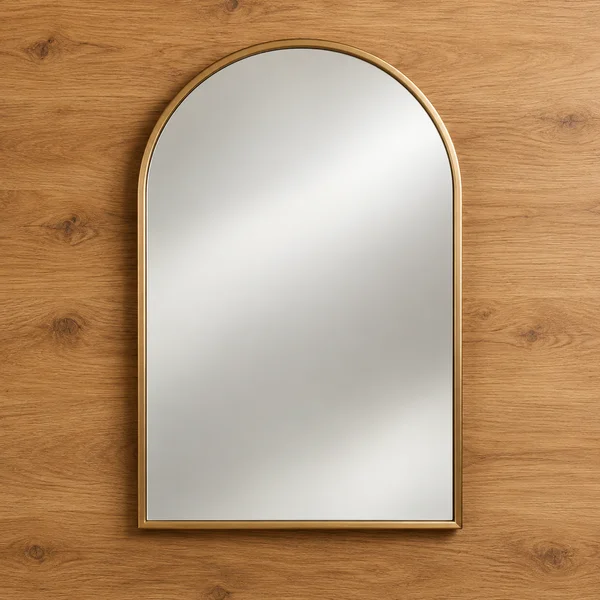
Bathroom vanity mirror
What to check
Measure the wall above the vanity, and centre the mirror on the basin rather than the wall.
-
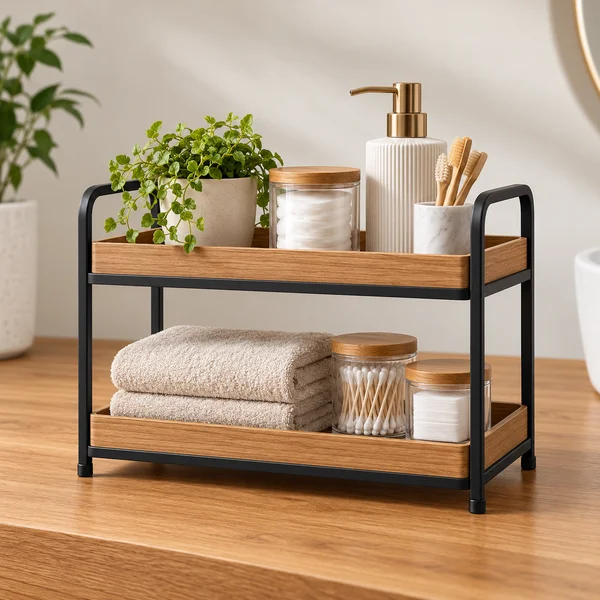
Two tier bathroom countertop shelf
What to check
Measure the counter depth and the height under any mirror or cabinet before choosing a tiered shelf.
-
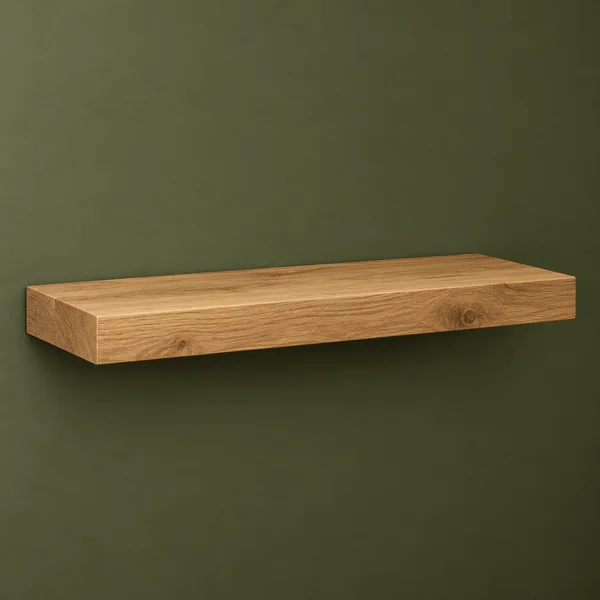
Wood floating wall shelf
What to check
Check the shelf depth and weight rating, and fix into studs or solid wall plugs.
-
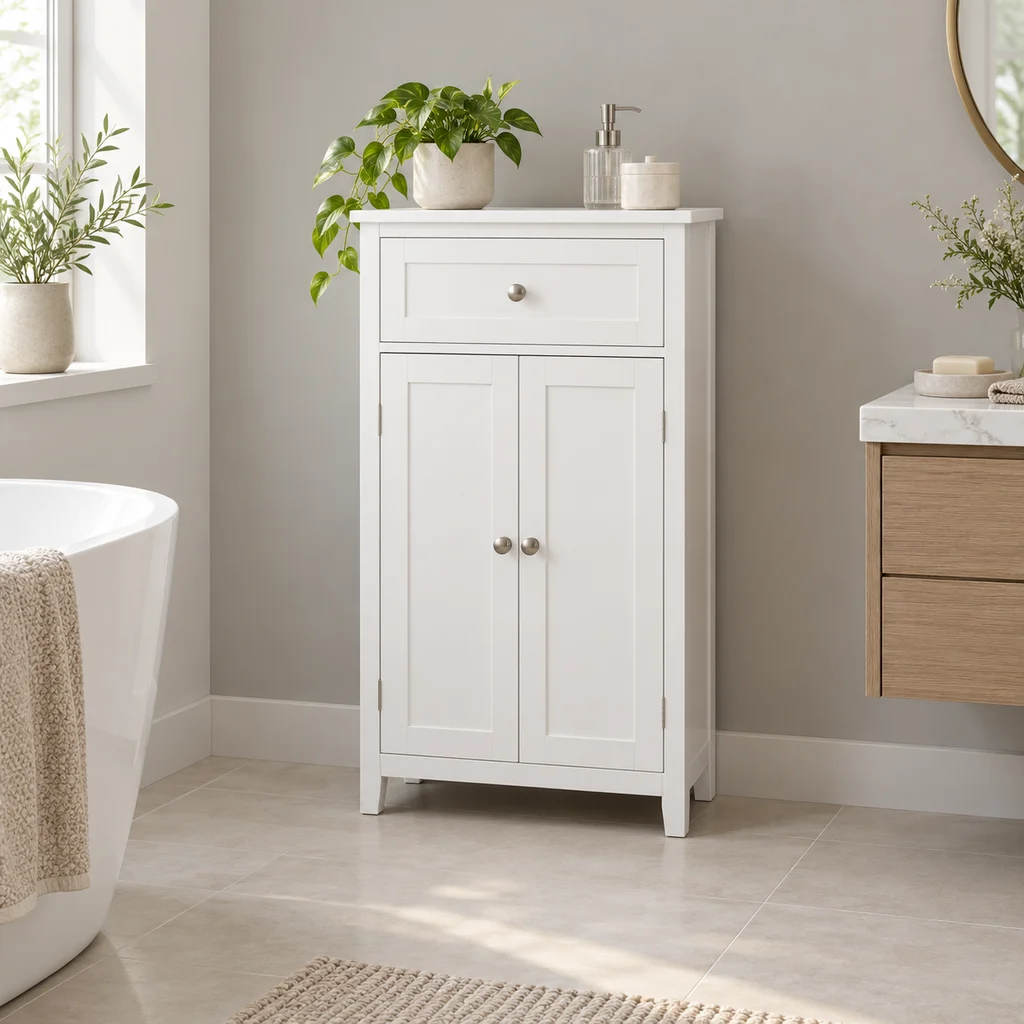
Bathroom cabinet
What to check
Measure the floor space and the door swing of the cabinet itself. Bathrooms are damp, so check the finish is moisture resistant.
-
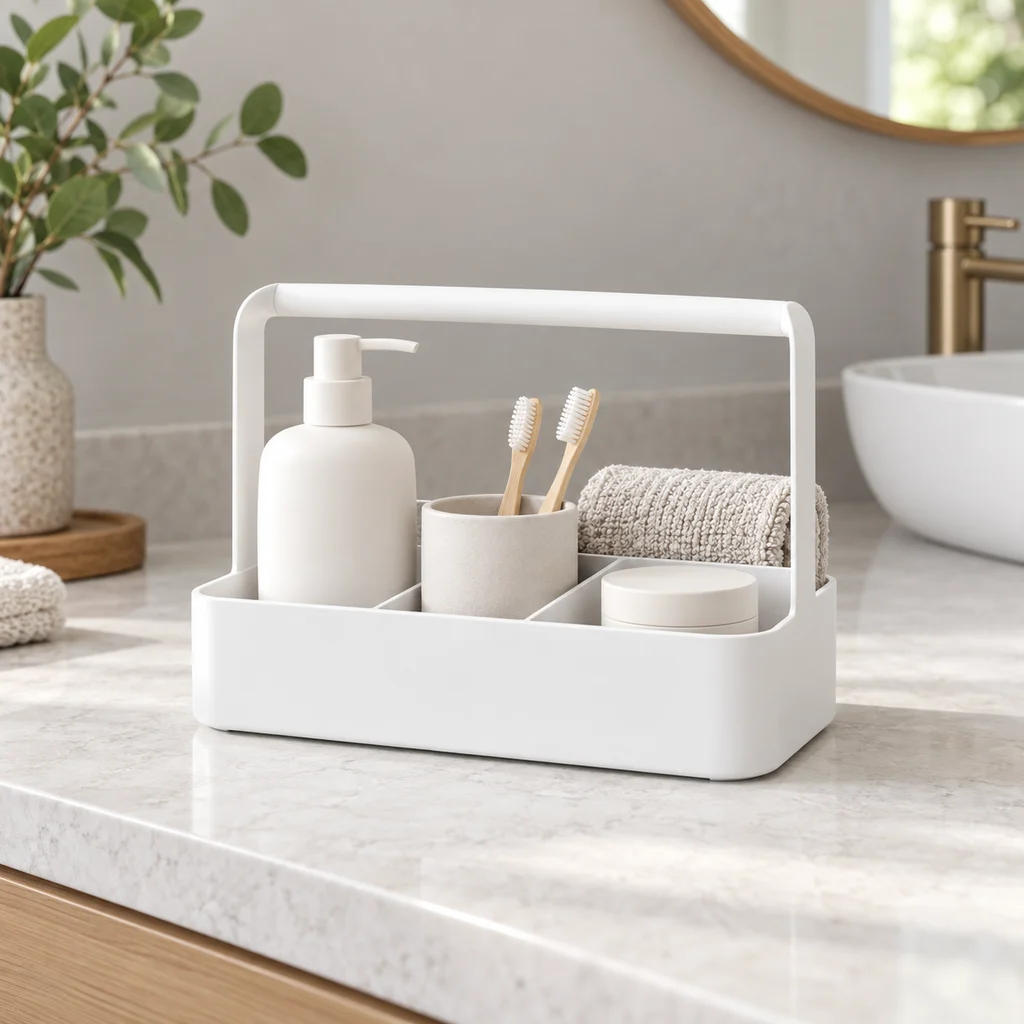
Bathroom caddy
What to check
A carry caddy works best when it holds one routine. Check the handle is comfortable and the base drains.
-
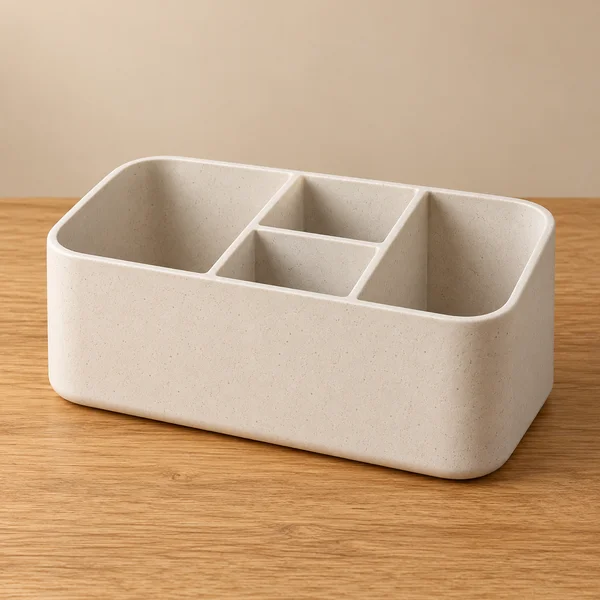
Bathroom countertop divided caddy
What to check
Clear plastic shows what is inside but also water marks. Check the compartment sizes against the bottles you use.
-
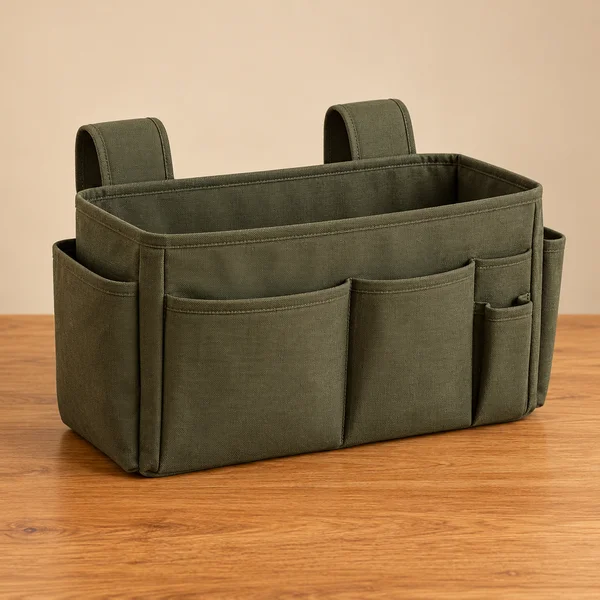
Bedside storage basket
What to check
Measure the gap between the mattress and the wall or frame. A bedside caddy needs a firm mattress edge to tuck under.
-
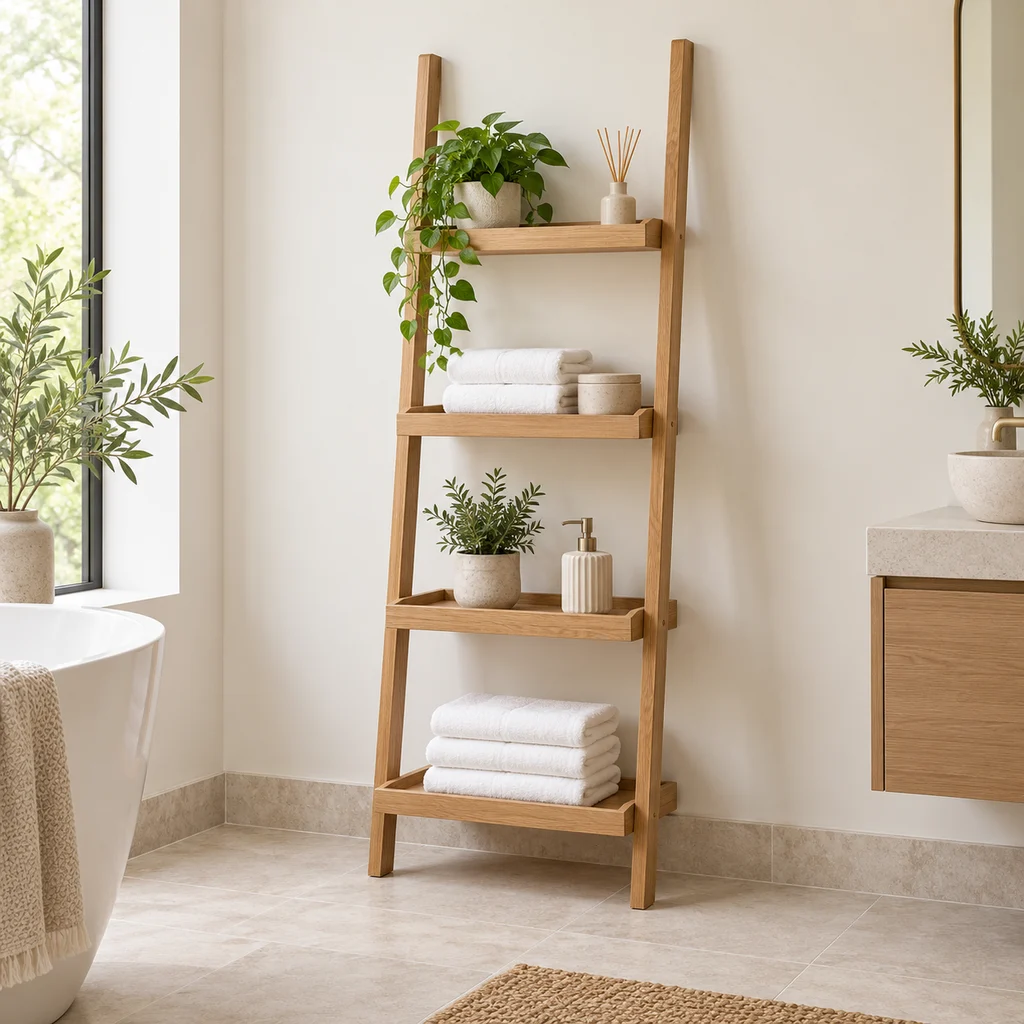
Ladder shelf
What to check
A leaning ladder shelf needs a wall anchor to stay steady. Check the depth so it does not block the door swing.
Show all 16 pieces
-
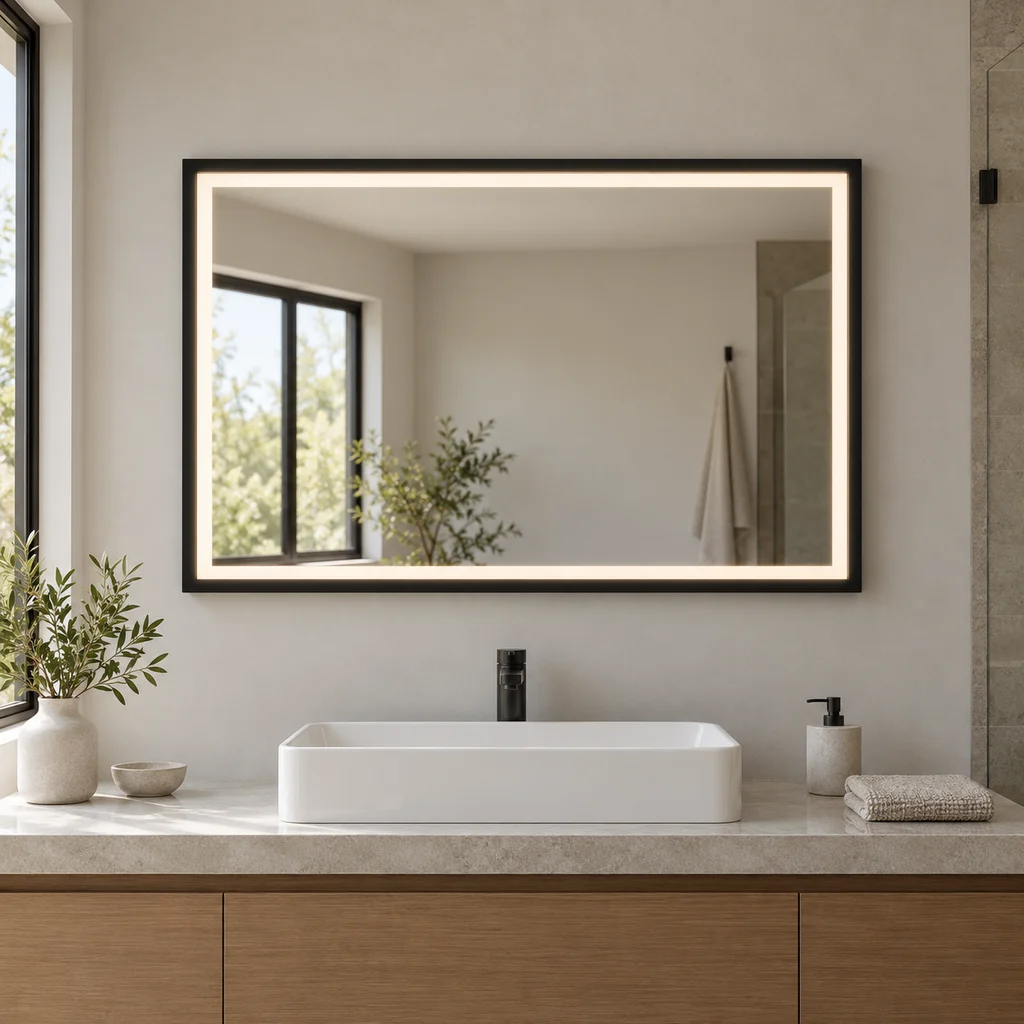
LED bathroom mirror
What to check
A lit mirror needs power at the wall. Check whether it plugs in or must be hardwired by an electrician before you buy.
-
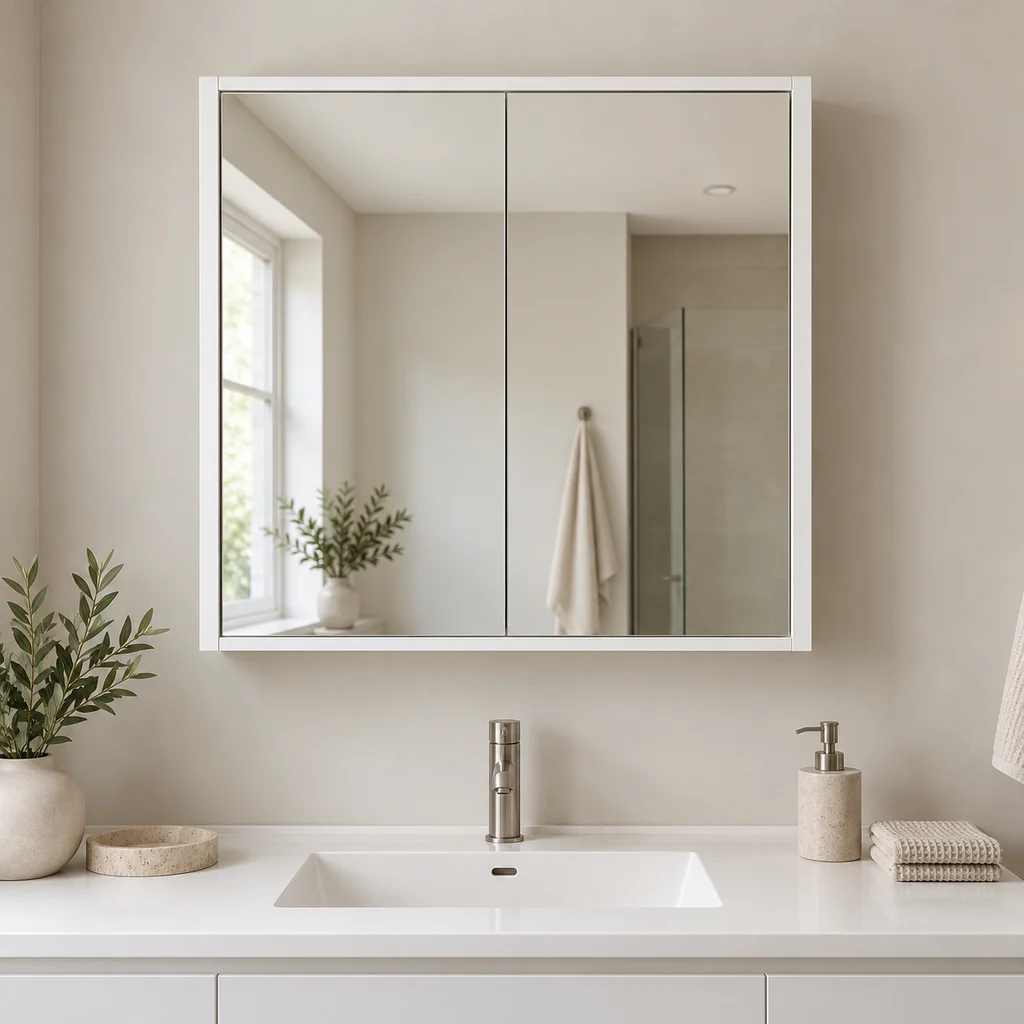
Mirror cabinet
What to check
Check the depth of the cabinet against the space behind the tap, and how it mounts to your wall.
-
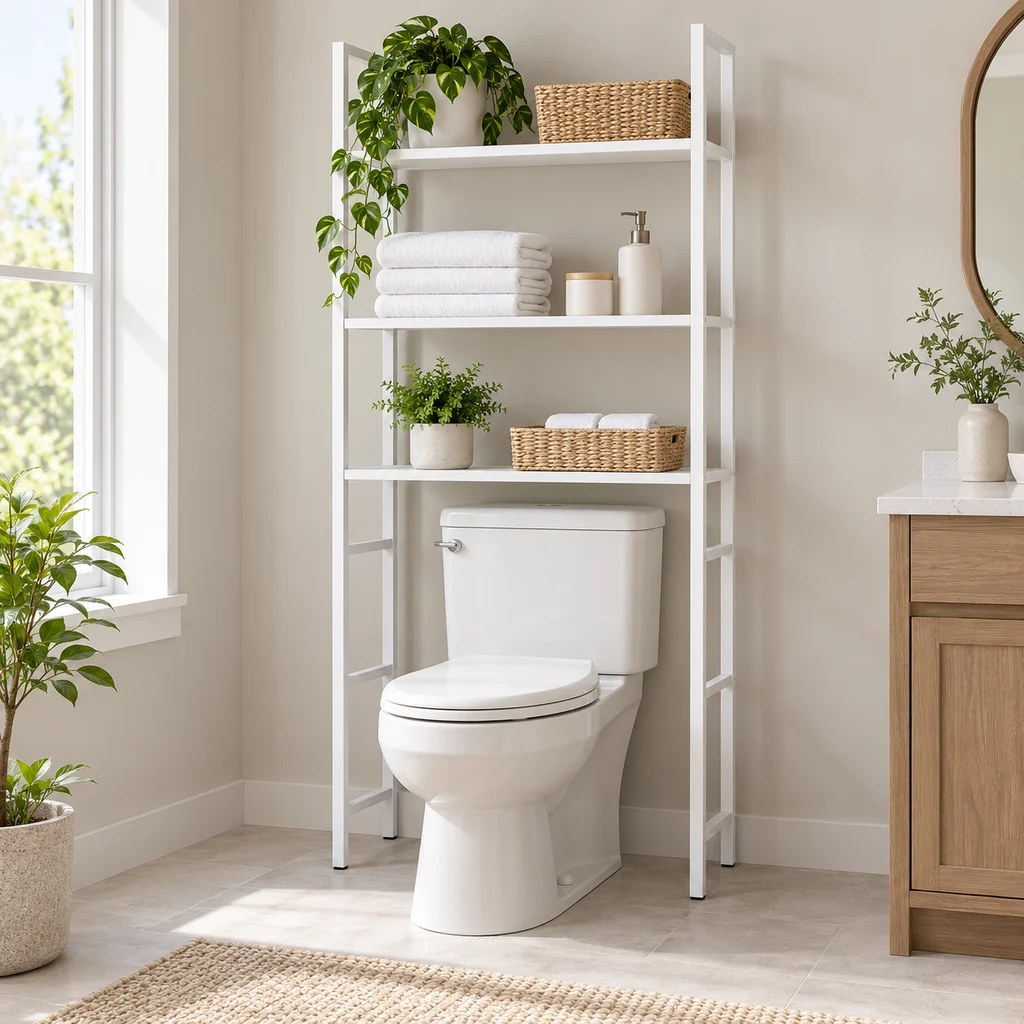
Over-toilet shelf
What to check
Measure the width of your toilet and the height to the cistern top. The frame must clear both.
-
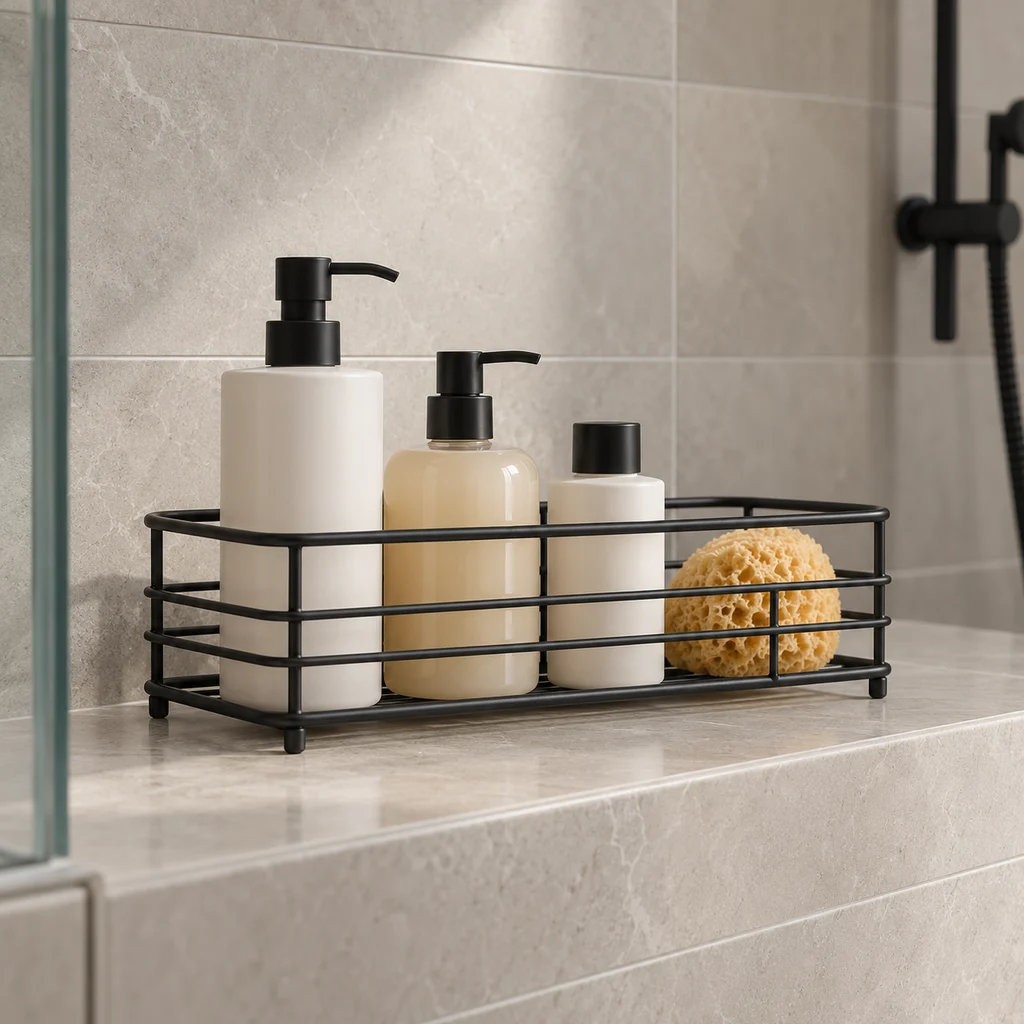
Shower caddy
What to check
Adhesive caddies need clean, dry, smooth tile to stick. Check the weight limit if you store large bottles.
-
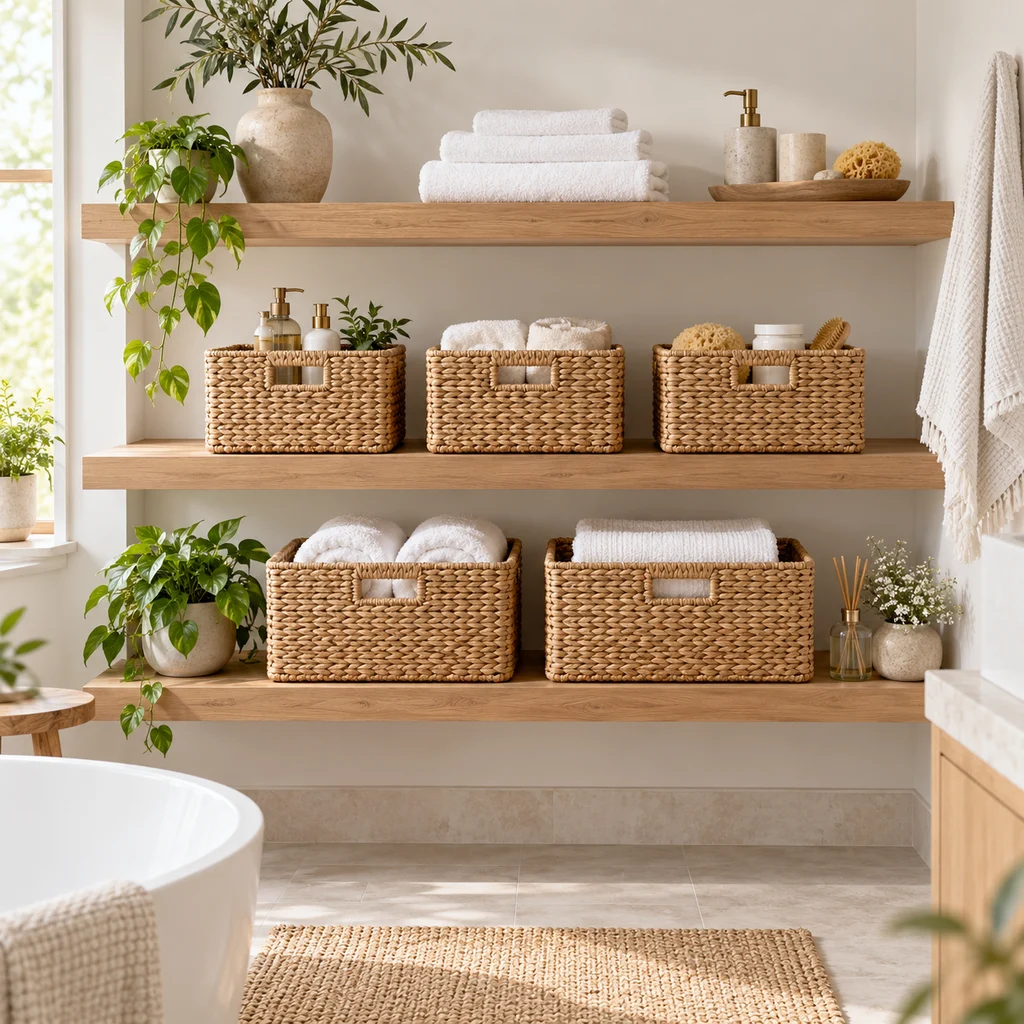
Storage baskets
What to check
Measure the shelf depth and height before buying baskets. Check whether the weave has a liner if you store fabric or small items.
-
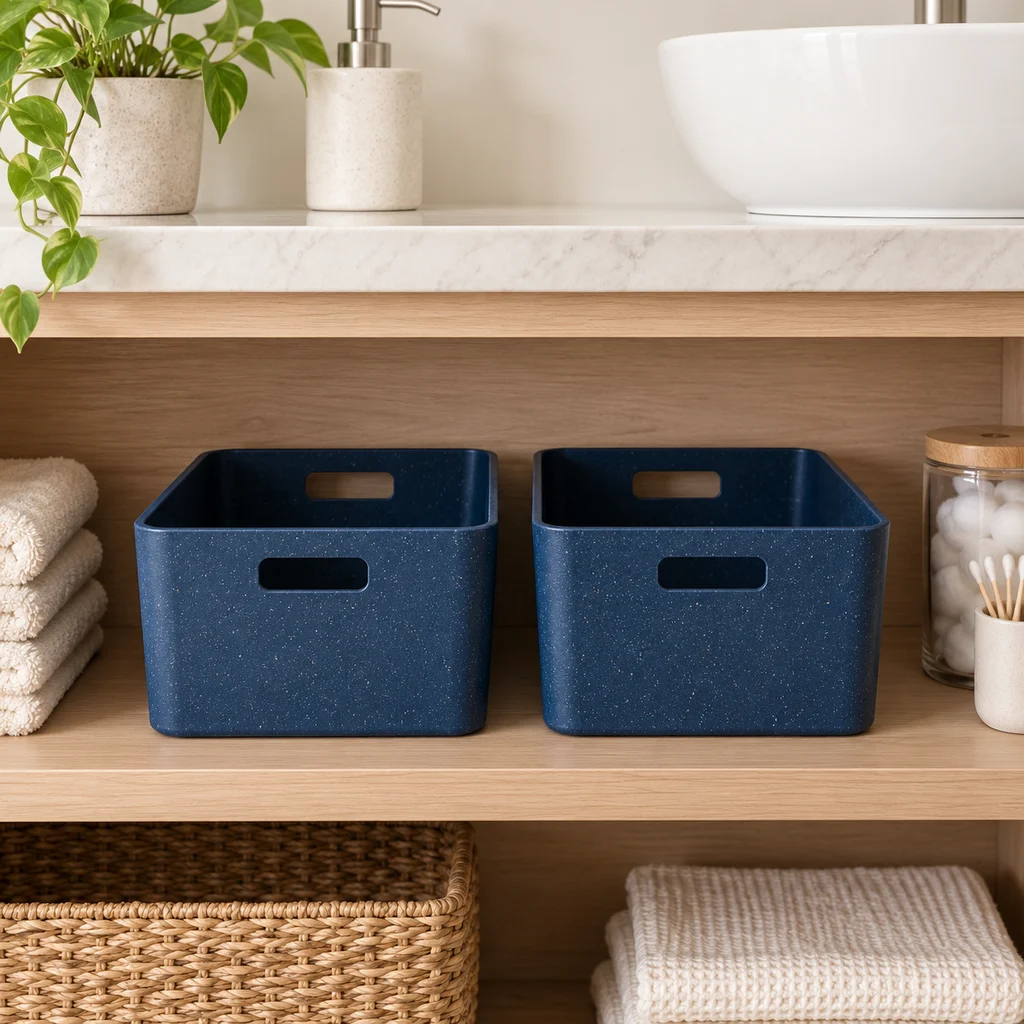
Storage bins
What to check
Measure the shelf or cabinet the bins will go in, including the height, before choosing a size.
-
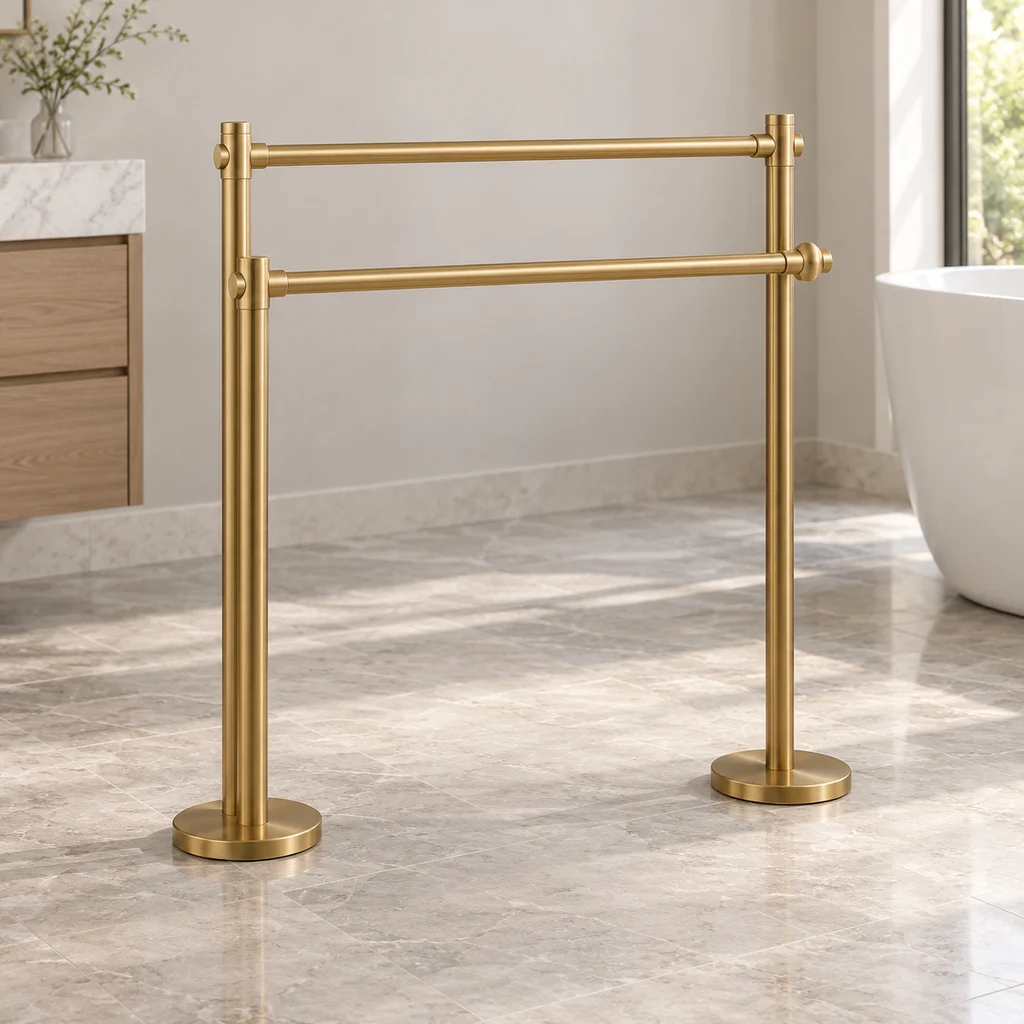
Towel rack
What to check
Check the bar length against the towels you use. Wall racks need the right fixings for tile or plasterboard.
-
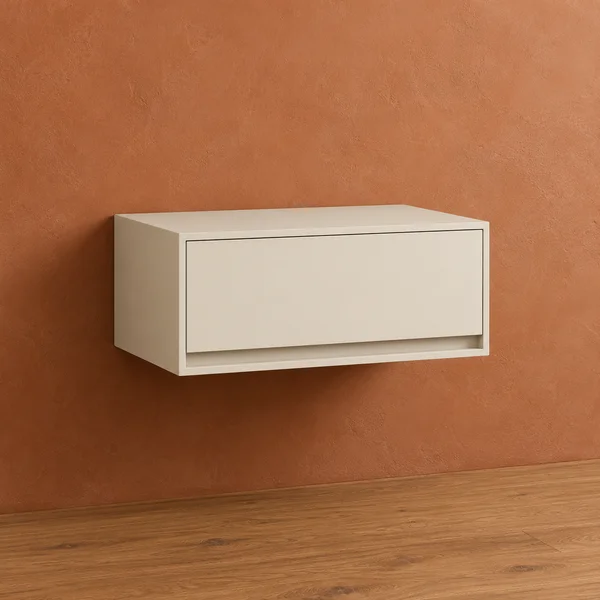
Wall mounted bedside drawer
What to check
Wall-mounted drawers need solid fixings and leave the floor clear. Mount them at a height you can reach from bed.
The gallery
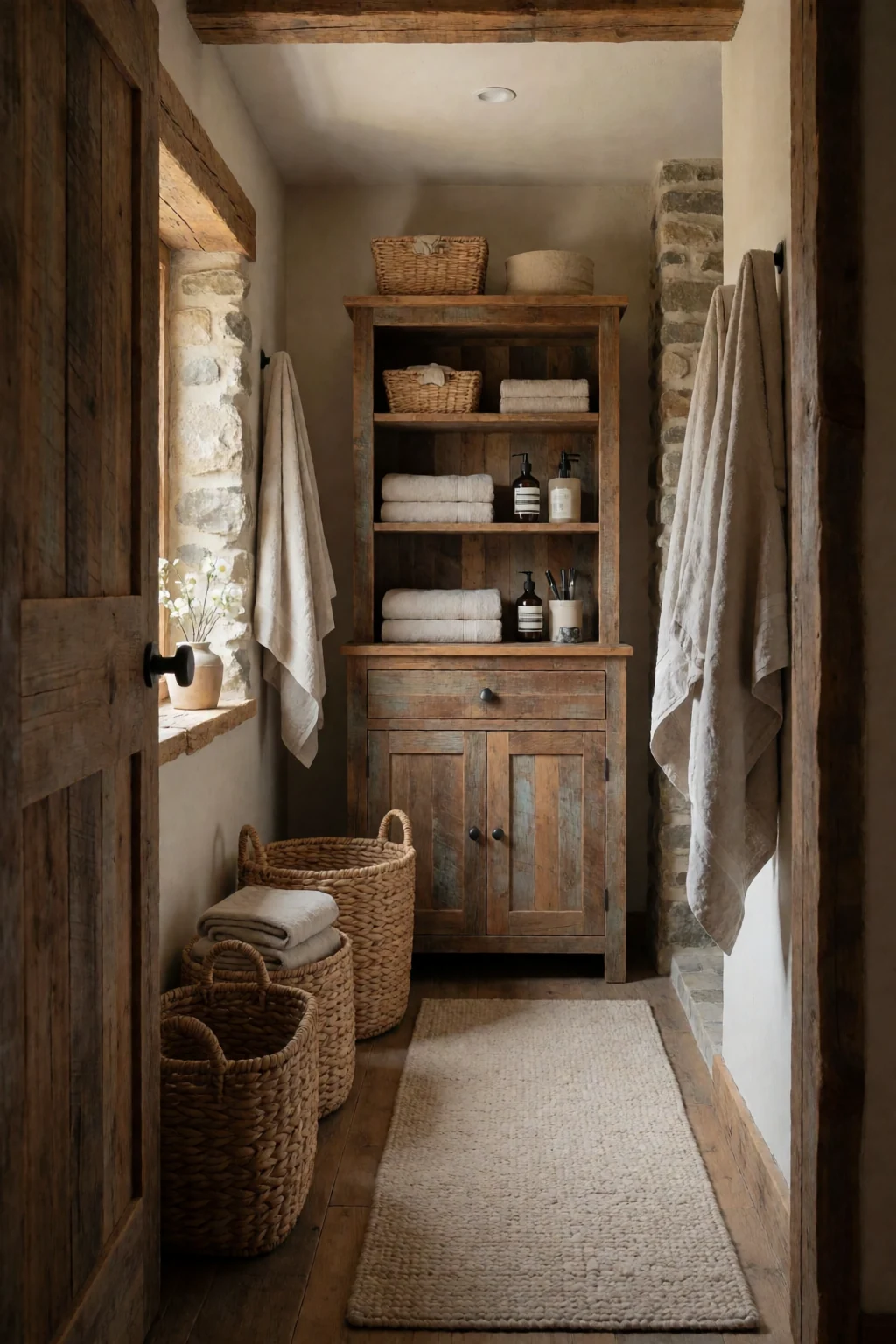
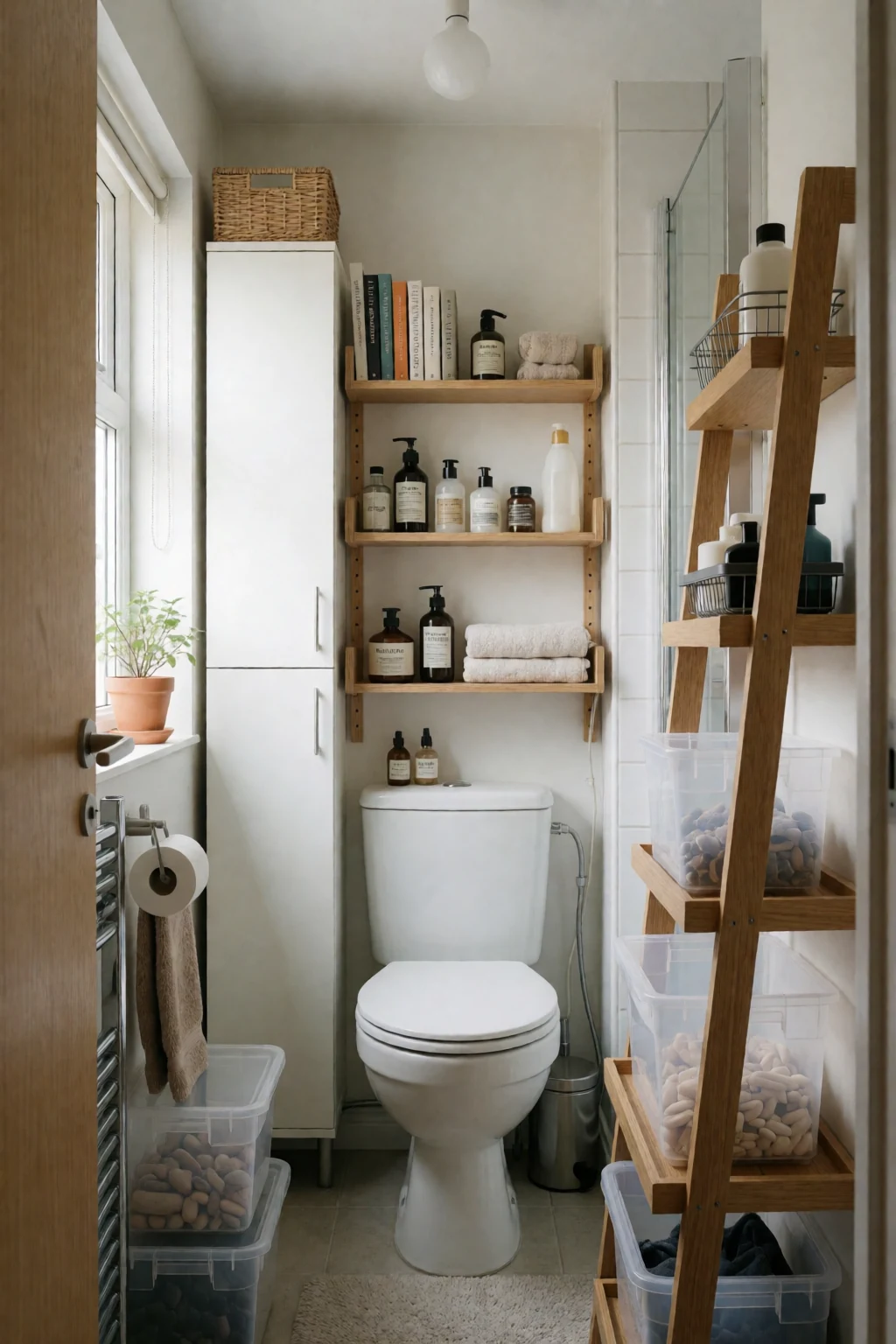
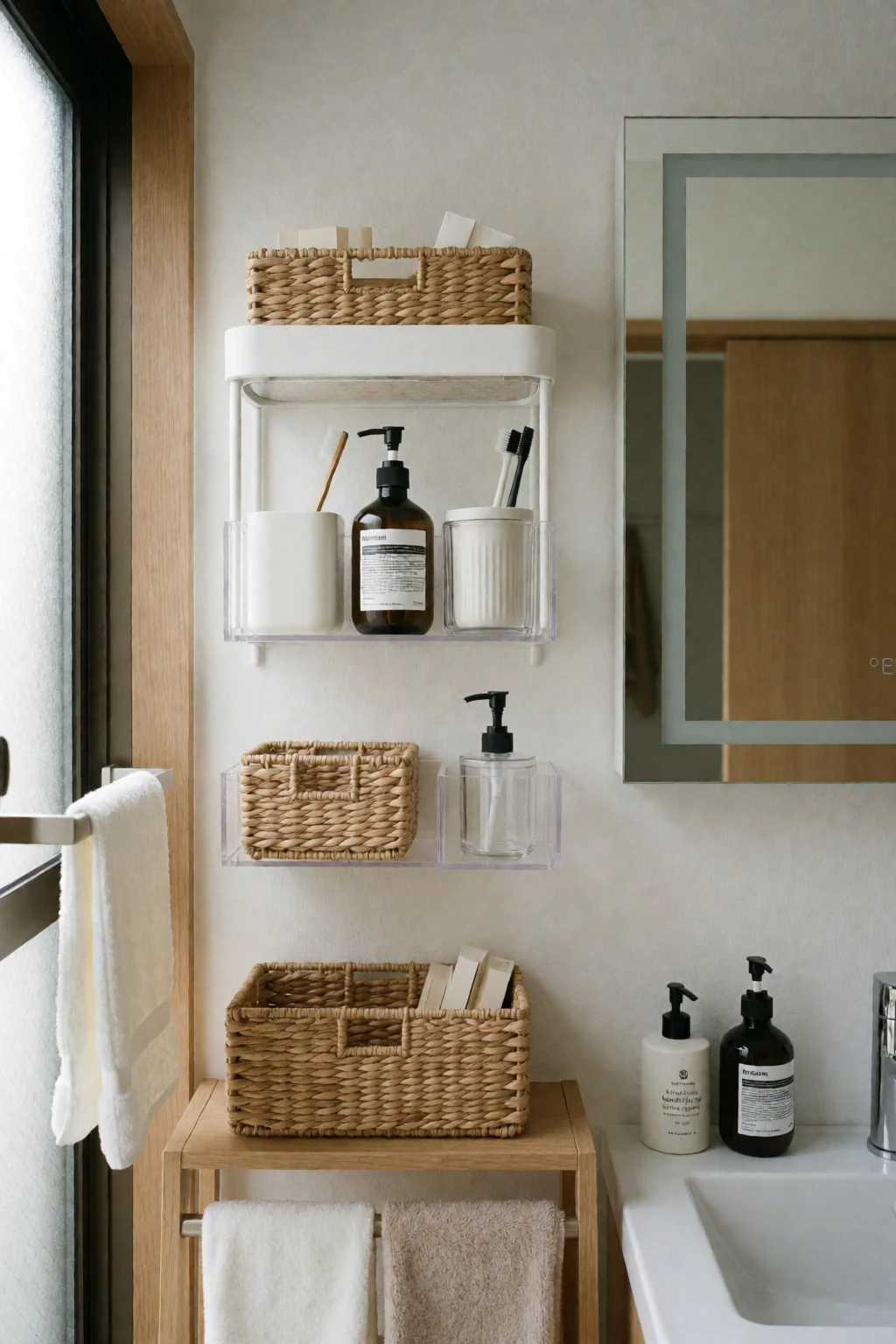
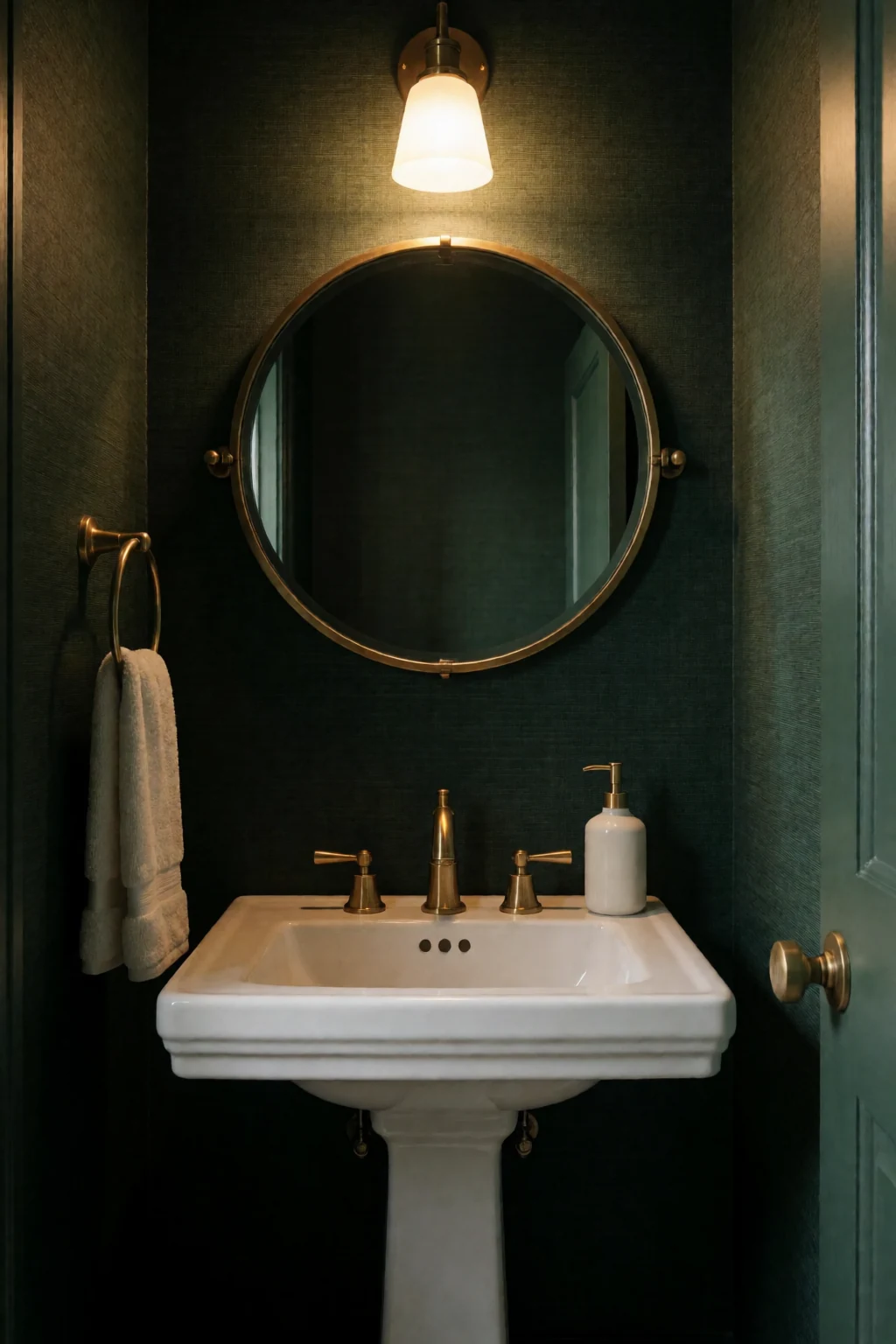
8 bathroom looks
Open a look to see its pieces.
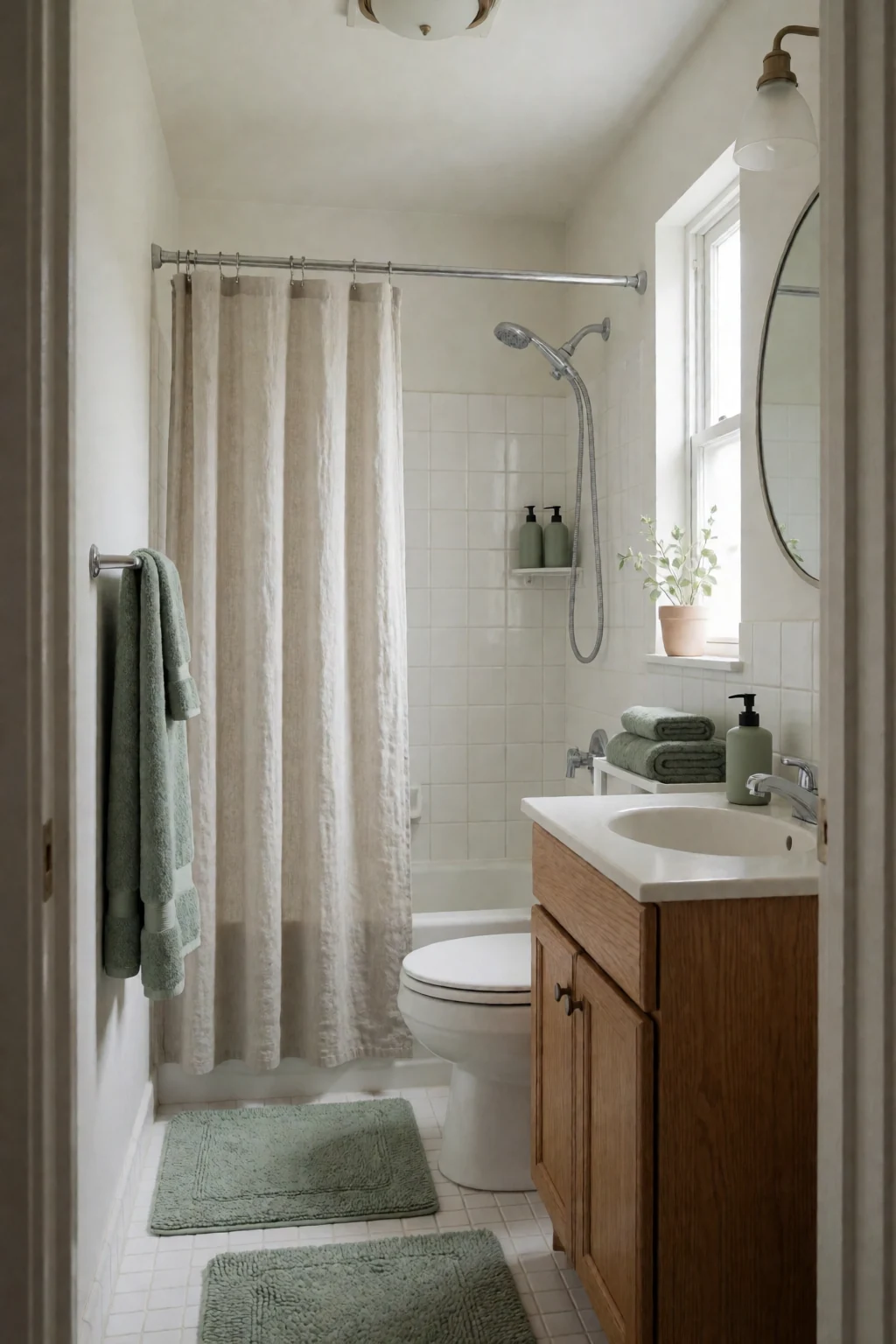
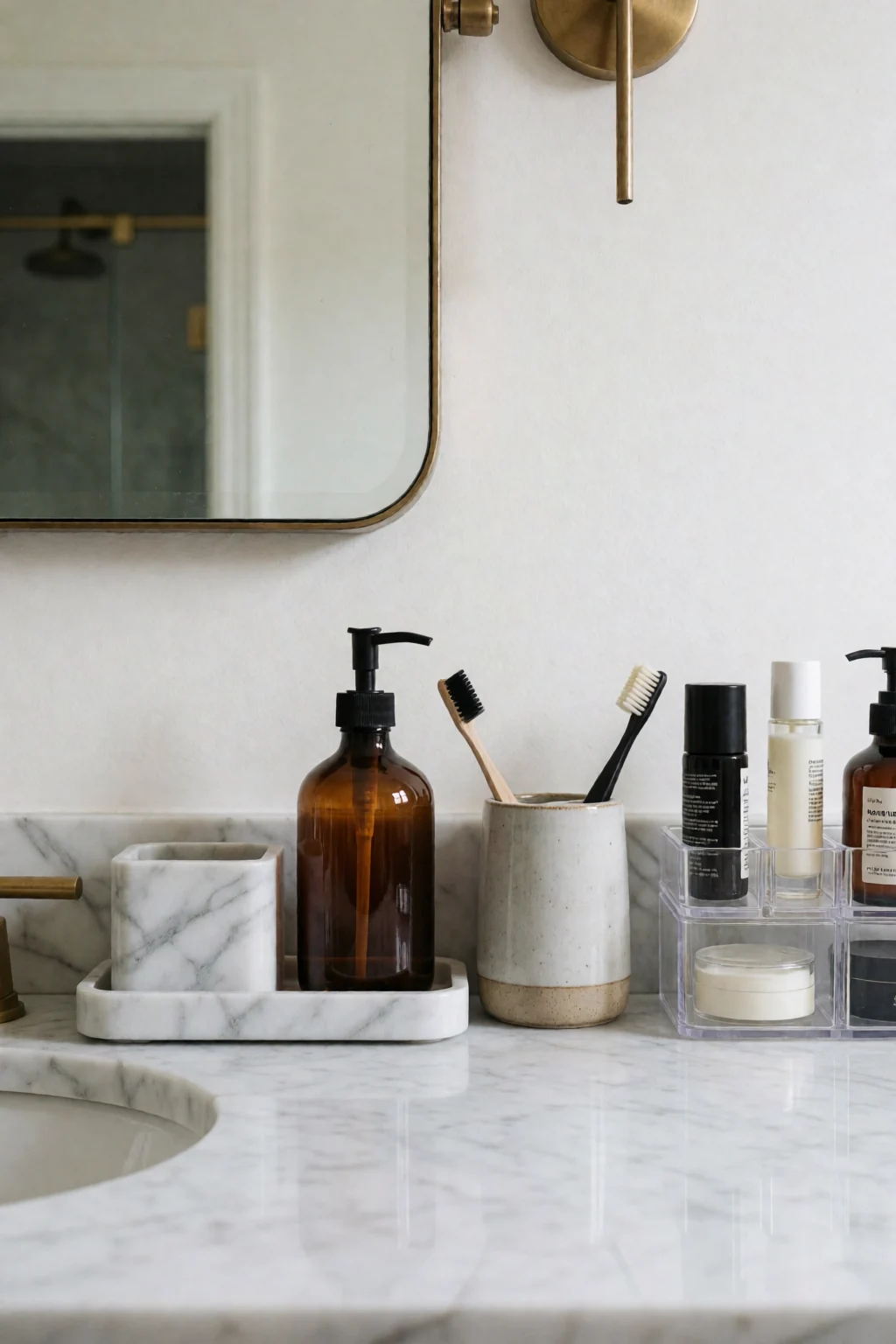
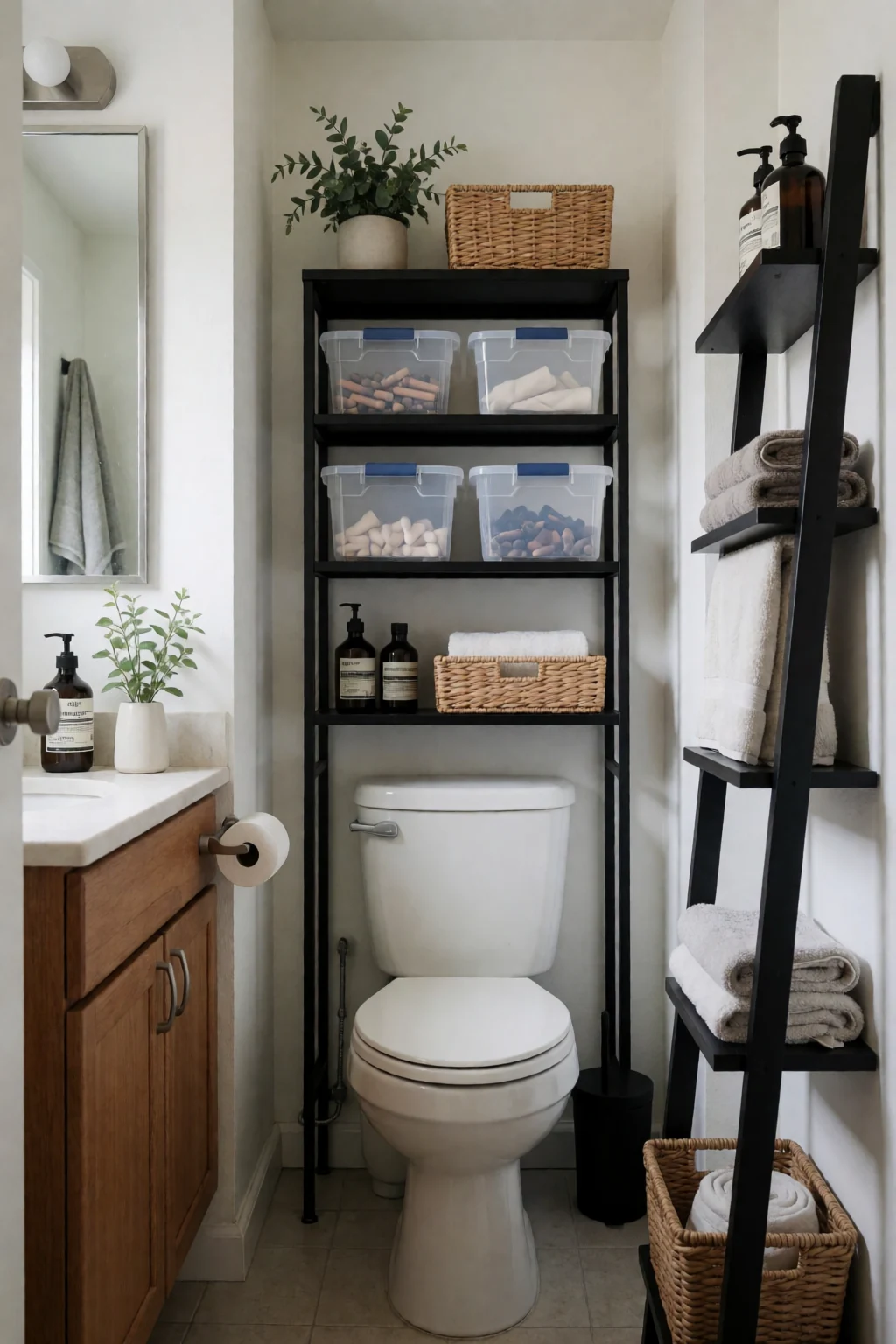
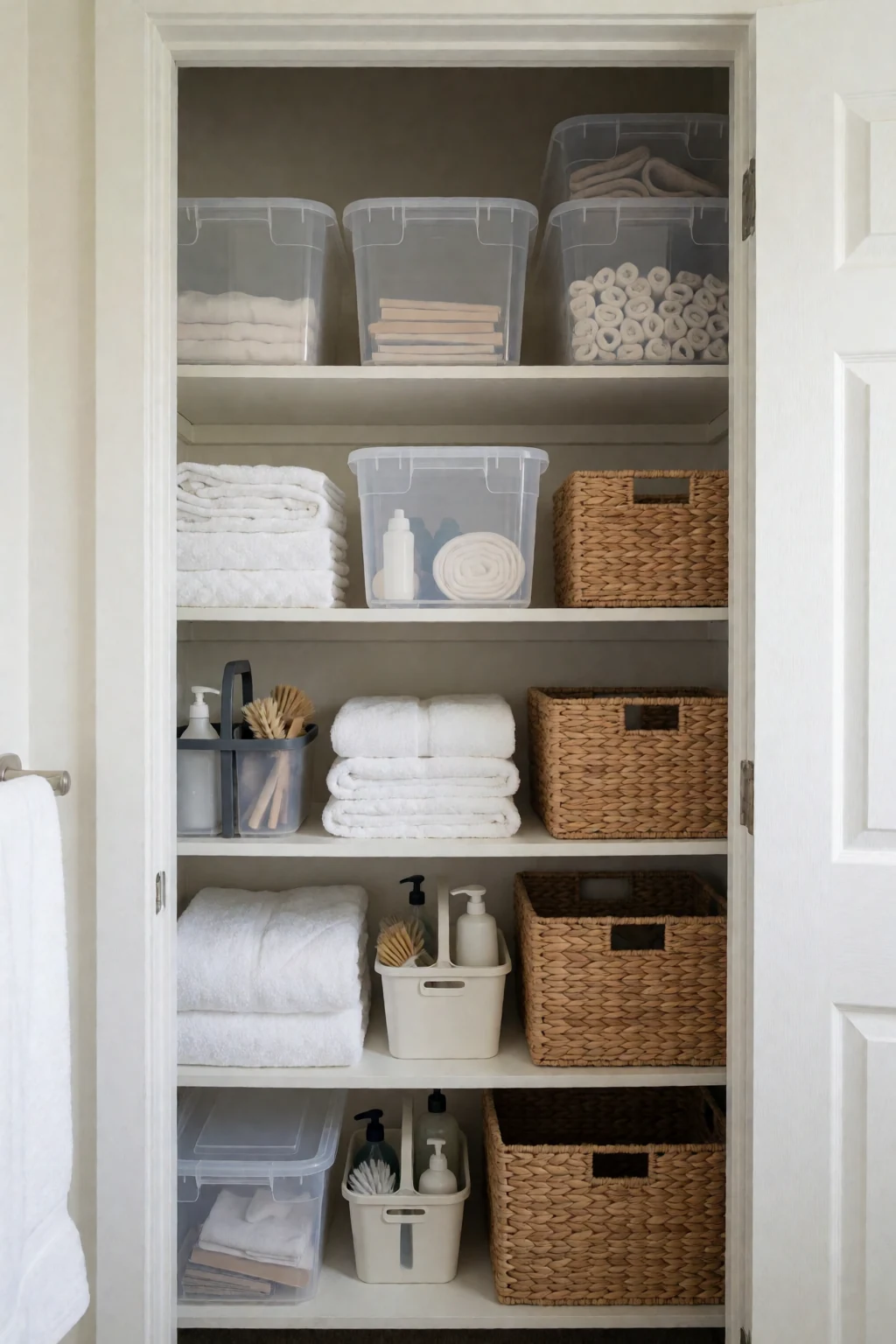
Keep exploring
Related guides
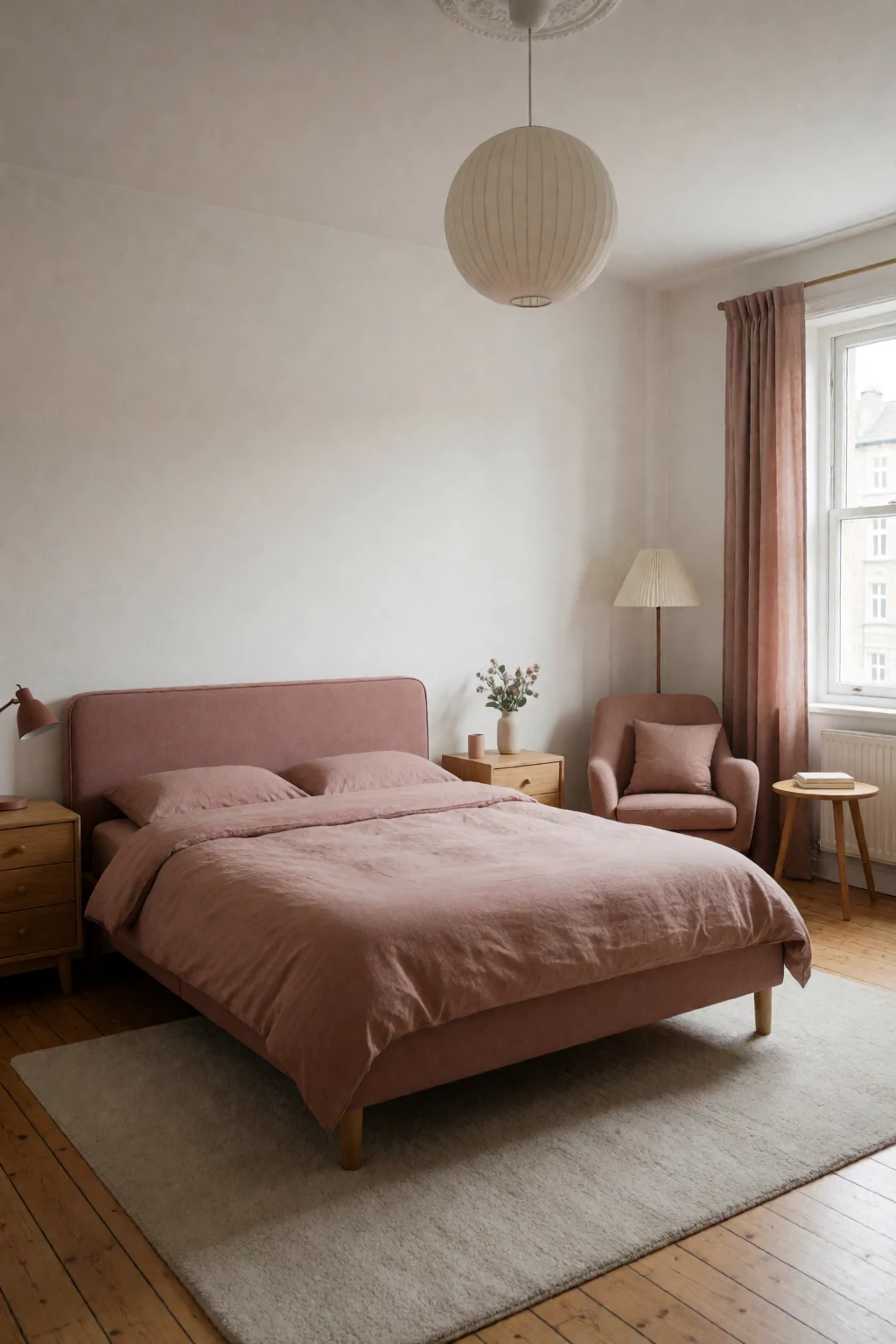 Bedroom
A bedroom has floor space for chests and bedside tables; a small bathroom relies on walls, the door and damp-proof storage.
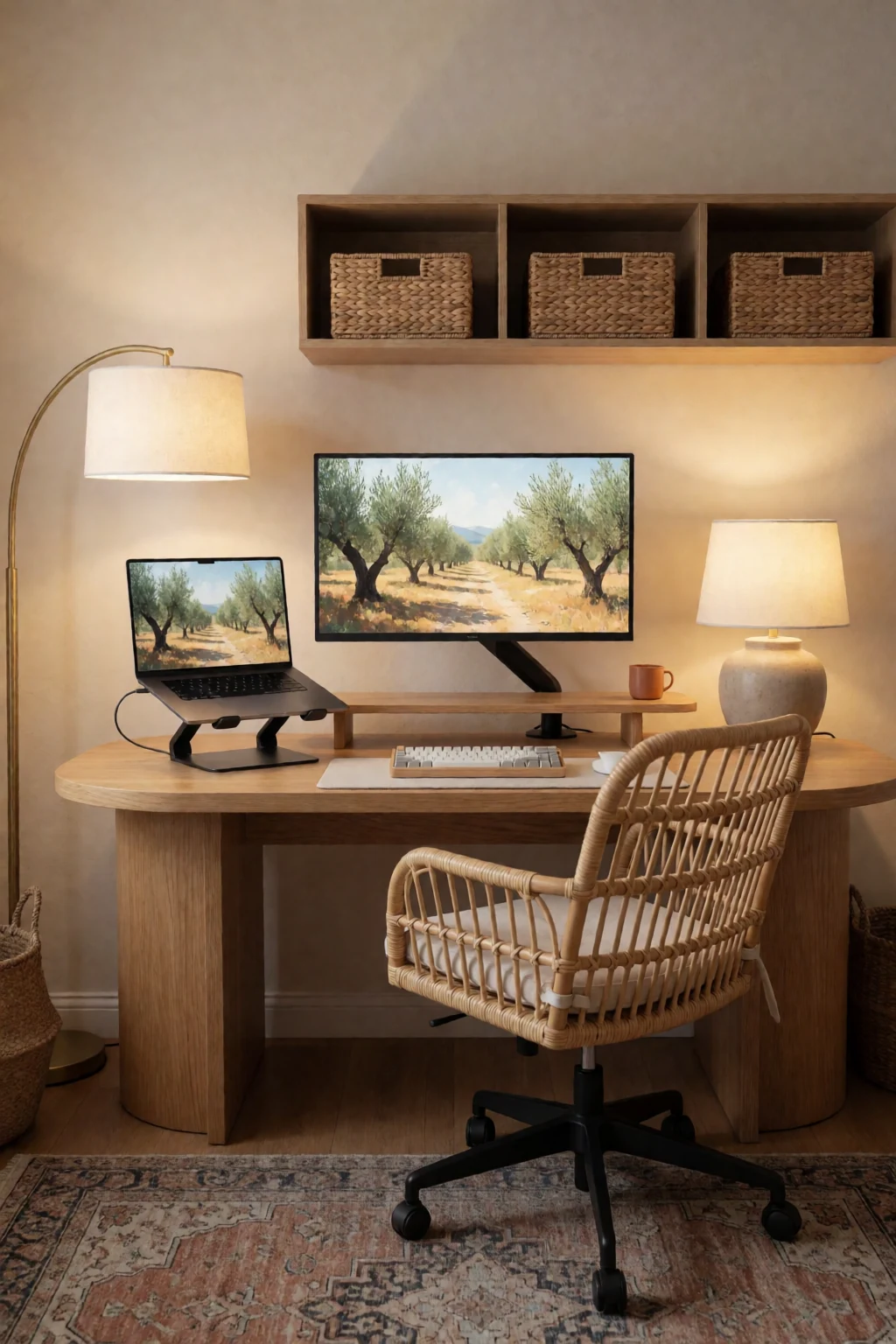 Work & gaming
A desk setup sorts electronics and cables on a dry surface, while a small bathroom sorts toiletries by zone in a wet room.
Questions
What should I keep out of a small bathroom?
Bulk spares, products you use less than weekly, spare towels beyond one set per person and anything that is not used there. Keep them in a hall or linen cupboard.
How do I add storage without drilling?
An over-door rack, a tension pole caddy in the shower, an under-sink organiser and a freestanding over-toilet unit with its anti-tip strap.
Where do towels go in a very small bathroom?
On hooks or a slim rail on the wall or the back of the door. Hooks hold more towels in less space than a rail.
How do I stop the counter filling up again?
Give every daily item a home in the mirror cabinet or a drawer, and clear the counter each evening.